


LA28 Olympics Coverage
Jun. 22, 2026
Building the legal framework for LA28
As Los Angeles prepares to host the 2028 Olympic and Paralympic Games, Elisabeth Freinberg is overseeing a rapidly expanding legal department responsible for everything from sponsorship deals and intellectual property protection to security coordination and venue agreements.


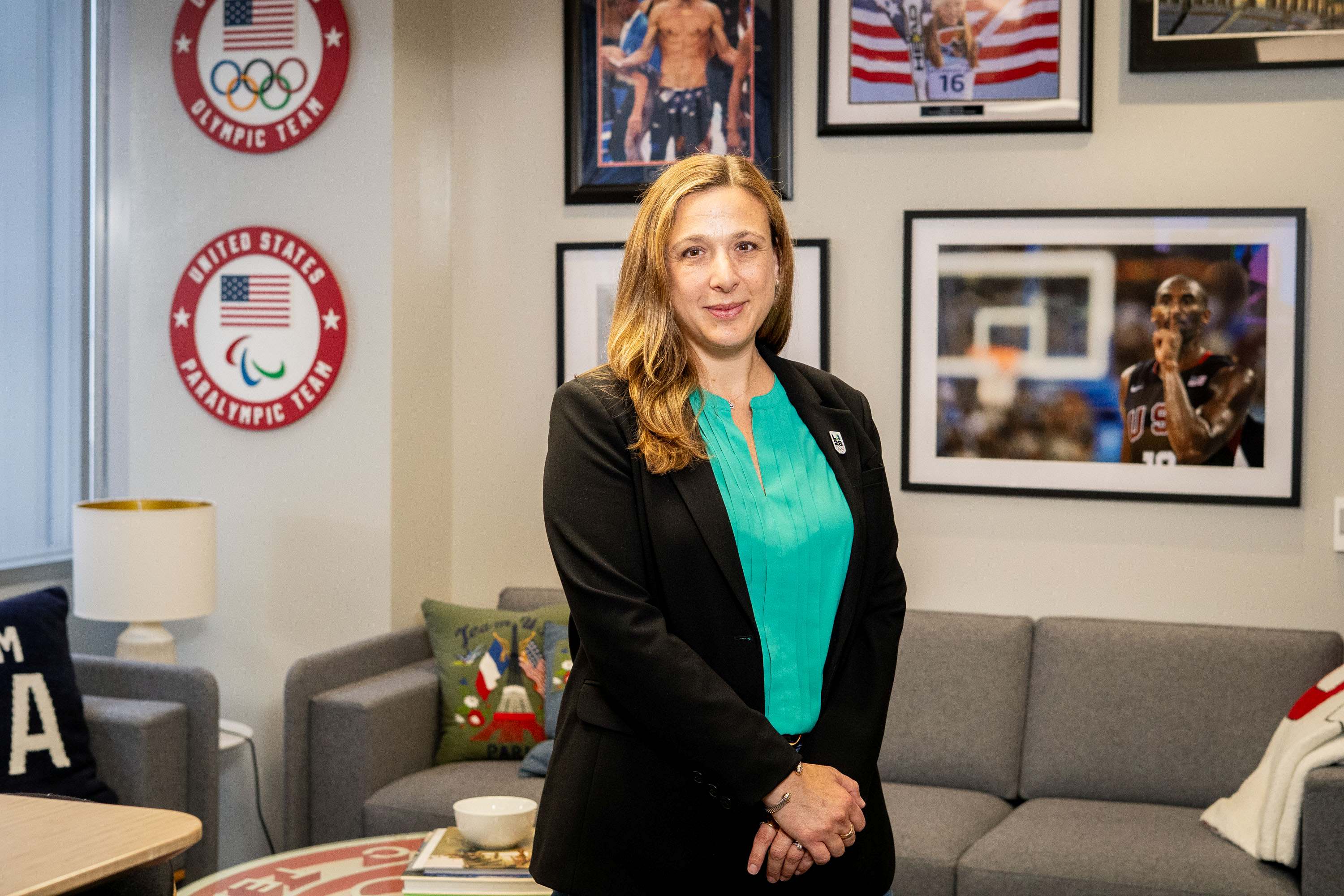
By 2028, Los Angeles will welcome thousands of athletes, dozens of heads of state, millions of spectators and billions of television viewers for the Summer Olympic and Paralympic Games.
For Elisabeth Freinberg, chief legal officer and general counsel of LA28, the countdown is measured not in days but in contracts, leases, sponsorship agreements, intellectual property disputes, labor issues, venue negotiations, security planning sessions and thousands of legal decisions that must be made before the first athlete arrives.
"The Games are kicking into higher gear now, as we're moving from a ramping up phase into really executing on our plans," Freinberg said recently. "We're hiring tons of people. We're expanding our real estate footprint. We're negotiating city services. We're protecting the intellectual property. We're producing ceremonies. Everything is happening at once."
As chief legal officer of the nonprofit organization responsible for staging the 2028 Olympics and Paralympics, Freinberg oversees a legal department that has grown from a handful of lawyers into what resembles a midsize law firm. Today her team numbers more than 40 lawyers, paralegals and legal professionals.
"I look around and feel like I have the best law firm that ever was," Freinberg said.
Within two years, the organization itself will swell from roughly 720 employees to more than 5,000, and the legal issues are as sprawling as the Games themselves.
Her lawyers negotiate with cities across Southern California, work alongside federal agencies responsible for Olympic security and help structure commercial partnerships that will ultimately finance a multibillion-dollar event.
The role is a long way from where she began.
After clerking, Freinberg joined Munger, Tolles & Olson LLP as a litigator. During her years there, she occasionally crossed paths with Daily Journal owner Charlie Munger, whose office occupied the same floor.
From Munger she moved into entertainment, spending roughly a decade at Warner Bros. at a time when the media industry was being transformed by streaming technology, digital content and new distribution platforms.
Her first assignment was serving as in-house counsel for TMZ, where she confronted the legal and ethical questions surrounding modern celebrity journalism.
The work required navigating complex issues involving privacy rights, surreptitious recordings, defamation law and newsgathering practices. After Hulk Hogan gained traction in his suit against Gawker for its publication of a secretly recorded sex tape, she helped refine TMZ's policies governing the use of covertly recorded audio and video.
"The issues were always interesting," Freinberg recalled.
What surprised her was how seriously the organization approached legal compliance.
"They really are focused on ensuring that they are in compliance with the law because that's the only way they can sustain the business," she said.
The experience also gave her a close-up view of content production, broadcasting and intellectual property -- skills that would later prove relevant to the Olympics.
At Warner Bros., her responsibilities expanded to include emerging business ventures. She worked on some of the company's earliest direct-to-consumer initiatives, digital comic book distribution projects for DC Entertainment, and exploratory efforts involving augmented and virtual reality.
"We were working on the first forays into direct-to-consumer television," she said. "We were working on AR/VR ventures. It was very cutting edge."
The move to LA28 came through an old Munger connection.
A former colleague who had become LA28's chief legal officer contacted her before departing for a position in the Biden administration. Initially, Freinberg was recruited not to lead the legal department but to oversee commercial legal matters -- sponsorships, licensing arrangements, intellectual property rights and major business transactions.
When she arrived, LA28 employed fewer than 100 people.
The organization was still largely focused on fundraising and long-term planning. Questions centered on strategy: what the Games footprint would look like, how many employees would eventually be required, what infrastructure would be necessary and how sponsorship programs would be structured.
Those questions have since evolved into operational realities.
"We were all strategy when I got here," she said. "Now we're implementing."
That implementation includes negotiating agreements with every city that will host Olympic events.
Los Angeles is only part of the equation. Freinberg's team also works with Inglewood, Long Beach and numerous other jurisdictions connected to the Games. Surfing competitions will take place near Trestles in San Clemente. Preliminary soccer matches will be held in multiple cities. Each venue requires its own legal framework, governmental cooperation and operational planning.
Then there is security.
Unlike most sporting events, the Olympics are designated a National Special Security Event, placing them in the same category as presidential inaugurations and political conventions.
The designation means the Secret Service plays a central role in coordinating security planning, working alongside local law enforcement, state agencies and Olympic organizers.
"The Olympics are a National Special Security Event because of the number of heads of state and the profile of the event," Freinberg said.
But perhaps no responsibility occupies more of Freinberg's attention than protecting Olympic intellectual property.
The Olympic rings are among the most valuable trademarks in the world. In the United States, those rights receive protection not only through trademark law but through the Ted Stevens Olympic and Amateur Sports Act, which grants special statutory protections to Olympic marks.
Those protections matter because sponsorship revenue is the financial engine that powers the Games.
LA28 is unusual among modern Olympic organizing committees. Unlike many recent host cities, Los Angeles is not relying on direct government funding to stage the event. Instead, organizers expect to finance the Games through sponsorships, ticket sales, hospitality programs, licensing arrangements and consumer products.
That makes intellectual property enforcement a business necessity.
"If you're paying hundreds of millions of dollars to be an Olympic sponsor, you need to know that somebody else can't come along and create the impression that they're associated with the Games for free," said Freinberg.
The challenge becomes especially complicated in the era of athlete name, image and likeness rights.
Olympians increasingly sign endorsement agreements of their own. Freinberg's team must ensure athletes can monetize their success while preventing companies from exploiting Olympic goodwill without becoming official sponsors.
"It's a balance," she said. "We never want to keep athletes from being able to make money."
As the Games approach, another challenge looms: scale.
To meet growing demand, Freinberg recently launched a fellowship program with UCLA, USC, Loyola, Pepperdine and Southwestern law schools. The initiative will bring recent graduates into the legal department to handle increasingly sophisticated work.
The program reflects her belief that young lawyers should be exposed to real responsibility early in their careers.
The opportunity is rare. Few legal departments can offer associates exposure to sponsorship negotiations, intellectual property issues, government contracting, entertainment law and major event operations all at once.
Most lawyers spend their careers advising clients through significant events. Freinberg is helping construct one from the ground up.
When the world arrives in Los Angeles in the summer of 2028, spectators will see athletes, ceremonies and competition.
What they will not see is the vast legal infrastructure beneath it all -- the agreements, protections, negotiations and planning that made the Games possible.
That infrastructure is increasingly Freinberg's responsibility.
As staffing expands and planning shifts into execution, Freinberg said the pace is accelerating.
"The Games are kicking into higher gear now. Everything is happening at once."
And with fewer than 800 days remaining, the work is only beginning.
David Houston
david_houston@dailyjournal.com
For reprint rights or to order a copy of your photo:
Email
Jeremy_Ellis@dailyjournal.com
for prices.
Direct dial: 213-229-5424
Send a letter to the editor:
Email: letters@dailyjournal.com