


Torts/Personal Injury
Jun. 8, 2026
Mediating trucking claims after Montgomery
The Supreme Court's decision in Montgomery v. Caribe Transport II, LLC keeps freight brokers in the crosshairs of trucking injury lawsuits, expanding potential liability and raising the stakes for litigation, insurance exposure and settlement negotiations.


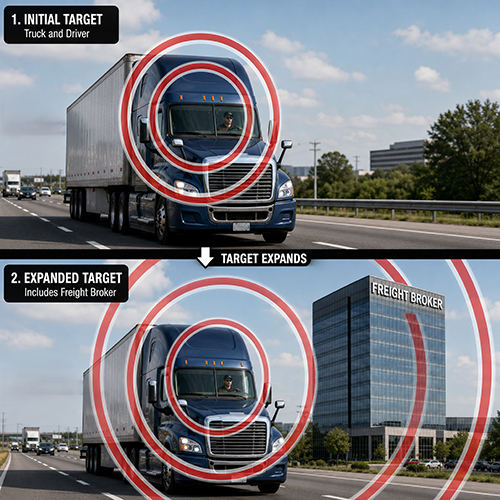
On May 14, 2026, the U.S. Supreme Court ruled that large freight brokers can be sued for negligently hiring unsafe motor carriers. In its unanimous decision in Montgomery v. Caribe Transport II, LLC (608 U.S. ___ (2026)), the Court ruled that state safety regulations are not preempted by federal law, thereby allowing injured parties to sue deep-pocketed logistics coordinators that manage the delivery of products all across the country.
The decision was not what the major transport companies had hoped for. Large freight brokers such as Amazon and FedEx had relied on the Court to carve them out of the liability equation for injuries sustained at the hands of third-party trucking companies engaged to handle their deliveries.
Although the case maintains the status quo in California, it shifts the liability playing field for brokers across the country, broadening the range of potential defendants in severe injury and wrongful death cases involving trucking companies. Large freight coordinators will be automatically named as the primary defendants in future cases, forcing them to litigate those cases and respond to extensive discovery requests about their allegedly negligent hiring practices. With these "deep-pocketed" defendants in the case, the potential value of personal injury claims is likely to rise significantly, as will the insurance risk profile for the industry.
What does this mean for resolving trucking injury cases? As parties grapple with liability issues and confront an increasingly complex and costly litigation picture, they should recognize that settling these cases out of court will be the least costly and most efficient way to achieve closure.
The case
While driving a load of plastic pots across Illinois in a Mack Truck, a trucker for Caribe Transport veered off course, striking Shawn Montgomery's tractor-trailer, which had been stopped on the side of the road. Montgomery sustained severe injuries, including the loss of his leg. The transportation broker, C.H. Robinson Worldwide, had hired Caribe Transport to transport the goods. Montgomery alleged that C.H. Robinson was liable for his injuries because it had negligently hired Caribe Transport.
Montgomery argued that C.H. Robinson failed to exercise reasonable care when it hired Caribe Transport to transport goods via truck because the carrier had received a subpar safety rating from federal regulators. That safety rating, he claimed, should have been enough to tell C.H. Robinson that its chosen carrier was reasonably likely to cause an accident.
The district court held that Montgomery's claim against C.H. Robinson was expressly preempted by the Federal Aviation Administration Authorization Act (FAAAA), 49 U. S. C. §14501. That statute preempts state laws related to the prices, routes, and services of the trucking industry. The claim, it ruled, did not fall within the FAAAA's safety exception, which provides that the law's preemption provision "shall not restrict the safety regulatory authority of a State with respect to motor vehicles." The Seventh Circuit affirmed the lower court's holding.
The Supreme Court ruled otherwise. Freight brokers, it held, may be sued for negligently selecting unsafe motor carriers; federal law does not preempt such claims. "Even if the FAAAA otherwise preempts Montgomery's negligent hiring claim against C.H. Robinson, the safety exception saves it," the court wrote.
"We'll grant respondents this: It is not obvious why Congress included a safety exception in (c) but not in (b). But it would be even odder to say that the alleged tort--the negligent hiring of an unsafe motor carrier whose truck caused injury--is not an exercise of 'the safety regulatory authority of a State with respect to motor vehicles.' §14501(c)(2)(A). The text of subsection (c)(2)(A) controls."
The new risk profile
Montgomery reaffirms the risk landscape in trucking and logistics litigation in California, while expanding the pool of potential defendants in serious injury and wrongful death cases nationwide. Plaintiffs have been given a permanent green light to pursue claims not only against motor carriers and their drivers, but also against the freight brokers who oversee delivery logistics. These entities are the big players, considerably more financially robust and well insured than the trucking companies they contract with for deliveries of their goods. When these deep-pocketed defendants are woven into the trucking liability picture, case values tend to increase dramatically.
In its decision, the Court clarified that freight brokers will not automatically be held liable for personal injury damages simply because an accident involving one of their carriers has occurred. They will only be liable if they act unreasonably in selecting the subject carrier. Presumably, this means that a broker can avoid liability by proving it followed documented safety-screening procedures and selected carriers in accordance with accepted industry standards.
But it won't be this simple. The fact-specific nature of the safety analysis, coupled with the jury appeal of well-known corporate defendants, significantly tilts the settlement playing field. With nuclear verdicts now a distinct possibility, injured parties will want to review Federal Motor Carrier Safety Administration safety ratings of carriers, examine prior safety violations by those companies, and look into freight brokers' carrier selection practices.
Even if the defense position appears strong--no prior violations, good safety ratings, excellent vetting practices--it is questionable whether a claim against a freight broker will be dismissed on a motion for summary judgment. Many trial court judges are likely to see the matter as too fact-intensive to merit taking the case from a jury. There may also be arguments for vicarious liability that would provide an additional avenue for plaintiffs to establish liability against the freight broker. Freight brokers and their insurers will need to be laser focused on broker conduct early in the litigation process and be prepared for extensive discovery testing their position.
In addition to demonstrating reasonable broker conduct in selecting the carrier, the defense might challenge proximate causation in an effort to establish that the primary cause of the incident was the motor carrier's conduct, not the broker's selection process. Here again, however, this is likely to be considered a jury question not appropriate for summary judgment.
Ultimately, the prospect of a nuclear verdict at trial should motivate the freight broker and its insurer to seriously consider settling these claims outside the courtroom, even when they have seemingly airtight defenses.
The post-Montgomery mediation landscape
Let's assume that viable defenses exist for the freight broker and the parties take the matter to mediation. Does the freight broker attempt to settle with the claimant after clearly establishing that it acted reasonably in hiring the carrier and vicarious liability also cannot be established. As logical as that may sound, it's probably not in the cards.
In large value cases, Plaintiffs will want to understand the insurance available through brokers, who tend to be large corporations whose insurance limits are typically much higher than those for the smaller trucking companies. If the injuries are significant and the carrier's insurance is limited, a plaintiff will be disinclined to release the broker in exchange for a nominal settlement amount. Without a significant settlement offer from the broker, mediation will likely not resolve the matter even if all parties acknowledge that liability is questionable.
Because Montgomery preserves injury claims against deep-pocketed, well-insured defendants, plaintiffs may be more willing to take the risk of going to trial rather than accepting a settlement offer. With joint and several liability for economic damages in California, there could also be significant broker exposure even if the majority of the fault lies with the carrier.
Conclusion
The decision in Montgomery will likely impact plaintiffs and defendants, and each side should govern their litigation strategies accordingly. When it kept open the door for claims to be brought against freight brokers, the Supreme Court reaffirmed the complexity associated with litigating trucking injury claims. The potential liability of the freight broker must be carefully analyzed, leading to increased discovery, lengthier trial preparation, and higher litigation costs for both sides.
These increased costs, along with the very real potential of nuclear verdicts at trial, should cause freight brokers and their insurance carriers to consider settlements in mediation. Plaintiffs also need to think carefully about the benefits of settlement, given the significant cost of trial and often uncertain outcome for negligent hiring and vicarious liability claims against the freight broker. There also is the potential of future appellate decisions creating more stringent requirements for pursuing such claims.
Submit your own column for publication to Diana Bosetti
For reprint rights or to order a copy of your photo:
Email
Jeremy_Ellis@dailyjournal.com
for prices.
Direct dial: 213-229-5424
Send a letter to the editor:
Email: letters@dailyjournal.com