


Constitutional Law
Jun. 5, 2026
Supreme Court's voting rights decision tests reach of California's election law
City argues the Supreme Court's recent Callais decision requires dismissal of a challenge to Huntington Beach's at-large election system; plaintiffs say the ruling has no application to California law.


A U.S. Supreme Court decision narrowing the federal Voting Rights Act has become a pivotal issue in a challenge to Huntington Beach's at-large election system under the California Voting Rights Act. The city argues the ruling requires dismissal, while plaintiffs contend it has no impact on state law.
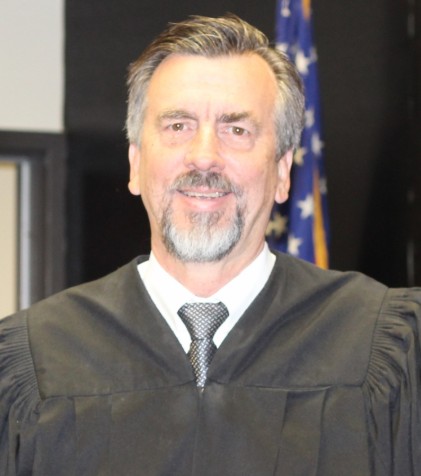
Orange County Superior Court Judge Craig L. Griffin took the matter under submission Tuesday after the parties filed supplemental briefs addressing the U.S. Supreme Court's April 29 decision in Louisiana v. Callais. Within days of the ruling, Griffin ordered briefing on its potential effect on the case. Louisiana v. Callais, 608 U.S. ___, 146 S. Ct. 1131 (2026).
The plaintiffs allege Huntington Beach's long-standing at-large City Council elections violate the CVRA by diluting Latino voting strength and seek to replace the system. Southwest Voter Registration Education Project et al. v. City of Huntington Beach, 30-2024-01397379-CU-CR-NJC (O.C. Super. Ct. filed May 3, 2024).
The dispute is the latest chapter in more than a decade of litigation under the California Voting Rights Act, which makes it easier for minority groups to challenge at-large election systems by eliminating the requirement to prove discriminatory intent and focusing instead on whether racially polarized voting dilutes minority voting strength.
Attorney Kevin I. Shenkman of Shenkman & Hughes PC, who represents the plaintiffs in the Huntington Beach case, brought one of the earliest CVRA challenges in 2012 against the City of Palmdale. A Los Angeles County judge found Palmdale violated the statute by using at-large elections that diluted Latino and African American voting strength. Jauregui et al. v. City of Palmdale, BC483039 (L.A. Super. Ct. filed Apr. 18, 2012).
"The CVRA permits liability without proof of intent to discriminate, because the CVRA says exactly that: 'Proof of an intent on the part of the voters or elected officials to discriminate against a protected class is not required,'" Shenkman said Thursday. "The CVRA ... was not enacted pursuant to any authority granted by the 15th Amendment; it was enacted pursuant to the State of California's general police power over its political subdivisions."
The city relies heavily on Justice Samuel A. Alito Jr.'s majority opinion in Callais, which said Section 2 of the federal Voting Rights Act must be interpreted in light of the Fifteenth Amendment's prohibition on intentional racial discrimination. Although proof of discriminatory intent is not required, the opinion said liability exists only when circumstances strongly suggest intentional discrimination.
Huntington Beach argues that despite textual differences between the federal Voting Rights Act and the CVRA, both must comply with the U.S. Constitution. The city contends the Fifteenth Amendment applies to all states, including California, and that the Supremacy Clause requires federal law to prevail over conflicting state provisions.
Shenkman dismissed the argument, saying the Supremacy Clause has no bearing on the issue.
"There has never been even a suggestion that the federal Voting Rights Act preempts state voting rights acts, such as the CVRA," Shenkman said. "Courts at all levels, both federal and state, have confirmed the CVRA is well within those bounds."
Richard Hasen, an elections expert at UCLA School of Law and a political science professor, said Callais was a constitutional case involving racial gerrymandering under the 14th Amendment's Equal Protection Clause.
"The constitutionality of the CVRA was not before the Court in Callais, so it does not directly speak to the question. But, given that the CVRA imposes liability on cities under a laxer standard than the Gingles test, and is unabashedly race-conscious, challengers to the CVRA will have a very serious argument that the CVRA is unconstitutional under Callais," Hasen said.
Hasen said a challenge would likely argue either that the CVRA's race-conscious framework violates the Equal Protection Clause or that it requires racial gerrymandering.
Will O'Neill, a former Newport Beach mayor who now leads the Republican Party of Orange County and is a partner at Newmeyer Dillion LLP, said the CVRA challenge may collide with Callais.
"Chief Justice Roberts was right when he said that 'the way to stop discrimination on the basis of race is to stop discriminating on the basis of race.' That is also true in gerrymandering lines to discriminate for or against people based on their skin color," O'Neill said. "Plaintiffs' attorneys have weaponized the CVRA and the efforts may well violate Callais."
The city argues the plaintiffs' disparate-impact theory is unconstitutional and that they failed to distinguish race from partisanship, pointing to a Republican electoral wave to explain recent council election results. It also argues that plaintiffs' expert David Ely's illustrative seven-district map violates the FAIR MAPS Act. "In this case, there is none, and Plaintiffs' case must be summarily rejected," the city's brief states.
The plaintiffs urged Griffin to disregard Callais, arguing it interprets a different statute enacted under different constitutional authority. The CVRA, enacted pursuant to the state's police power, expressly does not require proof of discriminatory intent by voters or public officials, they wrote. Applying Callais to the CVRA, the brief argued, "would do violence to the statutory text and legislative purpose of the CVRA."
Huntington Beach City Attorney Mike Vigliotta did not respond to requests for comment.
The plaintiffs relied heavily on the California Supreme Court's decision in Pico Neighborhood Association v. City of Santa Monica, 15 Cal.5th 292 (2023), which described the CVRA as designed "to provide greater protections to California voters than those provided by the [F]VRA."
They also argued the CVRA incorporated the standard for racially polarized voting in place in 2002, not later federal interpretations. Justice Elena Kagan's dissent in Callais, they noted, warned that the majority had made succeeding on a federal voting rights claim "nearly impossible."
The parties also disputed the continuing role of Thornburg v. Gingles. The city argued that Pico Neighborhood adopted three of the four Gingles factors and that those factors must now be reconsidered in light of Callais. The plaintiffs responded that the California Supreme Court's framework remains unchanged.
Alternatively, the plaintiffs argued that if Griffin concludes Callais establishes a new standard for CVRA claims, they should be permitted to present additional evidence, contending it would be unfair to fault them for failing to anticipate a rule announced after trial.
The case remains under submission before Griffin.
"If Judge Griffin were to accept Huntington Beach's argument about Callais, it would essentially destroy the CVRA ... until an appellate court reversed that decision," Shenkman said. "I have more confidence in Judge Griffin than that."
Douglas Saunders Sr.
douglas_saunders@dailyjournal.com
For reprint rights or to order a copy of your photo:
Email
Jeremy_Ellis@dailyjournal.com
for prices.
Direct dial: 213-229-5424
Send a letter to the editor:
Email: letters@dailyjournal.com