


Technology,
Law Practice,
Guide to Legal Writing
Jun. 5, 2026
The brief on my desk is good
A lawyer's prose used to be evidence of the lawyer's skill because you could not produce the writing without doing the thinking. AI has cut that link.


The brief on my desk is good. The reasoning is tight, the cases are well-arranged, the prose reads as if a careful lawyer wrote it. I do not know if a careful lawyer did. I never used to have to ask.
For as long as there has been a legal profession, a lawyer's prose has been evidence of the lawyer. Now anyone with an AI model can produce fluent legal writing. This year courts have already imposed at least $145,000 in sanctions for fabricated citations, and not against the desperate or the self-represented. That is the visible crisis.
The deeper crisis is the brief that is good: well-reasoned, properly grounded, genuinely sound, and that no lawyer's mind ever held.
What the prose was proof of
It is eleven at night. The brief is due in the morning. I have written the same paragraph four times. The third version was wrong; I could feel it was wrong but could not say why. On the fourth try the sentence forces a clause I did not intend, and the clause names the weakness I have been working around for two weeks. I sit back. The argument I thought I had is not the argument I have. I start over.
That moment, repeated across a career, is part of what made me a lawyer. So was the rest: the years in Witkin and the Rutter guides. Writing so a judge could take the argument on a single read because a judge made to read a sentence twice begins to doubt it. Learning to say it in chambers with no wasted clause because the time was not mine.
And the test I have put to every hard thing I have ever had to explain: could I say it to my mother and watch her nod? Not to talk down to her, but to include her, because she is owed that. But also because if she nods, a judge or a jury will too. You cannot earn the nod by sounding like you understand; you have to understand. The nod is uncheatable, and earning it a thousand times is how the understanding got built.
I learned grammar by construing Latin, one stubborn clause at a time, until the architecture of a sentence came clear. None of it was efficient. All of it was the job, and the job was the formation. The writing was not the report of thinking done somewhere else; the writing was the thinking. We already say we build a case, brick by brick. We build the lawyer the same way. The brief and the mind went up together; you could not raise one without the other. That was load-bearing: a sound brief proved a sound mind had built it.
We thought the proof lived in the prose. It lived in the price of the prose.
At six I would hand the memo up; the partner would skim it and say go file. He never re-read the cases. The prose was the proxy; evaluation came built into the work.
What breaks
Now I am the one the brief comes to, and the polish proves nothing. I read it now the way I once reread my own paragraphs at eleven at night, except I am checking for a mind I can no longer assume. I pull the citation, read the case, ask whether the confident sentence survives what it cites. Sometimes it does not. The failure is not a typo, but the absence of the two weeks of work that would have caught it. The cost did not vanish. It moved onto whoever reads next, and most days that is me.
Some will say this happens with every new tool. First alarm and then absorption. Not this time. The earlier tools automated retrieval: Shepard's and the citators found the case and flagged the bad law, but never pretended to do the reasoning. They left you the argument: the writing, which was the thinking. AI does not hand you the materials; it performs the act in which the reasoning was supposed to happen, and hands you the result. It is the first machine to automate not the search but the thought, and that is why the brief stops proving the lawyer now, when it survived the calculator and the form book.
It is tempting to answer that auditing is itself a formation, that the next generation will be made not by drafting but by catching what AI got wrong. The answer does not survive a moment's pressure. To catch the plausible-but-wrong citation you must already be the lawyer it is trying to fool. You cannot audit your way to a competence you never built.
And there is a second problem: there is no auditor's signature. When you sign a brief you do not certify that you reviewed it; you certify it as your own, after your own inquiry. The one part of the brief that AI cannot produce is the name beneath it, and that name is an author's, not an auditor's.
And I have lost something. A brilliant brief from a young lawyer told me the lawyer was brilliant; three paragraphs and I knew whom to trust with the hard case. A polished brief was expensive, and that expense made it informative: you could not cheaply fake one. AI has not created the fluent and shallow lawyer; it has driven the price of fluency to zero. The judgment I spent years building, to read people through their prose, has gone dark in my hand.
Sanctions reach the bad brief, but not the lawyer who never became one. That is caught five years from now, when someone has to be a lawyer in a room with no machine. We are policing the fabricated citation while the real loss passes uncosted.
The consequences
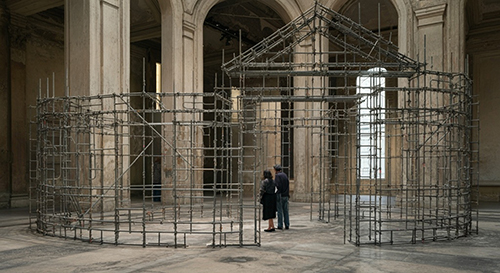
No one planned this. The years of doing it the hard way were the scaffolding, and our minds went up inside it. The machine is no threat to a mind already formed. The danger is that it makes us think we never needed the scaffolding at all. Without it, the building never goes up.
The work is not to mourn it but to rebuild, at cost, what once came built into the work. Above all the formation: the slow making of a mind that can see the structure before it writes, which we will have to choose, against every incentive to skip it. The billable hour will not choose it, and the client paying for it will not. But not all the places that make lawyers run on the billable hour: the law schools, the clerkships, the first years where a lawyer is built rather than billed. They can insist on problems worked without the tool, because that is how a lawyer is made.
There is now a shortcut to a polished brief or to what looks like one. I wonder whether the lawyers coming up will put up the scaffolding when they are no longer made to. Whether they will do any of this, or care that it was ever done, or know what it was for.
The machine will write the brief. It cannot write the lawyer. I do not know whether the lawyers who come after us will look anything like the ones we knew.
Disclaimer: The views expressed in this article are solely those of the author in their personal capacity and do not reflect the official position of the California Court of Appeal, Second District, or the Judicial Branch of California. This article is intended solely to contribute to scholarly dialogue and does not represent judicial policy, administrative guidance, or any indication of how the author would approach these issues in any legal proceeding.
Submit your own column for publication to Diana Bosetti
For reprint rights or to order a copy of your photo:
Email
Jeremy_Ellis@dailyjournal.com
for prices.
Direct dial: 213-229-5424
Send a letter to the editor:
Email: letters@dailyjournal.com