


Law Office Management
May 27, 2026
Munger Tolles bets future on young lawyers, lean teams and institutional culture
As Munger, Tolles & Olson navigates generational change, the elite California litigation firm is leaning harder into the model that built its reputation: lean teams, early responsibility and intensive mentorship.


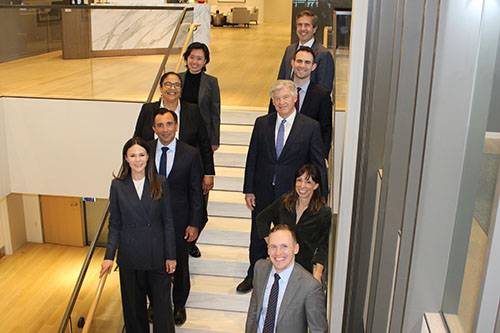
On a recent weekday in downtown Los Angeles, a third-year associate at Munger, Tolles & Olson LLP was preparing senior executives for depositions -- alone.
At many elite firms, that assignment would likely go to a senior partner. At Munger Tolles, it was entrusted to a lawyer barely out of law school.
"The client specifically asked for him," partner Malcolm A. Heinicke said. "That doesn't happen at another firm."
The anecdote captures something central to the firm's identity -- and increasingly, to its vision for its future. For more than six decades, the firm has built its reputation by recruiting elite legal talent and deploying lawyers in unusually lean teams against some of the nation's largest firms on some of the most consequential cases.
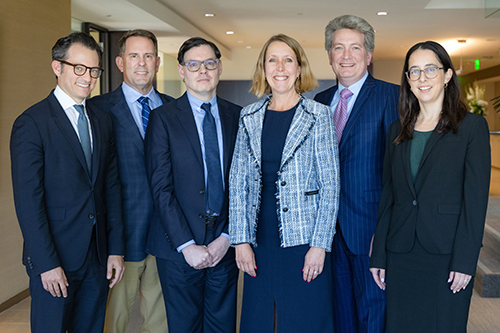
But as a new generation of partners rises into leadership, Munger Tolles is confronting a challenge that has tested many elite institutions: how to preserve the culture, quality and collaborative ethos that made the firm successful while handing responsibility to younger lawyers earlier and more deliberately than most of its peers.
At Munger Tolles, the answer has been to double down on the model that made the firm distinctive in the first place -- giving young lawyers meaningful responsibility almost immediately, flattening hierarchy and treating succession less as a formal transition than as a continuous process of trust and apprenticeship.
By the time young lawyers at Munger Tolles realizes they have been handed responsibility that would take years to earn at another elite law firm, it is usually too late to panic.
Sometimes they are already standing in front of a witness.
Partner Craig J. Lavoie was eight months out of law school when he took the deposition of a former company president who had recently finished a federal prison sentence for fraud. Partner L. Ashley Aull recalls taking a deposition before she had ever seen one conducted. Associate Wendy Q. Xiao said one of her first assignments after joining the firm was drafting a motion in limine -- prompting her to quietly Google what a motion in limine was.
"You're gonna get live ammunition the day you come in," Heinicke said. "If you want to be at a firm where they train you for five years and you never see a courtroom, there are plenty of them. If you want to start practicing law from Day One and be trusted with responsibility befitting your credentials, we will do that."
That opportunity -- and pressure -- has become central to one of the most consequential transitions in the history of the California litigation powerhouse.
For decades, Munger Tolles' identity was inseparable from a small group of towering figures: Charlie Munger, Ronald L. Olson, Brad D. Brian, Gregory P. Stone, John W. Spiegel and a handful of other elite litigators who helped define California's modern legal establishment.
The firm built a reputation for handling bet-the-company litigation with unusually lean teams staffed by lawyers who were expected to think like trial advocates from the beginning of their careers.
"We'll hire the best and brightest, and they'll figure out what to do," is a quote attributed to Charlie Munger, who stopped practicing law soon after the firm's founding but remained closely associated with it until his death in 2023.
Although many of those early partners are still going full steam - Brian, for instance, still helms major litigation throughout the country -- Munger Tolles is increasingly shifting responsibility to a younger cohort of partners.
"The next generation of MTO is doing awesome work," co-managing partner E. Martin Estrada said. "What really excites me now is seeing these people who years ago were the young lawyers getting early opportunities -- seeing them now hit their stride."
That generational shift is visible throughout the firm.
Bethany W. Kristovich now handles some of the firm's most sensitive crisis litigation, including wildfire, mass tort and public entity matters. Daniel B. Levin has become a leading figure in mass tort and class action litigation while helping lead the firm as co-managing partner. Antitrust litigators like Kuruvilla J. Olasa and Justin P. Raphael are helping build one of the nation's most active trial-focused antitrust practices.
Lawyers like Rose Leda Ehler, Robyn K. Bacon and Jonathan H. Blavin are simultaneously managing major practices while serving in increasingly influential leadership roles within the firm.
Kristovich said longtime firm leaders helped create space for younger partners to grow rather than protect client relationships for themselves.
"Brad Brian taught me how to lawyer at the highest level," she said. "He would bring me into matters with the full expectation that the next time the client had something, they'd call me."
She described similar experiences with senior litigators like Stone and Glenn D. Pomerantz, who she said repeatedly introduced her to clients and allowed her to take lead roles in increasingly important matters.
"I think the Munger leaders have done a wonderful job of making way for the next generation and really helping us," Kristovich said. "They've been incredibly generous."
That dynamic is intentional, according to several partners.
Benjamin J. Horwich, the firm's finance chair, said the evolution is visible even in the firm's internal data. Years ago, he said, client relationships and billing responsibility were concentrated among a very small group of lawyers. Over time, those relationships have spread across broader groups of partners.
"There is no longer a 'What if so-and-so gets hit by a bus?' question anybody can ask about the firm," Horwich said.
Associates serve on the firm's management committee. Younger partners sit on compensation and policy committees. Multiple attorneys described the firm as unusually democratic compared with peer institutions.
"There's not an artificial hierarchy standing in the way of good ideas," Ehler said.
Steven Levick, a transactions associate who serves on the management committee, said associates are expected to operate with an ownership mentality almost immediately.
"You're treated like an adult from your first day at the firm," he said.
That philosophy extends well beyond governance.
Many Munger Tolles lawyers describe the firm less as a pyramid and more as a collaborative apprenticeship system. Several partners contrasted this model with larger firms that deploy dozens -- sometimes hundreds -- of lawyers on major litigation.
A matter that might involve one partner and 10 associates elsewhere may instead involve two partners and two associates at Munger Tolles.
The tradeoff is pressure.
"You don't have armies of bodies standing between you and opportunity," Lavoie said.
But the upside, lawyers argue, is accelerated development. Associates routinely take depositions, argue motions and manage meaningful pieces of litigation years earlier than many peers at other elite firms.
The model has also become central to the firm's recruiting pitch.
"We hire the best people, and we trust them," Heinicke said.
That hiring philosophy remains one of the firm's defining features. While Munger Tolles still recruits heavily from elite law schools and federal clerkships, multiple partners rejected the idea that the firm defines excellence narrowly. Estrada emphasized that the firm now searches broadly for talent rather than limiting itself to traditional credential pipelines.
The goal, lawyers said repeatedly, is not merely intellectual horsepower but lawyers capable of handling high-stakes, unpredictable litigation.
"People hire us when the normal playbook isn't working," Kristovich said.
That description surfaced repeatedly in discussions of the firm's current work.
Munger Tolles lawyers are handling wildfire litigation, social media addiction litigation, antitrust battles involving Google and Albertsons, high-profile employment disputes, constitutional litigation, investigations, entertainment industry matters and mass torts involving nicotine pouches, baby formula recalls and pharmaceuticals.
Many of those cases involve extraordinary public scrutiny, novel legal questions or potentially massive financial exposure.
"The demand for elite legal services hasn't gone anywhere," Heinicke said. "It's increased."
Partner Carolyn Hoecker Luedtke, who joined the San Francisco office in 2000 after clerking for U.S. District Judge William W. Schwarzer of the Northern District of California, said watching the firm's lawyers practice made her want to join them.
"The most interesting cases I had during my clerkship were Munger Tolles cases," Luedtke said.
Partners across practices argued that modern litigation increasingly rewards elite strategic judgment rather than sheer manpower.
That belief helps explain why firm leaders view artificial intelligence less as a threat than as an opportunity. Lawyers throughout the firm described AI primarily as a tool that handles lower-level tasks while allowing attorneys to focus more intensely on strategy, advocacy and judgment.
"We've never made our money off the things being replaced by AI," Horwich said.
Bacon said the firm's future advantage lies in cultivating the specifically human skills AI cannot replicate -- persuasion, judgment, trust-building and strategic thinking.
"What are we actually going to surrender to the machines?" Bacon asked.
Even lawyers enthusiastic about AI emphasized that the firm remains skeptical about using generative AI for external legal writing or substantive advocacy. John L. Schwab described current AI-generated writing as fundamentally inconsistent with how Munger Tolles lawyers want to communicate with judges and juries.
But internally, the technology is already reshaping workflows.
Several partners suggested the shift may ultimately favor firms like Munger Tolles, whose lean structure already depends on maximizing the effectiveness of small teams rather than maintaining large associate pyramids. "I think we are headed to a place where you simply don't need 100 lawyers on any case, ever," Schwab said.
The firm's smaller size also remains central to its identity.
Despite its national reputation, Munger Tolles has resisted the massive geographic expansion pursued by many competitors. Lawyers repeatedly emphasized that the firm's three-office structure helps preserve cohesion and institutional culture.
"We're small enough that you can actually get to know everybody," Levick said.
That intimacy appears to reinforce one of the firm's strongest selling points internally: mentorship.
Nearly every lawyer interviewed described meaningful access to senior attorneys, including some of the firm's most prominent figures. Associates spoke casually about interactions with Olson, a name partner at the firm. Younger partners described decades-long mentoring relationships with firm legends.
For many lawyers, those relationships shaped not only their practices but their understanding of professional identity.
Ehler said she came to Munger Tolles searching for a place where lawyers cared deeply about excellence while remaining grounded as human beings.
"There's no firm I would rather be," she said.
That sentiment surfaced frequently across interviews, particularly among lawyers who had spent their entire careers at the firm.
But even laterals described a similar experience. Bacon said she came to Munger Tolles after years at the U.S. attorney's office because she wanted a place where she could continue trying cases while working in a culture deeply committed to ethical, high-quality advocacy.
"I liked the way they did the work," she said.
The firm's California roots also continue to shape its identity.
Although Munger Tolles now operates nationally, many lawyers emphasized its continuing connection to California institutions, politics and litigation culture.
Several described the firm as unusually embedded in the state's civic and legal life.
That identity extends beyond paying matters. Munger Tolles has long maintained an unusually large pro bono practice relative to its size, particularly in impact litigation and constitutional matters.
Horwich said the firm increased pro bono work by roughly 50% in 2025 with no drop in profits.
"We answered the call," he said.
The result is a culture that many lawyers described less as corporate and more as institutional.
"We want to work with top talent," Estrada said. "We want to roll our sleeves up and really practice as lawyers."
David Houston
david_houston@dailyjournal.com
For reprint rights or to order a copy of your photo:
Email
Jeremy_Ellis@dailyjournal.com
for prices.
Direct dial: 213-229-5424
Send a letter to the editor:
Email: letters@dailyjournal.com