


Alternative Dispute Resolution
May 29, 2026
Pre-mediation discovery: Get key cards on the table
In complex medical cases, the more critical expert evidence parties can surface before mediation, the greater the chance of turning uncertainty into meaningful settlement leverage.



Scott Hengesbach
Signature ResolutionEmail: shengesbach@signatureresolution.com
McGeorge SOL Univ of the Pacific; CA
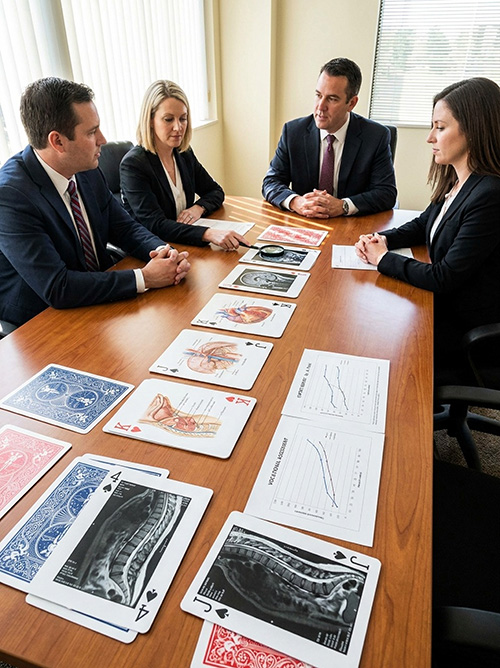
Most garden-variety personal injury cases can safely proceed to mediation following routine written discovery and a handful of non-expert depositions. Such mediations are commonly scheduled three to six months before trial, enough time for the parties to try and settle the case before they must engage in costly, time-consuming expert discovery and other pretrial work.
But when a case involves novel and/or complex medical issues, such routine non-expert discovery will not typically unearth key facts needed for maximally productive mediation. Alas, many of the most critical facts reside in the minds of medical and scientific experts.
For this reason, counsel handling these types of cases should consider ways to bring critical facts to light prior to mediation without having to engage in comprehensive expert discovery. The more key cards that are lying face-up on the table at mediation, the more likely a case is to settle.
Here are some creative ways parties can unearth and illuminate critical facts prior to mediation without investing in full-scale expert discovery.
A construct for expert discovery
Like most human beings, lawyers tend to be creatures of habit. In the civil litigation arena, they may be strongly inclined to rigidly adhere to the order of operation and timing of discovery as laid out in the Code of Civil Procedure. Even in mass tort litigation, where detailed case management orders altering statutory deadlines are often the order of the day, deviations tend to be broad, such as elongating the deadlines for all expert designations, counter designations and depositions.
While most cases involving novel and/or complex medical issues do not require comprehensive case management orders, it can be useful to devise a limited case management plan that deviates from the requirements of the code. Such a plan can pave the way for disclosure of key facts that better enable the parties to negotiate a settlement.
Pre-mediation disclosure
A simple way to facilitate pre-mediation disclosure of key medical and scientific facts, as well as opinions, is to designate and depose a select few experts well before the CCP deadlines. Imagine, for example, parties in a case involving hotly disputed medical causation. They recognize that causation is the linchpin of the case, but they want to get to mediation without going through the time and expense of comprehensive expert discovery. In such a case, counsel can agree to conduct early depositions of a predetermined number of experts in certain fields before mediation, deferring the balance of expert discovery until after mediation.
In theory, this could involve just two competing expert depositions before mediation. Although the process would involve some time and expense, truncating the expert discovery in this way would greatly help the parties understand the strengths and weaknesses of their case on a pivotal issue without tremendously increasing their pre-mediation costs.
A more limited way to facilitate pre-mediation disclosure of key medical and scientific facts and opinions before mediation might be for the parties to simply agree to exchange reports by a few select experts without conducting depositions of the experts. This would be akin to slotting mediation in between the disclosure of expert reports and expert depositions, albeit in a piecemeal fashion. It is a more surgical approach that can offer the much of the benefit of completing select expert depositions without the time and expense of depositions.
Even if parties are reluctant to share expert reports in advance of mediation, they can agree to share those reports confidentially with the mediator. This would not reduce the cost of having the experts prepare reports, but if both parties produce reports that reasonably detail the experts' opinions and the bases for their opinions, the reports will provide the mediator valuable information about the strengths and weaknesses of both sides' case, enabling him or her to discuss those strengths and weaknesses with each side to the extent permitted by the other side.
Such an approach should serve the parties far better than when an attorney simply shows up to mediation and advises the mediator in private that the attorney has retained an expert to address X issue and he or she is prepared to testify that such-and-such is true or false.
The benefits, in practice
The merit of these approaches becomes apparent when we consider a dispute involving the nature and extent of a plaintiff's injuries, and by extension, the nature and extent of his or her future care needs. When attorneys represent parties who have suffered serious residual injuries, they almost always need to retain a life care planner who can detail the plaintiff's future care needs and the costs thereof.
Deposing competing life care planners prior to mediation will probably not be especially valuable, but it can be of great benefit if the plaintiff is able to produce a detailed life care plan prior to mediation. Such a plan should be based on meaningful interaction between the life care planner and the plaintiff's treating physicians and/or retained medical experts. When it contains this level of information, the plan can make it much easier for the parties to hash out their positions during mediation, as opposed to a truncated life care plan based merely on the life care planner's review of the plaintiff's medical records.
Deposing treating physicians
Deposing treating physicians may not be particularly revelatory; the physicians often merely reiterate the plaintiff's subject complaints and the medical examination findings, diagnoses, and treatment plan. However, when cases involve novel or complex medical issues, treating physicians may end up wading into a few controversial issues, such as medical causation. In such instances, both sides should seriously consider the pros and cons of deposing the treating physician in advance of mediation.
In one memorable case, hepatologists at a highly respected university research hospital treated a liver transplant patient. The plaintiff's medical records revealed de facto causation opinions of the treating physicians: They believed that consumption of the defendant's product caused the plaintiff's liver to fail. Without much scientific evidence available in the medical literature, defense counsel chose to depose the treating physicians to learn the basis for their opinions. Those depositions yielded critical information with a significant bearing on settlement of the case.
In another case, a defendant driver admittedly caused an auto accident that injured the plaintiff, whose injuries were greatly exacerbated by the conduct of a health care provider. Both sides saw the wisdom of deposing the treating physicians to understand the potential negligence of the original health care provider and to get a better read on the nature and extent of the plaintiff's ultimate injuries and damages. Those depositions ultimately supported an eight-figure settlement of the case at mediation.
Pre-mediation motions
Cases involving highly debatable scientific issues such as medical causation often lend themselves to judicial intervention via motions for summary judgment, summary adjudication, or in limine. While attorneys often wish to forego the considerable time and expense of preparing such motions prior to mediation, filing them early almost invariably increases the probability of success at mediation. When a party merely mentions an intent to file a dispositive motion at mediation, there is little chance that the needle will move; if the motion has already been filed, the dynamic shifts significantly. This is especially true in complex medical cases where the scientific issues can be esoteric.
Consider a case involving a plaintiff who underwent a knee replacement procedure following an auto accident. Both sides realized that the pivotal issue in the case was whether the implant in question caused the plaintiff to contract a serious autoimmune disease. They agreed to make an unusual joint request to the court for a hearing on a motion in limine to exclude evidence that the implant caused the autoimmune disease. Because the parties made it clear that they would go to mediation before the motion was to be heard, the court granted their request and set a briefing schedule and hearing date for the motion several months prior to trial. After the parties took a few agreed upon expert depositions, they filed their briefs on the motion. They then proceeded to mediation and were able to resolve the matter-largely because their motion papers enlightened both sides about the strengths and weaknesses of their evidence on the pivotal issue in the case.
Conclusion
When complex medical or scientific issues are central to a case, counsel should consider devising and using strategies that will flesh out key evidence in advance of mediation. This may require a little forethought, but the payoff could be significant.
Although many strategies work within the construct of the Code of Civil Procedure, others may fall outside the statutory box. Either way, getting out in front of critical issues in these cases, whether by conducting discovery or by motion practice, helps lay key cards on the table, increasing the chances of successful mediation.
Submit your own column for publication to Diana Bosetti
For reprint rights or to order a copy of your photo:
Email
Jeremy_Ellis@dailyjournal.com
for prices.
Direct dial: 213-229-5424
Send a letter to the editor:
Email: letters@dailyjournal.com