


Ethics/Professional Responsibility
May 26, 2026
Don't sign blind: How Campos redefines judicial responsibility
Generative AI has shattered the legal system's long-standing trust in cited authority, and the Campos decision makes clear that judges as well as lawyers now share responsibility for verifying that the law they rely on is real.


Metro Justice Building
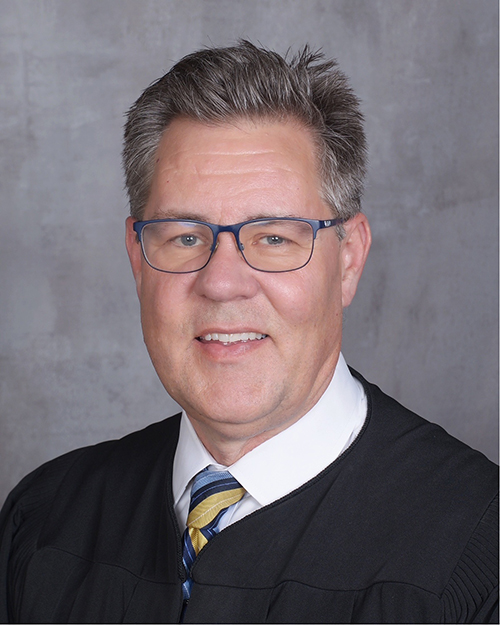
Bernard C. Barmann Jr.
Supervising Judge
Unlimited Civil, Civil Writs

For decades, trial courts operated on a simple assumption: when lawyers cite cases and statutes, those authorities actually exist. Generative AI has blown that assumption apart. Polished briefs and proposed orders can now contain fabricated cases, phantom quotations, and misleading summaries that look entirely legitimate.
Courts nationwide are confronting hallucinated citations filed by lawyers and self‑represented litigants who failed to verify AI‑generated work. As of May 11, 2026, researcher Damein Charlotin's AI Hallucination Cases database had already identified 1,432 such incidents worldwide--988 in the United States alone. The reported numbers on the database are growing each day.
While most published opinions have focused on attorney misconduct, a recent California Court of Appeal decision sends a message directly to the trial bench: judges, too, bear responsibility for catching fake authorities. In In re the Domestic Partnership of Torres Campos and Munoz (2026) 118 Cal.App.5th 1112, 342 Cal. Rptr. 3d 227 (Campos), the court made the point unmistakably.
Campos is a turning point. It signals that the days of trusting citations at face value are over. Judges who sign orders without personally verifying authorities now face real institutional, reputational, and appellate risk.
The Campos case
The underlying dispute was unremarkable--a fight over custody and visitation of a dog after the dissolution of a domestic partnership. What followed was anything but. One attorney cited nonexistent authorities generated by AI. Opposing counsel later incorporated the same fabricated citations into a proposed order. The trial court signed the order, unknowingly adopting fake law into its ruling.
On appeal, the court affirmed on forfeiture grounds because appellant's own counsel had drafted and submitted the very order containing the false citations. But the opinion did not mince words about the systemic danger. It emphasized how easily fabricated authorities can seep into the judicial system when lawyers and judges fail to independently verify what they are signing. It imposed $5,000 in sanctions, referred counsel to the State Bar, and issued a clear warning to the judiciary: signing unverified proposed orders jeopardizes the integrity of the court itself.
"[T]he judiciary cannot function properly unless judges and lawyers confirm the authenticity of cited authorities and review them to evaluate their holdings and reasoning."
(Campos at 1117-1118 [italics added].)
That language should get every trial judge's attention.
The Campos court explained that it published its opinion "to emphasize that courts and attorneys alike have a responsibility to protect the legal system against distortion by fabricated law, particularly in this new era of hallucinated citations generated by artificial intelligence (AI) tools." (Id. at 1117 [italics added].)
Why Campos changes everything
Before AI, fabricated cases were virtually unheard of. Lawyers occasionally mischaracterized holdings, but they did not invent entire authorities from nothing. The profession could rely on shared ethical obligations and the deterrent effect of bar discipline. AI has changed that. Now, any brief or proposed order can conceal fictional cases or quotes that look real. Courts can no longer rely on trust or tradition. The threat is systemic.
The trial bench is particularly vulnerable. Judges do not have the bandwidth to pull every case cited in every brief. They never did. But Campos makes clear that the risk of signing an order containing authorities the judge has not personally verified is no longer theoretical. It is a present, documented danger.
Practical implications
No judge can, or should, exhaustively research every citation that appears in a filing. But some practices must change.
Judges may need to:
· Shorten orders and avoid adopting string cites prepared by counsel.
· Require electronic copies of cited authorities with all proposed orders.
· Independently verify cases central to dispositive rulings.
· Be cautious of any proposed order suspected to be AI‑generated or AI‑assisted.
A fake citation hidden in a signed order is not just counsel's problem. Once adopted, it becomes the court's problem--and the court's embarrassment.
Conclusion
Artificial intelligence has ended the era in which courts could safely assume that professionally submitted citations were real. The legal system is now entering a verification era. Judges, lawyers, and court staff must adapt to this new reality.
The views expressed in this article are those of the author alone and not necessarily those of the Kern County Superior Court or the judiciary at large.
Submit your own column for publication to Diana Bosetti
For reprint rights or to order a copy of your photo:
Email
Jeremy_Ellis@dailyjournal.com
for prices.
Direct dial: 213-229-5424
Send a letter to the editor:
Email: letters@dailyjournal.com