


Judges and Judiciary
Mar. 25, 2026
Judge rejects ballot name challenge in OC judge race
A San Bernardino judge denied a writ seeking to force a judicial candidate to use her full legal name, finding no evidence of an improper name change or voter confusion.


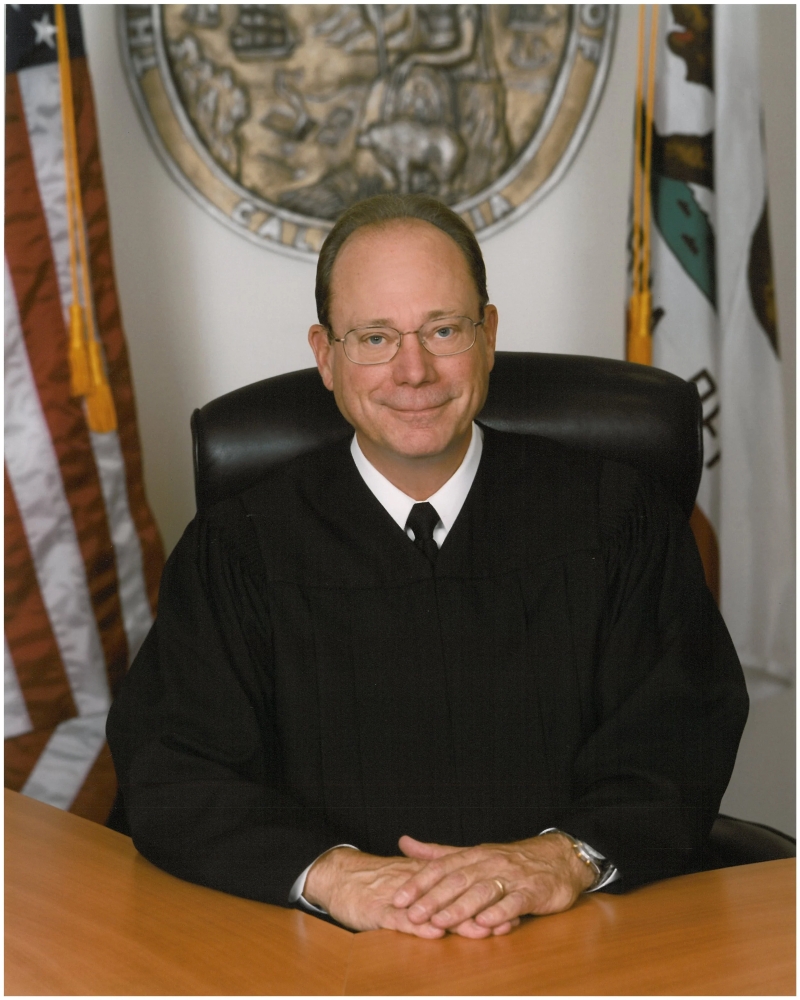
A San Bernardino County Superior Court judge on Monday denied all four claims in a writ petition seeking to compel the Orange County Registrar of Voters to change a sitting judge's ballot name and revise her candidate statement ahead of the June 2 election, rejecting a challenge under the California Elections Code governing ballot designations.
The ruling resolves a closely watched pre-election dispute over ballot names and candidate statements and rejects an effort to require a judicial candidate to use her full legal name.
Petitioner Charles E. Pell, who is running for the same Orange County Superior Court seat, argued that Ami Sheth Sagel violated the Elections Code by appearing on the ballot as Ami S. Sagel, which he characterized as an impermissible name change within one year of the election absent marriage or court order. He also contended the name was false or misleading and that her candidate statement contained actionable misstatements. Pell v. Page, 30-2026-01553798-CU-WM-CJC (O.C. Super. Ct., filed Mar. 11, 2026).
Attorney Jennifer Keller, representing Sagel, called the challenge specious and improperly motivated.
"The judge in San Bernardino made the correct decision -- frankly, the only decision a reasonable person could make," Keller told the Daily Journal. "It is deeply troubling to see a competent, decent and fair judge challenged apparently because the challenger thinks she is vulnerable due to a foreign-sounding maiden name and therefore tries to force her to use it on the ballot."
Pell, a former federal prosecutor, said this decision by Judge Schneider deprives nearly two million Orange County voters of vital information in an important judicial election.
"I'm disappointed the trial court failed to follow the statute's plain language and not only stripped me of the factually accurate, neutral ballot designation "Federal Criminal Prosecutor," but imposed the most drastic--and legally unsupportable--result: no ballot designation at all. I have never seen a ruling go that far, particularly when the Registrar had already approved that ballot designation," Pell said in an email. "Unfortunately, my opponent and her counsel chose personal attacks over the statute's text, because they could not defend the ruling under the plain language of the statute. This case is a stark reminder that there should be more judicial elections, not fewer. Judicial elections matter. Voters deserve real choices and more accurate information, not less, and Judge Schneider's decision denies voters both."
In 2021, Pell settled a lawsuit alleging he faced retaliation after reporting racially discriminatory conduct and language within the U.S. attorney's office for the Central District of California. Pell, who is white, claimed he was subjected to discipline and negative performance reviews after speaking out about bias against a Hispanic female prosecutor and other employees of color. Under the settlement, the Justice Department agreed to restore his performance rating, remove a reprimand and negative statements from his record, and cover his legal costs, though no monetary damages were awarded. Former U.S. Attorney Nicola Hanna disputed the claims, saying prior investigations found no discrimination or retaliation and characterizing the case as a "manufactured claim."
In the election challenge, San Bernardino County Judge Wilfred J. Schneider Jr. rejected all his claims.
On the name-change argument, Schneider found Pell had submitted evidence -- including court rosters, a Judicial Council judges list and a registrar's letter -- showing Sagel used the professional name Ami Sheth Sagel but failed to meet the statute's threshold requirement.
"Petitioner Pell did not present any evidence that Real Party changed her name within the past year, which is a requirement of the statute in question," Schneider wrote.
Sagel declared she was born Ami Harshad Sheth, married Brett Sagel in 2013 and has since used three names interchangeably in professional and personal settings: Ami Sheth Sagel, Ami S. Sagel and Ami Sagel. Schneider found the declaration clear and convincing. Sagel submitted supporting records, including credit cards, tax documents, court filings and recommendation letters predating her judicial appointment, reflecting the shorter versions of her name.
Pell said in an email that he entered the race believing he had the qualifications the job demands and that voters, not politicians, should decide who holds the seat. He questioned whether Judge Sheth Sagel met the standard Orange County voters deserve, noting the judge had never faced an election and had already drawn complaints about her conduct from attorneys and the public, including a recall effort.
"I believed voters deserved the chance to make that decision for themselves based on her record as a judge," he said.
He went on to say the allegations against him had no bearing on the legal questions before the court and were a deliberate distraction -- injected, he argued, because the statute didn't support the other side's position.
"I was deeply hurt by the effort to portray me in that way, because it is completely contrary to my record," Pell wrote. "While serving in the U.S. Attorney's Office, I initiated and prevailed in litigation to protect minority women AUSAs from unfair treatment, and as a federal prosecutor I fought for victims in underserved communities, including Latino victims in Orange County who were targeted in an ICE-impersonation fraud case. That record speaks for itself."
The court also rejected Pell's claim that Ami S. Sagel would mislead voters. Pell submitted four declarations from Orange County voters stating they would be confused by the abbreviated name, but Schneider found them unpersuasive because they used identical language "as if working from a script or template," undermining their credibility. He also discounted election consultant Fernando Chacon's opinion, noting Chacon provided no evidence of credentials or qualifications.
"As we pointed out in our brief, Judge Sagel uses Ami Sagel, Ami S. Sagel and Ami Sheth Sagel interchangeably, much as I use Jennifer Keller, Jennifer L. Keller and Jennifer Lynn Keller interchangeably," Keller said. "There is just one Ami Sagel sitting on the Superior Court bench and therefore no danger voters will be confused. The statutes and case law are clear that this is not a name change or attempt to mislead. Pretending otherwise is simply wrong."
Keller and her team also submitted a declaration from one of Pell's former colleagues. Anne Gannon, a former federal prosecutor, recounted a 2016 conversation in which Pell offered unsolicited advice on winning a judicial election, including targeting a sitting judge with "a fucked up name," which Gannon said she understood to mean a name that "did not sound to be of European origin."
Pell appeared to identify Judge Maame Frimpong, appointed to the Los Angeles County Superior Court in 2015, as a potential target. When Gannon pushed back -- citing Frimpong's credentials -- Pell did not retreat and later told Gannon her own name, Anne Gannon, was "a good name for a ballot."
Pell denied Gannon's claims.
"That accusation is flatly false," he said. "I denied it under oath in a declaration we submitted to the court before the hearing. As set out there, Ms. Gannon and I were not friends, did not have the kind of relationship in which such a conversation would have occurred, and she was rarely around the office in any event."
Schneider opined that the names Ami S. Sagel and Ami Sheth Sagel are objectively similar, with "Ami" itself being an uncommon spelling. Despite the petitioner's declarations to the contrary, Schneider found it difficult to see how voters could be confused by the omission of "Sheth," given the inherent distinctiveness of the name Ami Sagel.
The court also denied Pell's challenge to Sagel's reference in her candidate statement to an FBI recognition. Pell argued the accolade was a certificate of recognition, not a formal award, making the term "Award" false or misleading.
Schneider rejected the argument as unsupported.
"Pell does not explain the significance or importance of distinguishing a federal law enforcement accolade as a certificate, plaque, or award," the ruling states. Citing Allen v. Smith (2002) 94 Cal.App.4th 1270, 1281, Schneider wrote that a point "merely asserted without any authority for the proposition is deemed without foundation and requires no discussion."
The case, initially filed in Orange County Superior Court, was transferred to San Bernardino County because Sagel is a sitting Orange County judge.
"Judge Ami S. Sagel is widely regarded by the bar here in Orange County as an outstanding jurist who is hard-working, knowledgeable, and fair," Keller wrote in an email. "It is appalling that Mr. Pell apparently decided to go after her based on nothing more than his perception that her birth name -- which is Indian -- would make her vulnerable to an election challenge. To which I can only say -- for shame."
Douglas Saunders Sr.
douglas_saunders@dailyjournal.com
For reprint rights or to order a copy of your photo:
Email
Jeremy_Ellis@dailyjournal.com
for prices.
Direct dial: 213-229-5424
Send a letter to the editor:
Email: letters@dailyjournal.com