


Mar. 20, 2026
DOJ proposed ethics rule tests reach of state bar oversight nationwide
A proposed DOJ rule would pause state bar investigations of federal lawyers while the department reviews complaints first, reviving a decades-old fight over ethics enforcement, federal power and accountability questions.


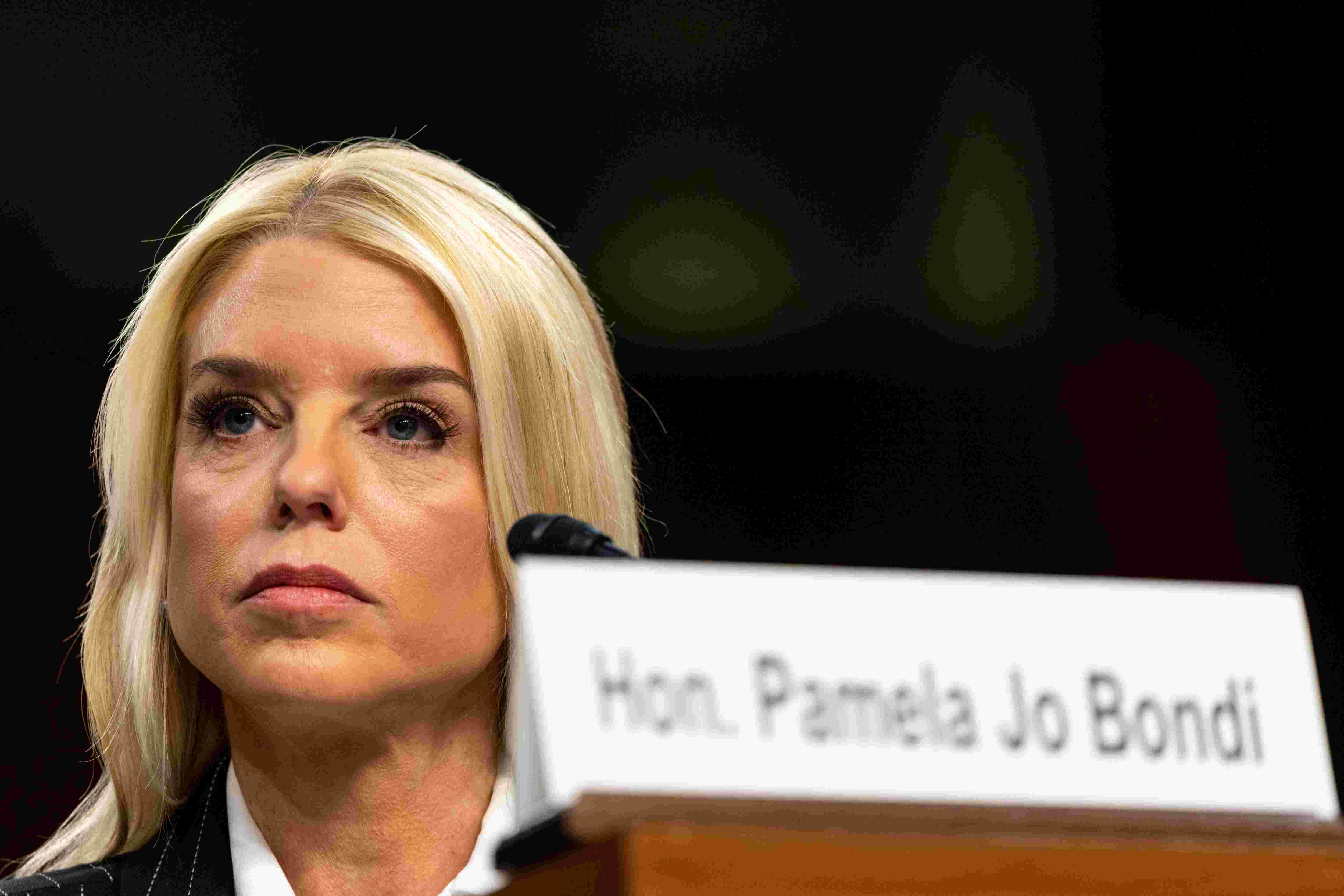
U.S. Attorney General Pam Bondi has revived a long-running fight over who gets to police the ethics of federal lawyers.
In a proposed rule published March 5 in the Federal Register, the U.S. Department of Justice said it wants the right to review state bar complaints and other allegations against current and former DOJ attorneys "in the first instance," before a state disciplinary authority can require that lawyer to cooperate with a local investigation.
The department would ask state bars to suspend parallel investigations while the DOJ reviews the matter internally, and the proposal says the department would take "appropriate action" if a bar refuses. Comments are due April 6.
The proposal would amend 28 C.F.R. part 77, the DOJ regulation implementing 28 U.S.C. Section 530B, the McDade-Murtha Amendment. That statute says government attorneys are subject to state laws and rules "to the same extent and in the same manner" as other lawyers in the state where they practice and directs the attorney general to make DOJ rules to ensure compliance.
Bondi's department frames the proposal as a response to what it calls the "weaponization" of bar complaints and the risk that politically charged grievances could chill zealous advocacy by federal lawyers. In the notice, the DOJ says some state bar authorities recently have opened investigations into department attorneys without coordinating with the Office of Professional Responsibility, and that those proceedings can intrude on the attorney general's authority to supervise DOJ litigation and protect confidential information.
California legal experts interviewed by the Daily Journal said the rule would do far more than create order. They said it could become a delay mechanism, shift oversight from independent state regulators to an opaque internal process and rekindle a question Congress meant to settle when it enacted McDade in 1998.
Steven Zipperstein, who was a federal prosecutor in Los Angeles and counselor to former Attorney General Janet Reno, said the underlying issue has roots in disputes over the "no-contact" rule, which limits prosecutors' communications with represented persons.
"The precise issue of which I am generally aware -- and that first arose decades ago -- involves the tension between the ability of federal prosecutors to contact people during criminal investigations ... and whether doing so violates the ethical rules against engaging in such contact with people who are represented by counsel," Zipperstein said in an email Thursday.
He said administrations of both parties wrestled with the issue. Under Attorney General Richard Thornburgh, the DOJ took the position in 1989 that federal prosecutors were not bound by state no-contact rules when engaged in authorized law enforcement activity. The DOJ proposed regulations during the early 1990s aimed at shielding federal prosecutors from state bar investigations over the no-contact rule.
Congress responded with the McDade-Murtha Amendment.
The department's current proposal, however, is broader than those earlier no-contact disputes, and the DOJ says McDade did not cede to state bars the authority to ensure federal lawyers followed state ethics rules.
Zipperstein said his only comment on the current proposal is, "The integrity of the federal criminal justice system depends on federal prosecutors acting with the highest level of ethics and professionalism."
The proposal aims to cover current and former department lawyers, as well as independent counsel. It says that when a bar complaint or allegation concerns conduct undertaken as part of a lawyer's duties for the department, the attorney general or her designee would decide whether to exercise the department's right of first review. The notice says the Office of Professional Responsibility (OPR), though not named in the proposed text, would be the designee. After the OPR concludes an investigation and the Professional Misconduct Review Unit renders a decision, the DOJ would notify the relevant state bar of the completion and, as appropriate, the result.
That matters because the OPR already has a central role in policing DOJ lawyers. The office was established in 1975 and investigates allegations of professional misconduct relating to DOJ attorneys' exercise of their authority to investigate, litigate or provide legal advice. When authorized by the review unit, the OPR already refers findings on professional misconduct to the appropriate state disciplinary authorities.
The DOJ says the proposed rule would "better reflect" an existing practice in which many state bars do wait for the OPR to finish before deciding whether to act, partly because the OPR has access to evidence and privileges the bars do not. The department also says the OPR has decades of experience and can apply state ethics rules consistently across jurisdictions.
Randall A. Miller, founding partner of Miller Waxler LLP and a specialist in defending attorneys and judges throughout California, said in a phone interview Thursday that there is some force to DOJ's argument that McDade may not have fully answered the enforcement question. But he said that does not necessarily mean the attorney general can override state disciplinary authority.
"I do agree that's the current position being taken by DOJ as to the breadth of McDade," Miller said. "There's certainly an argument -- call it semantics or not -- whether McDade only covered half of the inquiry. There's regulation and enforcement, and it's not really clear that the enforcement right is superseded by the DOJ."
Miller said the attorney general plainly has rulemaking authority under Section 530B to ensure compliance with state and federal ethics rules, but he questioned whether that power extends to displacing the states or putting them on a secondary footing.
"I just don't think the A.G. has the power to override enforcement recommendations," he said. "That decision is part of the intellectual inquiry here."
In Miller's view, the strongest objection is structural and historical: Regulation of lawyers has long been delegated to the states. He said that tradition creates an obstacle for the DOJ if the department tries to transform a practice of temporary deference into a legal command.
"The DOJ is trying to cut between the lines on that a little bit," Miller said. "Investigation of lawyers currently employed in the DOJ gives the DOJ too much power to delay or stall a state disciplinary authority. That's going to be suspect."
He said there may be room for a narrower cooperative arrangement, especially where privileged or classified information is involved. A state bar, he said, could allow the DOJ to identify what is confidential, protected or secretive, and stand down briefly while that is sorted out. But, he added, at the end of the day, the state bar has the authority to proceed under current general practice.
If the rule is adopted and a bar refuses to wait, Miller said the likely next step would be federal litigation.
"A bar takes action; the DOJ could jump into federal court," seeking a temporary restraining order or injunction, he said. "And frankly, that would tee up all the issues we're talking about."
Laurie L. Levenson, a professor at Loyola Law School and founding director of the Loyola Center for Ethical Advocacy, took a more skeptical view. "I don't think the problem is the rank-and-file U.S. attorneys," said Levenson, a former assistant U.S. attorney in Los Angeles. "I think the problem is when you have an A.G. or U.S. attorney who is violating court orders and thinking they can do so with impunity. The only recourse is to report."
Levenson said the proposed rule should be read in the context of a broader, decades-long DOJ effort to carve out special treatment for its lawyers. In her view, McDade was meant to stop exactly that.
"The McDade Amendment states unequivocally that federal government lawyers are subject to the same standards and the same process that all other lawyers are," she said.
The DOJ disputes that reading. In the proposed notice, the department argues that McDade requires DOJ lawyers to comply with the same substantive state ethics rules as everyone else but does not require that they be subject to the same enforcement procedures. The department says Congress did not expressly give the states enforcement authority over federal lawyers, and that Section 530B(b) gives the attorney general broad authority to create enforcement mechanisms to assure compliance.
Levenson said that the distinction between substantive rules and enforcement is too convenient.
"I don't think it's accurate that McDade language reflects the most immediate issue before it," she said. "The broader intent -- all the same standard -- can only happen if all are subjected to the same process."
She said the practical problem is that the proposed rule sets no clear timeline for DOJ review before findings are shared with the state bars. A system with no enforceable deadline, she said, could operate as a "black hole," effectively shielding federal lawyers from outside scrutiny.
Miller raised the same concern. "I don't think there's a time limit -- that's the problem in practice," he said. If the DOJ can hold matters indefinitely, he said, "That would probably be game playing."
Evan A. Jenness, a criminal defense attorney, former federal public defender and current member of the Central District of California Attorney Disciplinary Committee, rejected the DOJ's claim that the change is needed to combat weaponized complaints against federal attorneys.
"No, absolutely not weaponizing," Jenness said. She said judges already have been criticizing DOJ conduct in high-profile matters and that outside bar review serves an essential checking function that is "fundamental to our system of governance and justice."
Jenness said nothing prevents the DOJ from conducting internal reviews of complaints against its attorneys. The problem, she said, is the leap from internal review to exclusivity. "There is no reason to undermine the well-established system of state bar attorney oversight," she said.
She also questioned the DOJ's assertion that state bars routinely defer to the department's investigatory process. In her experience, bars may sometimes wait when another proceeding is more advanced or more consequential, but that is a discretionary case-management choice, not a surrender of authority.
The inclusion of former DOJ lawyers in the rule may be one of the proposal's most legally vulnerable features. The DOJ says former attorneys may choose to cooperate with the OPR if it wants first review, but if they refuse, the office may terminate its review, and the matter can revert to state authorities.
Miller said that question is "a little dicey." Attorneys do not gain immunity from state bar investigation or discipline simply because they once worked for the DOJ, he noted. At the same time, investigations into conduct undertaken while serving the government can raise privilege and confidentiality problems for current and former lawyers, because the privilege belongs to the government and the lawyer may be unable to disclose internal information in self-defense.
Levenson said extending the rule to former attorneys makes the overreach more obvious. "A state bar would give you an outside evaluation," she said. "If an opaque and self-serving system for DOJ attorneys is the only standard to which federal government lawyers are held, they will not be held accountable."
John Hanusz, a former federal public defender in Los Angeles, commented in an email Thursday, "The timing of this proposal is telling. As courts around the country are increasing calling the representations made by government attorneys into question, the DOJ suddenly claims that it alone should be able to address claims of misconduct in the first instance, thus neutering the oversight to which every single practicing lawyer is subject. The notion that DOJ can provide the solution - when it itself is the problem - is absurd."
For now, the proposal remains only that: a proposed rule. The DOJ says it is exempt from the usual notice-and-comment requirements because it relates to agency management, personnel, organization, procedure or practice, though the department nevertheless is taking public comment.
If finalized, though, the definitive answer will likely come from the courts. The proposed text expressly says the department will act if a bar refuses to stand down. That sets up a test of the attorney general's authority under McDade, the continued primacy of state bar discipline, and the line between protecting federal functions and insulating federal lawyers.
What began decades ago as a fight over the no-contact rule may now become a much broader contest over who gets the first and possibly decisive word when DOJ lawyers are accused of misconduct.
Laurinda Keys
laurinda_keys@dailyjournal.com
For reprint rights or to order a copy of your photo:
Email
Jeremy_Ellis@dailyjournal.com
for prices.
Direct dial: 213-229-5424
Send a letter to the editor:
Email: letters@dailyjournal.com