


Judges and Judiciary,
Civil Procedure
Mar. 20, 2026
Is it time to consider making court fully remote?
Courts already function largely online; completing the transition to a near-fully remote system would deliver meaningful cost savings while improving access, efficiency and convenience for the public.



Julian Alwill
Partner, Mediator and Arbitrator
Rothschild & Alwill, APC
Employment Law and Civil Litigation
Email: julian@ralegal.com
I am an older millennial. I did not grow up completely
online the way that Gen Z largely has and the way that Gen Alpha appears to be
doing even more. I remember dial-up and chat rooms. I did not get a cell phone
until college and I took notes in law school in a spiral notebook. When I
started practicing law in 2008, I had to make multiple copies of pleadings to
be mailed to the court, with a return envelope for a conformed copy to be
mailed back to me after the court stamped and received it. The rapid changes in
how law is practiced and how intertwined the internet has become in day-to-day
law has been a learning curve for me and has probably been even harder for
those who started before me.
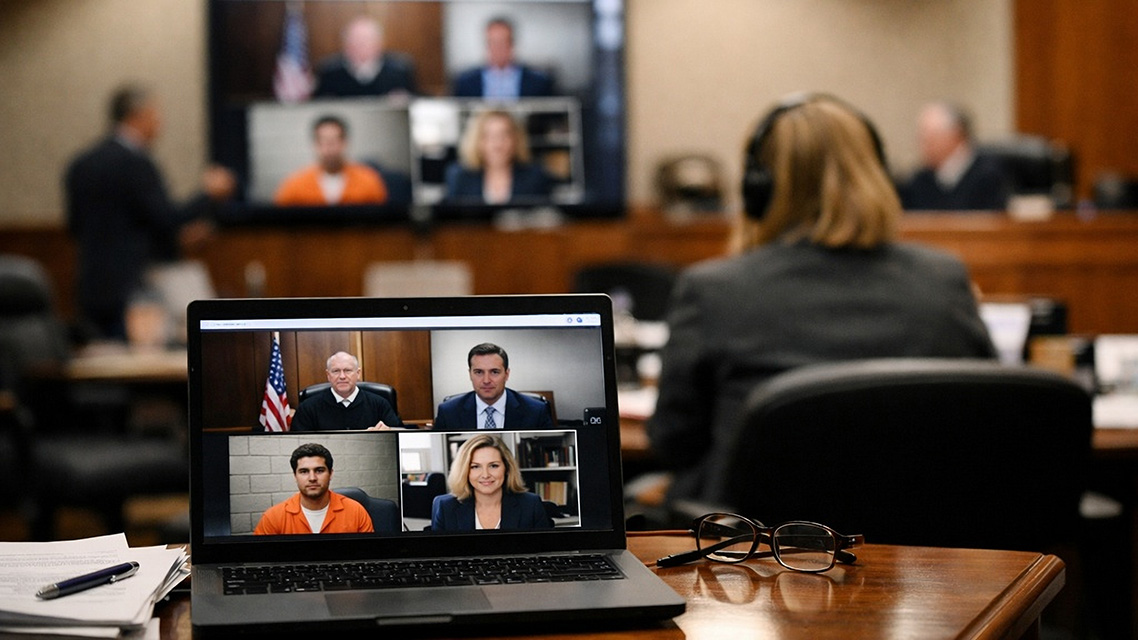
Then COVID came. Nearly all our law businesses went remote.
Meetings were all by phone and Zoom. Depositions took
place in front of laptops. Mediations happened online. Even the courts were
doing hearings and mandatory settlement conferences entirely remotely.
During COVID, I adjudicated a five-day remote arbitration
before a three-arbitrator panel entirely from my office. Witnesses appeared
remotely; the arbitrators appeared remotely; and all documents were shared on
screen or sent to the necessary individuals by email before the start of each
day's session. A couple of witnesses were financially hard-pressed so my firm
purchased them basic tablets that could be used for their live video
examinations and added a limited-period internet service to ensure smooth connectivity.
The few hundred dollars in costs for that were a fraction of what travel and
lodging would have cost for their appearances in court.
We all (or nearly all) got through it professionally. And
for many of us, we have only begrudgingly returned to the old way, while
maintaining as much of the post-COVID remote style of practice as we can get
away with.
The technology is here to conduct all court proceedings,
including trials, online. Students at all levels of academia--including graduate-level
courses--take important exams online in locations of their choosing with
software that keeps them on camera and ensures that they are not looking at
outside sources during tests. The same could be done with jurors.
Nearly all case filings are accomplished electronically
now. Court filings are already in the cloud and in secured servers. Most of the
legal and administrative work of courts is done nearly entirely on computer, electronically
or by phone. There would obviously be additional costs to expand this and
increase security, but those costs would be minimal relative to the savings of
not maintaining physical courthouses.
Substantial benefits would accompany a move to a
near-fully remote court system.
1. Increased access to justice
One of the strongest arguments for remote courts is
increased access to justice. Many Californians face barriers to attending court
in person, including transportation costs, work obligations, childcare
responsibilities and long travel distances--especially in rural counties. Remote
hearings conducted through secure video platforms allow individuals to
participate from their homes or workplaces, making it easier for people to
defend their rights without missing work or traveling long distances.
2. Cost efficiency
Maintaining large courthouse facilities requires
substantial public funding for building maintenance, security, utilities and
staff. By shifting more proceedings online, the state could reduce these
overhead expenses and allocate resources toward improving digital
infrastructure, expanding legal aid programs or reducing case backlogs.
Electronic filing systems already used by courts across California demonstrate
how technology can streamline administrative processes.
3. Efficiency and case management
Scheduling hearings through online platforms can reduce
delays caused by crowded court calendars, late arrivals or logistical issues.
Judges and attorneys can review documents electronically and hold shorter
procedural hearings without requiring everyone to travel to the courthouse.
This flexibility can help courts process cases more quickly and reduce
backlogs.
This is not to say that a move to remote courts would be
without issue or that certain matters would not still require a physical court
setting. The Confrontation Clause of the Sixth Amendment requires that, in
criminal prosecutions, a defendant has the right to be confronted by witnesses.
The Fifth and Fourteenth Amendments also require confrontation as part of due
process. While remote and video confrontation of such witnesses arguably could
satisfy these requirements, in matters involving the possible deprivation of
liberty, in-person trial may still be the just route. In certain civil matters,
parties may decide that they prefer to present their trial in person. There is
no reason this could not be an option for parties that want to pay for such
setup. Civil litigation is already expensive and if parties determine that the
value of conducting their trial in-person is worth the added expense of funding
a court location and paying the travel costs of necessary personnel, that can
be part of the budgeting calculation all lawyers already make.
There is value in the connectivity of in-person workspaces
(like court), in physically being around those deciding or assisting in one's
case, and in the potential persuasiveness of speaking directly to a judge or
jury a few feet away. As with nearly all things, however, humans are very apt
to adapt, and new skills and connections may and will arise through a remote
court system.
Change can be hard; but efficiency compels us to progress.
During COVID, some counties such as Alameda conducted a
number of jury trials remotely with positive results. Various
arbitration groups, including AAA, already default to arbitrations being
conducted entirely remotely unless both parties stipulate otherwise.
The efficacy that has been demonstrated since COVID in the
legal community's ability to adjust to remote practice requires us to finally
start to ask: Is it time to consider making court fully remote?
Submit your own column for publication to Diana Bosetti
For reprint rights or to order a copy of your photo:
Email
Jeremy_Ellis@dailyjournal.com
for prices.
Direct dial: 213-229-5424
Send a letter to the editor:
Email: letters@dailyjournal.com