


Mar. 17, 2026
9th Circuit judges rebuke their colleague over 'vulgar' dissent
Twenty-seven judges say the opinion's language "makes us sound like juveniles, not judges" in dispute over transgender access to Korean spa. Judge Lawrence VanDyke agreed but said the language was necessary because the court's majority opinion avoided what the case was about.


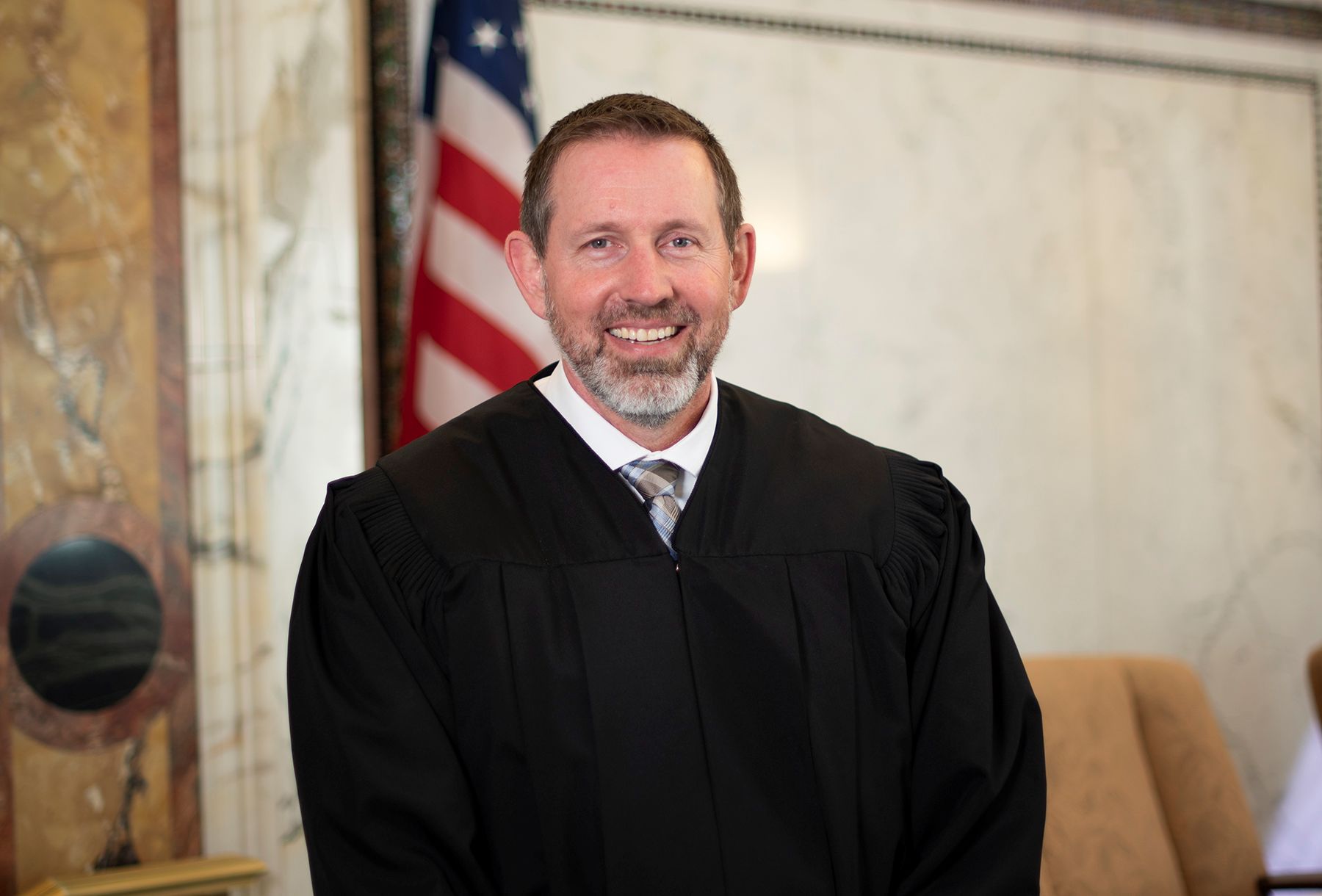
Twenty-seven judges on the U.S. Court of Appeals for the 9th U.S. Circuit Court of Appeals publicly rebuked Judge Lawrence VanDyke for a dissent that began with the sentence, "This is a case about swinging dicks," warning it "makes us sound like juveniles, not judges" and risks undermining public confidence in the judiciary.
The rebuke came in a Thursday statement accompanying an order denying rehearing en banc in a First Amendment challenge to Washington's anti-discrimination law. A Korean women's spa sued the Washington State Human Rights Commission after it was forced to change a policy excluding pre-operative transgender women from its all-nude communal facilities. Olympus Spa et al. v. Armstrong et al., 23-4031 (9th Cir. May 29, 2025)
Senior Judge M. Margaret McKeown, joined by 27 colleagues including Chief Judge Mary Murguia, wrote that the legal system is not a place for "vulgar barroom talk" or claims that fellow judges are "woke" or "complicit" in harming Americans. "That language makes us sound like juveniles, not judges, and it undermines public trust in the courts," they wrote.
"The lead dissent's use of such coarse language and invective may make for publicity or entertainment value, but it has no place in a judicial opinion," McKeown added. "Decorum and collegiality demand more."
In a Statement Respecting the Denial of Rehearing En Banc, Judge John B. Owens, joined by Judge Danielle J. Forrest, wrote: "Regarding the dissenting opinion of Judge VanDyke: We are better than this."
VanDyke acknowledged his phrase "shouldn't appear in a judicial opinion" but said the shock value was intentional. "The fact that so many on our court want to pretend that this case is about anything other than swinging dicks is the very reason the shocking language is necessary," he wrote, accusing the majority of avoiding "eye contact with the actual and horrific consequences of its erroneous opinion." He also criticized "woke regulators and complicit judges" for ignoring harms to women and girls.
VanDyke contrasted his colleagues' concern over wording with their handling of the spa's religious liberty claims.
"My distressed colleagues appear to have the fastidious sensibilities of a Victorian nun when it comes to mere unpleasant words in my opinion, yet exhibit the scruples of our dearly departed colleague Judge Reinhardt when it comes to the government trampling on religious liberties and exposing women and girls to male genitalia," VanDyke wrote. "That kind of selective outrage speaks for itself."
In a separate statement on the merits, McKeown, joined by six colleagues, said the dissent raised arguments the spa's lawyers never advanced.
"They are not subject to the deliberative process that ordinarily ferrets out specious legal arguments," McKeown wrote. "They are not held to the strictures of party presentation and may extend to arguments that were either forfeited or never discussed at all. And in the unfortunate case of the lead dissent, they may serve to air personal grievances entirely unbecoming of members of this court."
Kevin T. Snider, chief counsel at the Pacific Justice Institute representing Olympus Spa, said his office is preparing a petition for certiorari with the U.S. Supreme Court.
"The notion that public accommodation laws override the First Amendment interests of these Christian-immigrant-Korean business owners - as well as the associational rights of women and teenage girls in their intimate spaces - cannot go unchallenged," he said.
The dispute stems from the Washington State Human Rights Commission finding that the spa's policy -- admitting biological women and post-operative transgender women but excluding pre-operative transgender women -- violated the Washington Law Against Discrimination. After signing a pre-finding settlement agreement while reserving its constitutional claims, the spa sued.
A trial judge dismissed the spa's claim and, last May, a divided 9th Circuit panel upheld decision. McKeown wrote that the statute only incidentally burdened the spa's speech, survived rational-basis review, and that the spa did not qualify as an intimate or expressive association.
In the main dissent to the denial of en banc review, Judge Kenneth Lee provided a history of Korean spa culture that dates back hundreds of years in which men and women are in separate facilities, and everyone is nude - unlike modern spas where people are usually swaddled in robes. Lee also described the history of discrimination against Asian Americans in the United States and in Washington State. And he offered a retort to Owens, writing: "The women and girls of Washington state deserve better. Olympus Spa--an immigrant-founded business run by a Korean family--also deserves better."
In his dissent, VanDyke argued that exemptions for private clubs and religious institutions made the statute neither neutral nor generally applicable, triggering strict scrutiny. He cited Catholic Charities Bureau v. Wisconsin to show the statute unconstitutionally differentiates among religions. The court ruled in that case that Catholic Charities Bureau and its sub-entities were not exempt from unemployment taxation. The decision prioritized function over affiliation -- an organization's activities, not its ties to a religious body, determine exemption eligibility.
VanDyke already faced criticism for a YouTube video dissent in a Second Amendment case challenging California's ban on large-capacity magazines, in which he filmed himself handling several handguns to explain their mechanics. Duncan v. Bonta, 133 F.4th 852, 872 (9th Cir. 2025)
In a concurring opinion, Judge Marsha Berzon, joined by four colleagues, said the video was problematic because it relied on facts outside the record and allowed VanDyke to effectively serve as his own expert witness.
Berzon called the video "wildly improper" and said he was "egregiously" appointing himself an expert. VanDyke defended the video in his written dissent, saying it complied with court rules because it was supported by a written disposition, which he said made up most of his dissent.
In another case, VanDyke wrote a sarcastic solo dissent to a habeas petition accusing Senior Judge William A. Fletcher of inserting "binding dicta" and embarking on a "bizarre and gratuitous frolic."
The dispute centered on a 9th Circuit panel's decision to reverse course and deny relief to convicted murderer Keith Ford -- having previously granted his petition, over Judge Ryan D. Nelson's dissent, based on a Solano County prosecutor's rebuttal comments. VanDyke also challenged the majority's approach to state court deference under the Antiterrorism and Effective Death Penalty Act of 1996. Ford v. Peery, 2021 DJDAR 8508 (9th Cir., filed March 27, 2018)
Thursday's order in the spa case amends the panel's May 2025 opinion.
Douglas Saunders Sr.
douglas_saunders@dailyjournal.com
For reprint rights or to order a copy of your photo:
Email
Jeremy_Ellis@dailyjournal.com
for prices.
Direct dial: 213-229-5424
Send a letter to the editor:
Email: letters@dailyjournal.com