


Evidence
Mar. 13, 2026
When 'bad plaintiff' tactics blow up: The cautionary tale of character evidence
Argueta v. Worldwide Flight Services demonstrates how portraying a plaintiff as "bad" through character evidence can undermine a trial and lead courts to overturn verdicts


Leonid M. Zilberman
Partner
Wilson Turner Kosmo LLP
Phone: (619) 236-9600
Email: lzilberman@wilsonturnerkosmo.com
Lonny practices employment law, diversity, equity, and inclusion as well as mediation and alternative dispute resolution and provides anti-harassment and other employment-related training to California Employers.
A few weeks ago, after giving their opening statements in
downtown Los Angeles, the parties in Argueta v. Worldwide Flight Services,
Inc., decided to settle their case for almost $4 million. This was the
second trial of the case, because after a defense verdict the first time
around, plaintiff appealed and had the verdict overturned in a published
decision from December 2023 (Argueta v. Worldwide Flight Servs., Inc.,
97 Cal. App. 5th 822 (2023)). The case lasted almost nine years, and the real
learning lesson isn't about the second trial or the facts, but why the first
verdict was overturned. It is a story that defense lawyers should heed and not
repeat because California courts treat character evidence in FEHA harassment
cases as a potential minefield, and they police it through the Evidence Code's
character rules and section 352 balancing.
But let's begin at the beginning. Defense lawyers love a
good story about a "bad" plaintiff. After all, we know that credibility is the
prime battle in any employment case, right? Except the Argueta case is a
published reminder that if your story is built on character evidence untethered
to the elements of harassment, you are not trying a case, rather, you are setting
the groundwork for your own reversal on appeal.
The cautionary tale of admitting evidence that makes
plaintiff look bad
Eunices Argueta worked as an agent at a
freight operations company, and claimed her boss sexually harassed her. At
trial, the court admitted evidence of multiple complaints that other employees
made against Argueta, accusing her of retaliation, yelling, making threats and
other bad behavior and the employer won a defense verdict in her sexual
harassment case brought under FEHA. The win didn't last.
The Court of Appeal reversed and ordered a new trial
because the jury heard, in excruciating detail, multiple subordinates' written
complaints that the plaintiff was a bullying, rude, lazy, dishonest, power‑tripping
supervisor. While it played well at trial, not on appeal because this evidence
is what the court termed a "quintessential" example of unduly prejudicial
character evidence.
The written complaints had nothing to do with whether the accused
manager's touching, comments and physical intrusions were severe or pervasive
enough to alter the conditions of employment. They had everything to do with
painting Argueta as someone jurors would instinctively dislike. That is
precisely why the Court of Appeal held their admission was an abuse of
discretion under section 352 and why the defense verdict could not stand.
Motive is not a magic password for admissibility
Defense counsel persuaded the trial court that the
substance of the subordinates' complaints showed plaintiff's "motive" to
fabricate harassment to save her own job. That framing is familiar in
employment defense: "I'm not using this to show she's a bad person; I'm using
it to show why she lied about it."
Argueta exposes how thin that move can be when scrutinized. The
court acknowledged that motive to lie is a legitimate credibility issue under
Evidence Code section 780, but then did something important: it asked whether
the specific bad‑conduct details added anything
probative beyond the fact that serious complaints existed
and consequences might follow.
The answer was essentially "no." Argueta's motive to lie
(if any) flowed from being under investigation and facing termination, not from
whether she was actually rude, lazy
or cruel to subordinates. And the employer's decision to place her on leave over an incident
already signaled that her job was precarious; without needing to parade every
allegation of misconduct before the jury. In other words, the fact of
complaints and discipline might have had minimal probative value on her motive.
The substance--pages of narrative about her horrible personality--did
not.
For defense lawyers, that's a wake‑up call: labeling
something "motive" or "credibility" does not magically immunize it from Evidence
Section 352 analysis. A question you should ask yourself before insisting on
the gory details is the same one the court asked here: "Does this specific
evidence actually illuminate motive, or does it just make the plaintiff look
awful?" If it's mostly the latter, you're loading the reversible‑error
gun.
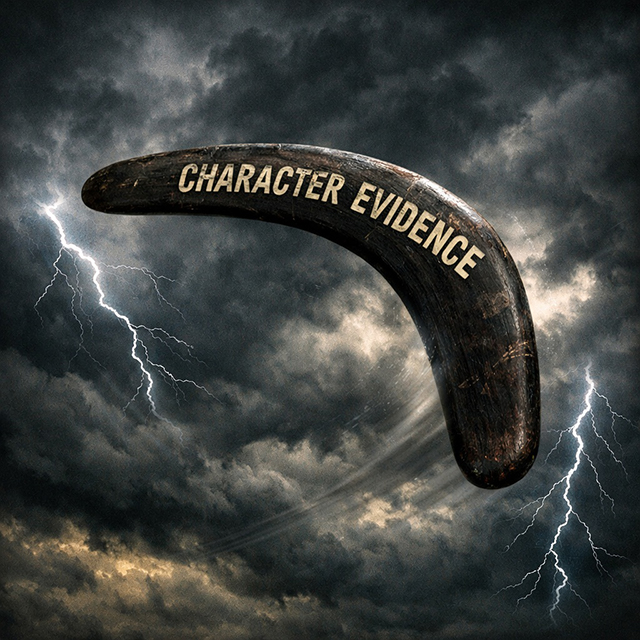
Character evidence: The boomerang you think is a spear
The opinion walks carefully through Evidence Code sections
352, 786, and 1101 and uses the defense closing to illustrate how character
evidence reliably metastasizes once it's in the record. The
trial judge tried to insulate the complaint letters with a limiting
instruction: The jury was told the complaints were admitted only for their
effect on plaintiff, not for their truth. But once the jury heard plaintiff was
a manipulative, rumor‑spreading, threatening bully who treated pregnant
workers like malingerers, the die was cast.
Defense counsel's closing then did what, in real life,
character evidence should do: it became a direct argument that the plaintiff
did what "people like her" do. Counsel told the jury that her alleged threat to
"come get" a co-worker if he complained was "consistent with who she is,"
pointing to complaints that she threatened subordinates. That
is textbook propensity reasoning, squarely barred by Evidence Code 1101 and
786. The Court of Appeal had little patience for it and emphasized that
evidence she "had done it before" was used to prove she did it again, is
exactly what the character rules prohibit.
The Court noted that the complaints portrayed her as
someone "not afraid to speak her mind," creating an improper inference that if
she were really harassed, she would have reported sooner, which is precisely
the reasoning the courts have rejected. Here lies the second wake‑up
call: character evidence is a boomerang. You throw it thinking you've struck
the plaintiff's credibility; the appellate court sees you've weaponized
propensity, and it comes back as reversible error.
Evidence Code section 352 is still key to overturning
employment trial verdicts
Argueta is, in many ways, a section 352 case masquerading as a
"character evidence" case. The opinion repeatedly returns to the imbalance
between minimal probative value and overwhelming prejudicial impact. Key
points worth building into your defense practice:
• "Quintessential prejudice." The court held the letters
"fit the quintessential definition of prejudice" because they uniquely invited
the jury to dislike plaintiff as a person--rude, dishonest, aggressive--while
having "very little effect on the issues."
• "Extremely careful analysis" required. When prior bad
acts are involved, substantial prejudice is inherent and the evidence should be
admitted, if at all, only when it has substantial probative
value.
• Limiting instructions are not a cure. They are
least effective when probative value is low and the
evidence goes to a central issue like credibility.
Just like when an umpire call is challenged in baseball, think
of section 352 as the slow-motion review booth behind every evidentiary call in
employment trials. You may be able to persuade a busy trial judge that you'll
use the evidence for some fine‑point credibility theory. But the Court of
Appeal, with a transcript and much more time, will ask a plainer question: "Did
this really help the jury decide the FEHA elements, or did it just make them
hate the plaintiff?" If the answer is the latter, you're likely going to get
reversed.
Practical lessons for defense counsel
For defense lawyers, Argueta provides a practical
checklist with four key takeaways:
1. Separate conduct from character:
Conduct that goes directly to an element of the claim (e.g.,
whether the plaintiff engaged in misconduct that legitimately prompted
discipline) may be relevant. Generalized descriptions of being
manipulative, rude, a bully or lazy are character evidence and highly dangerous
unless they directly tie into a material, disputed issue or element of a
specific cause of action.
2. Use a "two‑sentence" test:
Before you fight to admit a complaint or bad act, ask: "In
two sentences, how does this help the jury decide severe/pervasive, causation
or damages?" If you can't answer that cleanly without relying on "she's the
kind of person who...," you probably shouldn't put it in.
3. Offer the minimum necessary version:
If motive or context truly matter, consider stipulating or
seeking admission of a neutralized fact pattern: "Multiple subordinates lodged
written complaints; HR warned plaintiff further issues could lead to
discipline." You don't need five pages about tone of voice, cell‑phone
use and drama‑making to make that point.
4. Police your own closing argument:
Argueta shows how a defense verdict can be lost in the last 20
minutes of trial. Once you pepper your closing with phrases like "consistent
with who she is," you're no longer in credibility‑impeachment land;
you're in propensity land. Draft closing themes with an Evidence Code in hand,
not just a gut instinct about what will resonate with jurors.
The irony in Argueta is that defense counsel had
other ammunition that was far safer and more legally sound to present to the
jury. The opinion itself notes: (1) there were timing issues around when
plaintiff first formally complained, including consulting a lawyer while on
leave; (2) there were inconsistencies between what various witnesses said about
what she reported and when; and (3) there was evidence about the employer's
internal investigation and its own discipline of the alleged harasser.
All of these go to credibility and perception of
severity/pervasiveness without smearing the plaintiff's general character as
being a "bully" and "mean." They may not be as emotionally satisfying as
reading salacious complaints aloud, but they are less likely to trigger a reversal.
In sexual harassment litigation, the temptation to put the
plaintiff on trial is strong. But Argueta teaches that when you turn
your cross‑examination into a personality referendum, you are no longer
just trying your case but potentially creating appellate law. And as this
opinion shows, the law that emerges may not be the law you wanted.
Submit your own column for publication to Diana Bosetti
For reprint rights or to order a copy of your photo:
Email
Jeremy_Ellis@dailyjournal.com
for prices.
Direct dial: 213-229-5424
Send a letter to the editor:
Email: letters@dailyjournal.com