


Government
Mar. 4, 2026
A year after Trump's law firm orders, early critics say the courts held -- but the legal profession wobbled
Few firms spoke out earlier or more forcefully against President Trump's executive orders against law firms than San Francisco litigation boutique Keker, Van Nest & Peters.


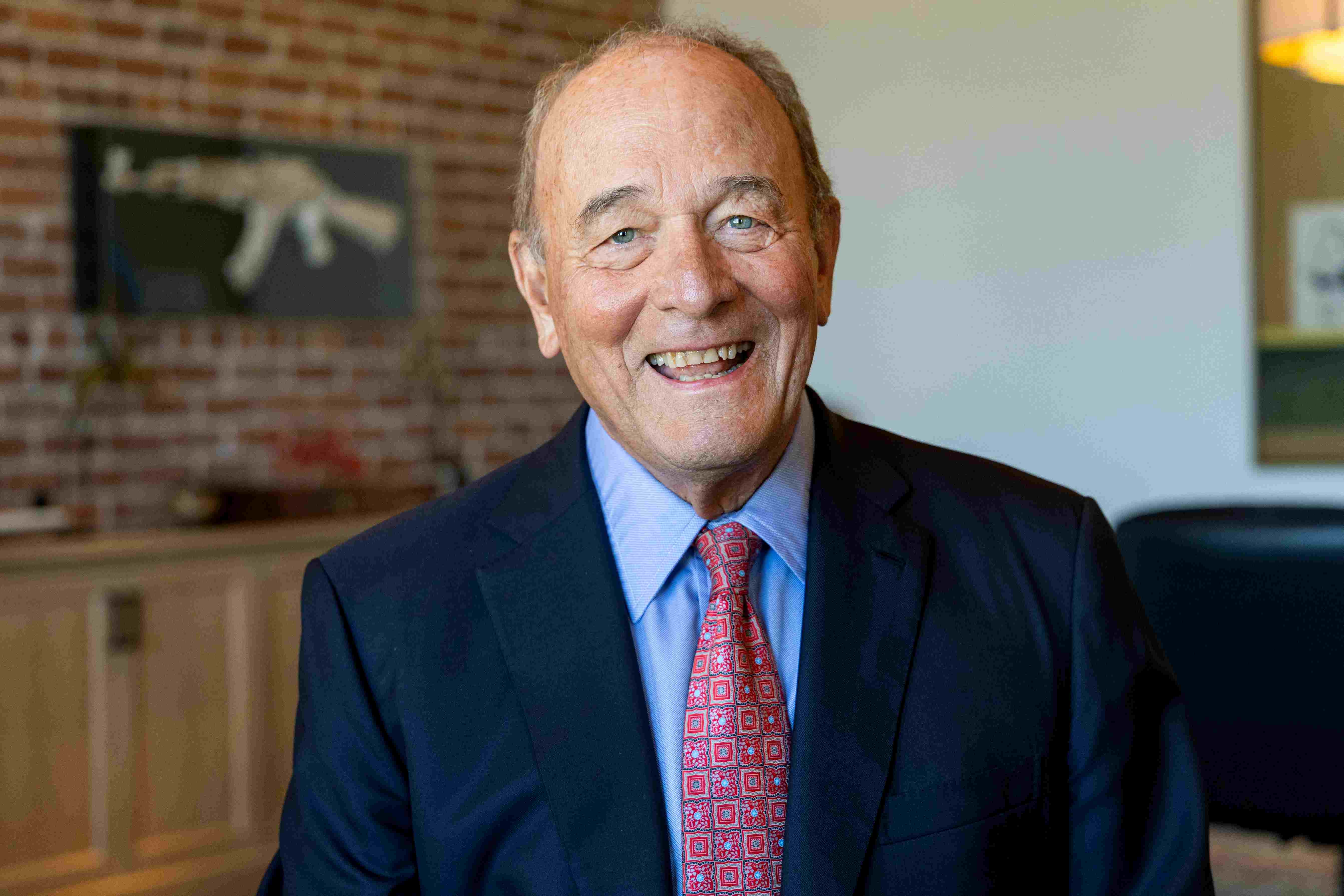
A year after President Donald Trump launched his unprecedented campaign against major law firms, the legal fight over those executive orders remains unsettled -- and so does the profession's reckoning with how it responded.
Few firms spoke out earlier or more forcefully than San Francisco litigation boutique Keker, Van Nest & Peters. In March 2025, name partners John W. Keker, Robert Van Nest and Elliot R. Peters published a New York Times op-ed urging law firms to stand up to what they called unconstitutional retaliation against lawyers representing Trump's political adversaries.
At the time, the administration had issued a series of executive orders targeting several firms, threatening to strip lawyers of security clearances, bar them from federal buildings and cut off government contracts for the firms and their clients. Judges across the ideological spectrum quickly blocked the orders.
The litigation now appears headed for further appellate review after a series of abrupt moves by the Justice Department. On Monday, the department told the U.S. Court of Appeals for the D.C. Circuit it planned to drop its appeals of four district court losses. Less than a day later, it reversed course again, saying the administration would press ahead after all.
For the lawyers who helped rally the early opposition, the legal outcome has never been much in doubt.
"They lost across the board among four judges in the district court in D.C. who were all appointed by different presidents and come from different ideological backgrounds, all of whom had no trouble issuing TROs and then enjoining these executive orders," Peters said in a recent interview. "If they try and do it again, they're going to lose."
The broader lesson, the partners say, lies less in the courtroom than in how the legal industry reacted to the pressure.
Nine large law firms chose to make deals with the administration to avoid similar orders, promising nearly $1 billion in pro bono work aligned with causes favored by the president. Four firms -- Jenner & Block, WilmerHale, Perkins Coie and Susman Godfrey -- fought the orders in court and won preliminary victories.
Van Nest said the contrast reflected a widening divide between litigation-focused firms and global corporate practices dependent on regulatory approvals and government relationships.
"All the firms that caved in are firms that are working very closely with the government and getting benefits for their clients," Van Nest said. "They've apparently departed from the goal or the model of being an objective force for good and defending the rule of law in our country."
"So yeah, do I fault them? Do we fault them? Absolutely."
The law firms that struck deals with the administration all are among the largest in the world. They are Paul, Weiss, Rifkind, Wharton & Garrison; Skadden, Arps, Slate, Meagher & Flom; Milbank; Willkie Farr & Gallagher; Cadwalader, Wickersham & Taft; Kirkland & Ellis; A&O Shearman; Simpson Thacher & Bartlett; and Latham & Watkins.
The firms have said little about their decisions but some, in particular Paul Weiss, saw significant partner defections after its deal became public.
Keker said the calculus looked different from the perspective of a litigation boutique.
"We are litigators who are used to standing up to the government for clients," he said. "We don't have to worry about our corporate partners who are worried about getting their deals approved by the government and so on."
The partners said they never viewed their public stand -- including the op-ed urging firms to file amicus briefs -- as a major gamble.
"I don't think we thought we were taking a big risk," Keker said.
Van Nest said the greater concern was that no one else would speak up.
"We saw the risk the other way," he said. "We felt like, hey, this is something we're all doing. He's calling us all out. Somebody's got to say something."
Despite the district court victories, the partners say Trump may have succeeded in one respect: discouraging pro bono immigration work at some of the largest firms.
"I sense from talking to folks out there that a lot of those firms have dialed way back to zero their efforts in immigration defense," Van Nest said.
The episode also exposed deeper structural changes in the legal industry, Keker said, as the largest firms grow increasingly dependent on corporate practices tied to government regulation.
"As firms get bigger and more dependent on their corporate practices ... consolidation of firms is the enemy of strong independent lawyers," he said. "They become law factories. We're not a factory."
Whether the White House will try similar tactics again remains unclear. Van Nest said Trump appears to have moved on, at least for now.
"If only because he got the top people to agree -- he got a billion dollars of so-called pro bono services," Van Nest said. "He hasn't done anything on this front in a year."
But Peters said the episode should not be viewed in isolation.
"The government's moved on to more frightening misuses of the legal system," he said, citing what he described as politically motivated prosecutions and threats to election systems.
For Keker, the courts' swift rejection of the orders ultimately reaffirmed a central constitutional principle.
"When people grew up with the separation of powers, and checks and balances, that's sort of built in ... into the American system and in the American psyche," he said.
"This goes totally against that -- tries to rip down that structure that's lasted 200 years."
Still, the partners say the legal profession's divided response will remain part of the story long after the litigation ends.
Hundreds of firms eventually signed briefs supporting the challenges to Trump's orders. But the early choices -- whether to fight or cut a deal -- are likely to shape reputations for years among clients, attorneys and law students deciding where to work.
Or, as Peters put it, the decision facing firms was simpler than it seemed.
"If they came after us ... we would go to court and get that enjoined within 20 minutes," he said. "Skadden could have too. Paul Weiss could have too. They all could have."
"They chose not to."
David Houston
david_houston@dailyjournal.com
For reprint rights or to order a copy of your photo:
Email
Jeremy_Ellis@dailyjournal.com
for prices.
Direct dial: 213-229-5424
Send a letter to the editor:
Email: letters@dailyjournal.com