


Technology,
Ethics/Professional Responsibility
Mar. 3, 2026
AI and the problem of plausible answers
Artificial intelligence systems can reason their way to a clean, confident answer -- and still get it wrong in ways that matter.


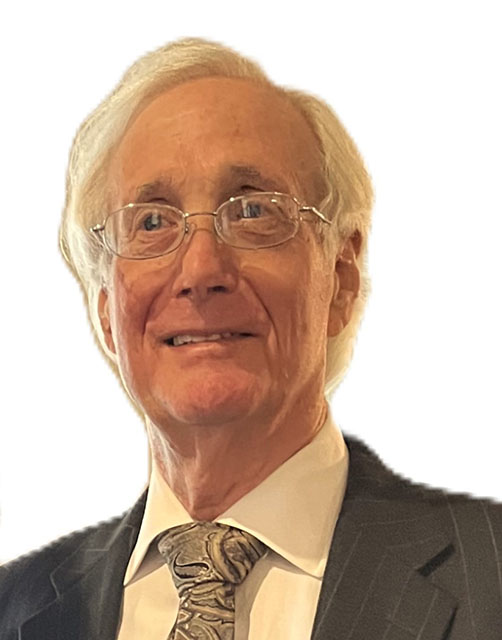
Neal J. Fialkow
Attorney and Founder
The Law Office of Neal J. Fialkow Inc.
Labor and Employment
Phone: (626) 584-6060
Email: nfialkow@fialkowlawgroup.com

Artificial intelligence systems are now used by ordinary
people to answer questions that once went directly to doctors, lawyers or
trusted advisers. People ask whether a symptom is serious, whether a risk is
real, whether a problem can wait. The system responds calmly and at length. It
explains. It organizes. It reassures or warns. And people act on what it says.
The danger is not that these systems are irrational. The
danger is that they often reason correctly while starting from the wrong place.
AI systems do not simply retrieve information. They
construct answers. To do that, they fill in facts that were never provided.
They assume a time frame. They assume severity. They assume how long something
has been happening, how likely it is to worsen, and what the person asking is
prepared to do next. They must assume these things, because without them no
answer is possible.
What they do not reliably do is say which assumptions they
made.
The result is an answer that sounds complete. The
reasoning follows. Each step makes sense. The conclusion appears supported.
What is missing is the moment when someone asks whether the assumptions were
right to begin with.
This is not a rare flaw. It is how the system works.
Consider a common medical question. A person experiences a
recurring symptom and asks whether it is dangerous, whether it requires
immediate treatment, or whether it can safely be left alone. The system
responds with a structured answer. The reasoning is orderly. The guidance
sounds sensible. What is missing is the one fact that determines whether any of
it applies. When the system does pause, it often pauses in the wrong way. It
does not identify the foundational question -- how long this condition usually lasts
if untreated, whether this episode differs from prior ones, or whether
intervention itself carries risk.
Human experts are trained to notice this. They pause. They
ask what happens if nothing is done. They ask whether this episode is different
from prior ones. Those questions are not incidental. They are often decisive.
AI systems do not reliably ask them unless directed. And
people often do not know to direct them. The system's answer sounds finished.
The reader assumes the hard questions were already considered.
This becomes especially dangerous when the system shifts,
without warning, from the general to the specific. Much of what AI knows comes
from averages--what usually happens, what is typical, what guidelines say for
most people. When a user describes a personal scenario, the system may continue
reasoning from those general rules while speaking as if it has moved into the particular case.
That is a subtle error, but a serious one. In medicine and
law, harm often occurs at the margins. What is safe for most is dangerous for
some. A system that does not clearly separate "what usually happens" from "what
is happening here" invites the user to treat general reassurance as personal
safety.
Facts introduce another layer of risk. AI systems
summarize quickly. They read a great deal and compress it. In doing so, they
sometimes get things wrong. Not in dramatic ways, but quietly. A date is off. A
threshold is misstated. A case is described too broadly. A drug's onset is
confused with its duration. The system does not flag these errors. It presents
them the same way it presents everything else.
The user has no easy way to tell the difference.
This matters because one wrong fact can flip an analysis.
A claim sounds right. It later turns out not to be. Everything built on it has to be rethought, and until that happens, the answer
feels settled.
The problem is not that the system lies. The problem is
that it can be wrong while sounding certain.
Certainty has effects. It lowers anxiety. It makes waiting
feel reasonable. It makes escalation feel unnecessary. In situations where time
matters, this is not a neutral outcome. A delay of a few minutes may mean
nothing. A delay of an hour may mean everything.
AI systems are not good at handling time. They explain
what is typical. They do not always say when waiting is safe and when it is
not. They flatten urgency. They describe outcomes without tying them to delay.
In doing so, they can encourage people to wait when waiting is the wrong
choice.
Warnings do not reliably fix this. When every answer
includes a caution, people stop seeing the cautions. Worse, they may assume
that truly serious risks would be described differently. The absence of urgency
begins to feel like information.
The way the system communicates makes the problem worse.
It responds directly. It adapts to tone. It feels conversational. The exchange
feels like a joint effort to think things through. Responsibility shifts. The
user is no longer alone with the decision, even though the system will bear
none of the consequences if the decision turns out badly.
Bias is not corrected in this process. It is reinforced.
Someone inclined to minimize risk hears reassurance. Someone inclined to worry
hears validation. The system reflects the posture brought to it. It does not
impose a corrective one.
It is tempting to say that better questions would solve
these problems. That puts the burden in the wrong place. People do not know
which assumptions the system is making. They do not know which facts are
fragile. They do not know which missing detail would undo the answer they just
received. Expecting them to discover that under stress is unrealistic.
The deeper issue is that the system cannot reliably tell
when it is answering the wrong question very well. It can reason cleanly inside
a model that does not match reality. It can be right about consequences that
will never occur and silent about the one that will.
At scale, this produces predictable results. Most
interactions cause no harm. Some are helpful. A small number lead to worse
outcomes. Those outcomes will rarely be traced back to the system. They will
look like ordinary human error -- waiting too long, misjudging severity, failing
to act. The role the system played will be hard to see, even in hindsight.
None of this requires bad intent or defective engineering.
The system does what it is designed to do. The problem lies in what it cannot
do. It cannot feel fear. It cannot weigh the cost of delay. It cannot know when
logic has outpaced reality. And it cannot know when a clean answer has replaced
the wrong uncertainty with the wrong confidence.
AI systems reason without consequence. Humans do not.
When a system that reasons cleanly is placed into
decisions shaped by hesitation, hope, denial, incomplete facts, and imperfect
timing, correctness alone is not protection. In some cases, it is the risk.
That risk does not announce itself. It arrives quietly, in
an answer that makes sense, at a moment when sense is not enough.
When you receive an answer from an AI system--in medicine,
law, engineering or any other serious domain--pause before relying on it. Ask
the following five questions together, even if you are not sure why they
matter. Do not answer them yourself. Ask them about the system,
and read what comes back.
1. What assumption must be true for this answer to
hold--and is that assumption known or merely inferred?
2. What happens if nothing is done and how certain is that
outcome?
3. What single fact, if wrong or incomplete, would change
this conclusion?
4. Is this answer describing what usually happens, or what
applies here?
5. Does this answer reduce uncertainty appropriately, or
does it simply sound confident?
Most readers will be surprised by the result. Answers that
initially felt responsible begin to contradict themselves. What seemed specific
reveals conditions. What sounded settled becomes contingent. In some cases, the
response exposes assumptions the reader did not know were being made at all.
That moment is the point. It signals that the problem has
not yet been framed tightly enough to support a confident conclusion.
In practice, this realization has a useful effect. It
reminds the reader that serious medicine belongs with health care providers,
serious legal judgment with lawyers, serious engineering judgment with
engineers. Artificial intelligence does not replace those roles. It prepares
the user to engage them more fluently--with clearer questions, better context,
and a sharper understanding of what actually matters.
Until artificial intelligence systems can reliably pause,
test their own assumptions and surface contradictions on their own, this discipline remains with the user. Not as a
matter of preference, but as a matter of necessity.
Submit your own column for publication to Diana Bosetti
For reprint rights or to order a copy of your photo:
Email
Jeremy_Ellis@dailyjournal.com
for prices.
Direct dial: 213-229-5424
Send a letter to the editor:
Email: letters@dailyjournal.com