


Cannabis,
Administrative/Regulatory
Mar. 2, 2026
California ABC declares Kratom and 7-OH illegal on alcohol-licensed premises
Kratom and 7-OH products have been on shelves for years, but as sales pick up, the California Department of Alcoholic Beverage Control issues a warning: sell them in ABC-licensed premises and face administrative disciplinary proceedings, including suspension or revocation of the license.



Ralph B. Saltsman
Partner
Solomon Saltsman & Jamieson
426 Culver Blvd
Playa del Rey , CA 90293
Email: rsaltsman@ssjlaw.com
Ralph has extensive experience in the area of land use licenses and permits.

Stephen Allen Jamieson
Partner
Solomon Saltsman & Jamieson
Phone: (310) 822-9848
Email: sjamieson@ssjlaw.com
Stephen has represented plaintiffs and defendants in trials, and litigated cases involving catastrophic personal injury, business frauds, torts of all kinds, land use, and Indian casino gaming.

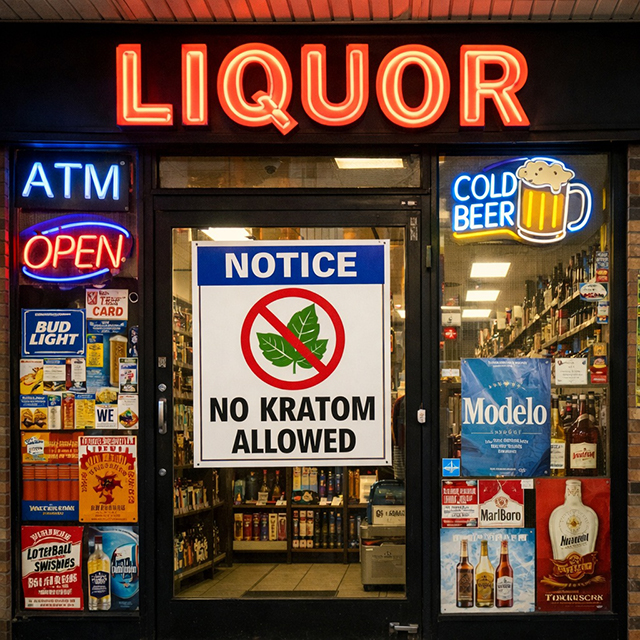
Warning: The ABC is coming after your Kratom.
But wait. What is Kratom? Do you know what it is? Do
you know anyone who does? First, a brief overview.
· "Kratom" is made from the leaves of the Mitragyna Speciosa tree, native to Southeast Asia.
· The chemical term for the active ingredient in Kratom is
"7-hydroxymytragynine," more commonly referred to as "7-OH," and can be either
derived from natural leaves or artificially synthesized.
· Products including Kratom or 7-OH, including infused
beverages, ointments, candies and others, have recently become popular for
their alleged health benefits, such as pain relief, euphoria, mild psychoactive
effects and energy boosts.
· Both plant-based Kratom and artificially-synthesized
7-OH have recently been declared harmful drugs or food additives by the
California Department of Public Health.
· They have also recently been declared illegal by the
California Department of Alcoholic Beverage Control.
Selling Kratom
You've had Kratom and 7-OH products on your shelves for
years. Just when Kratom and 7-OH sales are picking up and beginning to fit well
into your product mix, the Department of Alcoholic Beverage Control issues a
warning: Selling or offering for sale Kratom and 7-OH products in ABC-licensed
premises will result in the Department bringing an administrative disciplinary
proceeding against your license.
It's déjà vu to those days when the ABC banned marijuana
or THC-infused products from ABC-licensed premises all those years ago. Having
Kratom and 7-OH products on shelves or counters of liquor stores, gas stations,
convenience stores or any other ABC-licensed premises will invite the ABC to
seek and secure a suspension or revocation of that license.
Hopeless argument of legality
When ABC agents show up to seize Kratom and 7-OH products
you feel a need for a response. You argue hopelessly with those ABC agents that
continuing sales of the colorful displays of Kratom gummies, teas, energy
drinks and capsules is lawful, because Kratom is not on any governmental or
statutory schedule of illegal substances.
ABC's answer is to cite the California Department of
Public Health's 2025 classification that Kratom and 7-OH are illegal "poisonous
or deleterious substance[s] or food additive[s]," which has resulted in
state-wide seizures of Kratom products by health officials. The ABC has also
adopted that stance and will subject licensees selling those "illegal" products
to license suspension or revocation.
You insist that Kratom is now a billion-dollar industry.
The state's answer? "See above." Several California cities and counties also
have staked out the illegality of Kratom position. Many other states outside
California are similarly aligned. Tobacco regulators are pursuing the same
path, and the U.S. FDA has issued its own warning against Kratom and 7-OH use.
ABC license revocation
State law in California provides the statutory machinery
for the ABC to revoke a sale of alcohol license for selling Kratom or
7-OH. Business & Professions Code Sect. 24200.5 prohibits a licensee from
"knowingly permitting the illegal sale...of controlled substances or dangerous
drugs upon his or her licensed premises."
By including "dangerous drugs," this statute could
conveniently be the basis for the Department to take administrative action
against ABC-licensed purveyors of Kratom and 7-OH. Note that the penalty
designated by section 24200.5 is revocation of the license. Note also, as a
general proposition, that revocation could be partially stayed to allow for a
lessor suspension or a mandated sale of the license. Licensees should not
expect leniency.
Of course, all this begs the question of whether Kratom
and 7-OH actually are "dangerous drugs" within the
meaning of section 24200.5. Arguments to
the contrary may be made in disciplinary proceedings or follow-on litigation. However,
for now the ABC believes its adoption of the DPH's position is the last word on
the subject.
Be careful with Kratom advertising
Of course, Kratom product websites and advertisements
continue to state that Kratom is not illegal. Others may seek to disguise the
contents of their products by labelling them with generic terms like "natural
leaf," "alkaloid" or "botanical supplements," or by using lesser-known names
for the plant Kratom is drawn from, like "maeng da"
or "speciosa."
None of the above will have any discernable effect on the
ABC's willingness to pursue discipline against your liquor license and to seize
Kratom products found on your licensed premises.
These product websites may describe the products as herbal
and beneficial. The leaves can be chewed, and the powder can yield all the
inviting products mentioned above. Kratom has been consumed locally in Asia for
hundreds of years. Today, these products can be found in all manner of stores
and from all manner of suppliers, including ABC licensees. Look for Kratom and
7-OH products on the energy drink shelves, among herbal teas and ointments, and
even in candy displays.
Manufacturers and boosters tout Kratom and 7-OH products
as mood elevators, pain relievers, sources of euphoria, energy boosts and as
helpful tools for those customers who are attempting withdrawal from opioid
addiction. Still, many scientists remain skeptical of these claims, with
studies showing little-to-no health benefits, as well as potential risks of
addiction, among other side-effects.
Most importantly for ABC-licensed retailers: accepting the
sales pitch and inviting the products into your store is inviting potential
regulatory catastrophe.
Bottom line: Kratom and alcohol don't mix (for now)
Studies and research into the uses and dangers of Kratom
and 7-OH continue, and the legal environment is continuing to evolve as state
and federal legislatures debate adding Kratom and 7-OH to the schedules of
unlawful prohibited substances. However, today, be advised the California
Department of Alcoholic Beverage Control will administratively pursue
discipline against alcohol licensees found to have products containing Kratom
or 7-OH available for purchase. Revocation is in play.
Be warned.
Submit your own column for publication to Diana Bosetti
For reprint rights or to order a copy of your photo:
Email
Jeremy_Ellis@dailyjournal.com
for prices.
Direct dial: 213-229-5424
Send a letter to the editor:
Email: letters@dailyjournal.com