


Feb. 27, 2026
Improper juror access in social media case, judge warns media
In the Social Media Cases trial, Judge Carolyn B. Kuhl warned of a possible media gag order after an apparent violation of her no-juror-contact rule occurred in Los Angeles County Superior Court.


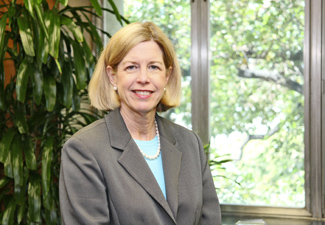
The Los Angeles County judge overseeing the bellwether social media addiction trial on Friday warned that a "clear violation" of her no-contact rule with jurors had occurred, suggesting the culprit was a member of the media and mentioning the possibility of a media gag order.
She said a news report showed that a reporter got close enough to jurors to hear their conversation.
Before the start of continued testimony Friday morning at around 9 a.m., and outside the presence of the jury, Superior Court Judge Carolyn B. Kuhl took the bench to address the matter to the public and press in the gallery.
At the start of trial in early February, Kuhl instructed members of the media and public that the hallway directly outside her first floor Spring Street Courthouse courtroom - including the restroom across from the door designated for jurors - was entirely off-limits to them during breaks and recesses.
"I have consistently advised media who are attending, the visitors who are attending and watching, and counsel that you must stay at the other end of the hall and away from the jurors," Kuhl said.
"That obviously did not happen in one instance because there was a report in one of the media sources today with regard to a conversation by jurors in the hallway. That is a clear violation of my order," Kuhl said.
"Members of the media, the last thing I want to do is impose a gag order," Kuhl said. "But if I have to do that in order to preserve the integrity of this trial, I will have to have a hearing on that."
The judge also noted that "some members of the media" were not present Friday morning, said she will "have that conversation with them as well" at the next trial date. (Media seats are assigned, and when a reporter doesn't come, court staff knows and reassigns the seat.)
After about 15 minutes of sidebar and chambers discussions involving counsel and the court reporters, jurors were brought in at approximately 9:09 a.m., and cross-examination of the 20-year-old plaintiff, referred to in the proceedings as Kaley G.M. resumed. She filed the claims when she was a minor.
The case is the first test in a coordinated proceeding involving thousands of lawsuits that allege social media apps are defectively designed to addict and harm minors. The plaintiff in this case alleges Meta Platforms and Google designed Instagram and YouTube in ways that addicted her and significantly harmed her mental health - allegations both companies deny. Social Media Cases, JCCP5255 (L.A. Super. Ct., filed Oct. 24, 2022).
On Thursday, the plaintiff testified that compulsive use of YouTube, beginning at 6, and Instagram, beginning at 9, "consumed" her childhood and contributed to anxiety, depression and body dysmorphia that persist today.
Under examination from Lanier Law Firm founder Mark Lanier Friday, she testified that she is unable to quit social media and that still feels it controls her. She said her symptoms - including anxiety, social phobia, body dysmorphia and thoughts of self-harm - were not present before she began using Instagram and YouTube.
On cross examination, Wilson Sonsini Wilson Sonsini Goodrich & Rosati LLP partner Melissa J. Mills, for YouTube, shifted focus to parental controls, usage data and other potential stressors in the plaintiff's life.
Mills elicited testimony that Kaley's parents never used YouTube Kids and did not consistently activate parental controls, though Kaley said her mother at times imposed screen-time limits and installed monitoring software on her computer.
Mills also confronted the plaintiff with sworn "fact sheet" filings in which she estimated her more recent YouTube use at about an hour per day. The attorney represented that YouTube data for the years 2020 to 2024 reflected her average daily watch time of roughly 58 minutes.
Kaley responded that she did not know whether that breakdown was accurate but acknowledged that her current use is "limited" and largely for music.
Lanier, on redirect examination, elicited testimony that YouTube's data did not consist of the years before 2020, when the plaintiff was a young adolescent.
Mills further questioned whether any doctor or therapist had ever told Kaley that YouTube caused her mental health conditions.
She testified that she never specifically raised concerns about "social media addiction" with her health care providers because she feared they would tell her to simply get off the apps, something she said she was unwilling to do.
Mills also highlighted the plaintiff's testimony that she has a passion for video editing, a skill she said she largely taught herself.
When asked whether YouTube provided a platform to express herself and connect with others, Kaley said "it was helpful," but added it was "still harmful because it kept me on the app long at night."
The novel theory in the plaintiff's case is that social media app design features such as autoplay, notifications and algorithmic recommendations on pages with infinite scroll are built to "engineer addiction in children's brains," Lanier said.
On his redirect, Lanier sought to reframe the narrative around Kaley's early childhood and the progression of her anxiety and body image struggles during middle and high school, when she said she was using Instagram filters on nearly every photo of herself.
Attorneys for Meta and Google argue that the plaintiff's mental health struggles stem from other "traumatic" events in her life, including alleged verbal and physical abuse by her mother and at school, which they contend predated or were independent of her social media use.
Kaley testified that using beauty filters made her feel "prettier" online but worsened how she saw herself in the mirror. By 9, she said, she was already comparing her appearance to others and feeling "pretty bad about myself."
She acknowledged that being bullied at school and online affected her negatively, but being offline and away from social media felt worse. "If I wasn't on it, I felt like I was missing out," she testified.
Kaley's testimony lasted about a day and a half.
Devon Belcher
devon_belcher@dailyjournal.com
For reprint rights or to order a copy of your photo:
Email
Jeremy_Ellis@dailyjournal.com
for prices.
Direct dial: 213-229-5424
Send a letter to the editor:
Email: letters@dailyjournal.com