


State Bar & Bar Associations
Feb. 26, 2026
State Bar charges prominent trial lawyer Paul Kiesel in water billing scandal fallout
Kiesel responded that the charges against him risk "undermin[ing] a long-standing practice in complex litigation: responsible cooperation among counsel," warning that punishing such coordination could chill efficient settlements that benefit injured consumers.


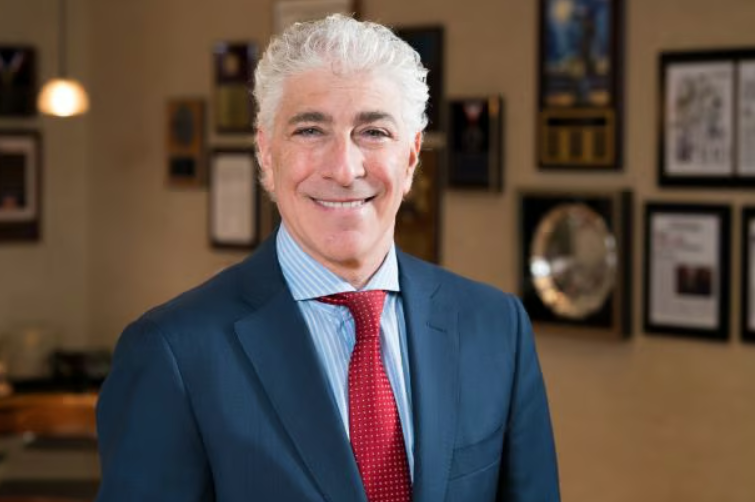
Veteran Beverly Hills trial lawyer Paul Kiesel is facing disciplinary charges from the State Bar of California stemming from his role in the sprawling litigation surrounding the Los Angeles Department of Water and Power's billing system debacle -- a controversy that has already resulted in criminal convictions, judicial findings of collusion and the recommended suspension of a former top city attorney.
The charges, filed Wednesday by the bar's Office of Chief Trial Counsel, accuse Kiesel of orchestrating a coordinated legal strategy designed to help the City of Los Angeles resolve a wave of class-action lawsuits on favorable terms while concealing key facts from the court and opposing parties.
"Attorneys hold a position of public trust that requires that they not conceal conflicts, mislead courts, or participate in coordinated efforts that compromise the fairness of legal proceedings," George Cardona, State Bar chief trial counsel, said in a statement. "The disciplinary charges against Mr. Kiesel allege that he engaged in misconduct that threatened the integrity of the legal system and risked significant harm to the public."
The charges arise from litigation following the City of Los Angeles' failed rollout of a new customer billing system in 2013. The system, implemented by PricewaterhouseCoopers, led to widespread overbilling, delayed bills and missed charges, costing the city hundreds of millions of dollars and triggering intense public backlash.
Kiesel rejected the charges in a statement, calling them "unfounded, misguided, and fundamentally wrong."
"The State Bar considered my integrity strong enough to use me as a cooperating witness in its own prosecutions," Kiesel said. "For the Bar to pursue charges in spite of these facts is shameful and disappointing."
Multiple class actions were filed against the city and LADWP. Ultimately, a global settlement in the case known as Jones v. City of Los Angeles provided full refunds to affected ratepayers. According to Kiesel's statement, "Los Angeles ratepayers received every penny they were owed through full refunds." But the manner in which that settlement was achieved became the focus of years of litigation and disciplinary scrutiny.
At the center of the controversy is a litigation strategy developed in early 2015 after city officials sought to gain control over mounting lawsuits and negative publicity.
The plan -- sometimes referred to as the "friendly plaintiffs' counsel" or "white knight" approach -- involved recruiting cooperative class counsel to file suit against the city and negotiate a global resolution.
According to a Feb. 17, 2026, decision of the State Bar Court in the disciplinary case against former Chief Deputy City Attorney James Clark, Clark "authorized and directed former outside counsel Paul Paradis and Kiesel to find outside counsel that would be friendly to the City and its litigation goals to supposedly represent Mr. Jones in a class action lawsuit against the City."
The Clark ruling credits testimony from Paradis and others that a second meeting occurred on Feb. 23, 2015, during which Clark approved the strategy. The court rejected Clark's denial that he attended the meeting, finding his "self-serving testimony is not credible".
The decision further notes that Clark was aware that the Jones v. City complaint had been drafted by Paradis before it was filed, and that Clark understood a settlement demand would be forthcoming even before the complaint was filed.
Those findings are significant because Kiesel has maintained that city officials -- not outside counsel -- initiated and directed the litigation structure that later drew accusations of collusion.
Kiesel's statement emphasized that federal prosecutors investigated the matter and declined to bring charges against him, describing that outcome as a "rare public clearing" by the U.S. Department of Justice.
Paradis later pleaded guilty to a federal bribery offense involving kickbacks and was sentenced to prison.
Clark himself was found culpable by the State Bar Court of multiple acts of moral turpitude and concealment, with the court recommending a two-year actual suspension and probation.
In its analysis, the State Bar Court concluded that Clark authorized the recruitment of "friendly" counsel and knowingly concealed material facts about the structure of the settlement from interested parties.
Kiesel has positioned himself as a cooperating witness in those proceedings. According to his statement, he "has been a key cooperating witness in the State Bar's investigations and prosecutions of others who were responsible for ethical violations."
Despite the findings of collusion, the settlement itself was ultimately approved and provided complete financial relief to ratepayers. The Clark ruling notes that the final judgment awarded approximately $67 million in refunds and fees in Jones v. City.
Retired federal judge Dickran Tevrizian, who mediated the matter, characterized the settlement as fair and beneficial to consumers, according to the court's recitation of the record.
In his statement, Kiesel argues that the charges against him risk "undermin[ing] a long-standing practice in complex litigation: responsible cooperation among counsel," warning that punishing such coordination could chill efficient settlements that benefit injured consumers.
Critics, however, have argued that the structure of the litigation deprived other plaintiffs' counsel of a meaningful role and undermined the adversarial process -- concerns echoed in the Clark ruling.
The case represents the latest chapter in the long-running fallout from the LADWP billing crisis, which has entangled city officials, outside counsel and class action lawyers in overlapping civil, criminal and disciplinary proceedings.
For Kiesel, whose career has included prominent consumer and mass tort litigation as well as leadership roles within the legal community, including serving as president of the Los Angeles County Bar Association, the charges present a significant professional challenge. In a statement, his partners at Kiesel Law said they "stand unanimously behind him and express complete confidence he will be exonerated."
David Houston
david_houston@dailyjournal.com
For reprint rights or to order a copy of your photo:
Email
Jeremy_Ellis@dailyjournal.com
for prices.
Direct dial: 213-229-5424
Send a letter to the editor:
Email: letters@dailyjournal.com