


Space Law/Aviation/Aerospace,
Administrative/Regulatory
Feb. 23, 2026
Advanced Air Mobility nears launch but legal readiness is unsettled -- Part 1
Advanced Air Mobility is racing toward initial operations, buoyed by capital and political will. From a lawyer's perspective, the real question is whether the legal machinery to support AAM operations will be in place when the aircraft are ready.



Q: How do you make a small fortune
in aviation?
A: Start with a large one.
- old American proverb
Advanced Air Mobility (AAM, sometimes Urban Air Mobility
or UAM) refers to an emerging class of aircraft which are typically
electrically powered vertical take-off and landing (eVTOL) platforms. Other
types of aircraft, including conventional take-off and landing (CTOL), short
take-off and landing (STOL) and hybrid turbine-electric platforms are also in
development.
AAM aircraft are typically highly digitized and automated
"fly by wire" platforms which are projected to be capable of autonomous or
remotely piloted operation. AAM aircraft driven by electric
or hybrid electric motors potentially offer helicopter-level performance at
much lower noise levels, carbon emissions and operating costs, as well as
greatly simplified and cheaper maintenance.
The market for AAM has been projected to exceed $70
billion over the next 10 years. Accordingly, AAM original equipment
manufacturer (OEM) startups have formed strategic partnerships with legacy
aviation and transportation companies. Corporate teams are forming, and the
race to commercialize AAM operations is shaping up to be something of a scrum.
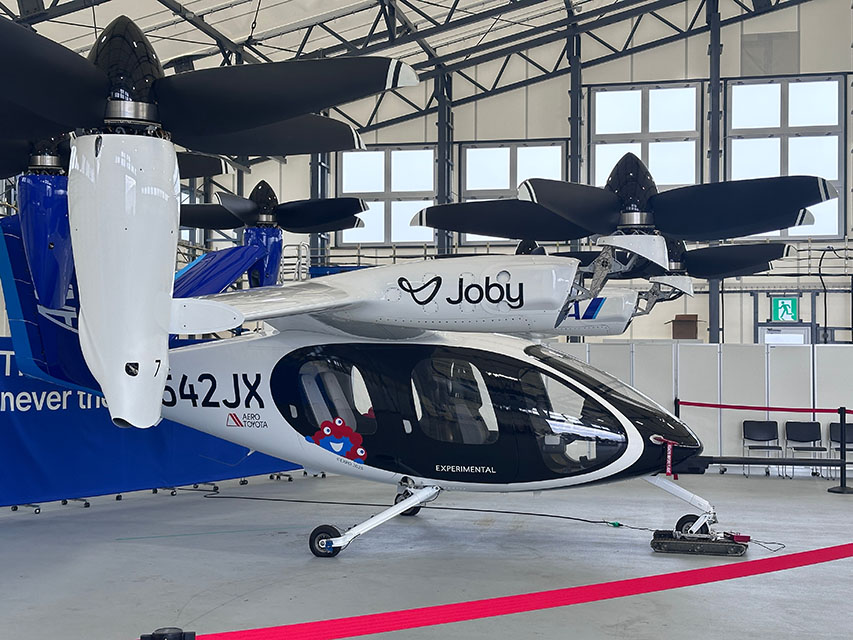
For example, Joby (NYSE: JOBY) has partnered with Uber and
Toyota. Joby has also secured an investment from Delta Airlines.
Archer (NYSE: ACHR) has announced a funding and contract
manufacturing commitment from Stellantis, the world's fifth largest automaker.
Archer has also partnered with Southwest Airlines and United.
Wisk is a fully owned subsidiary of Boeing, which has
reportedly also made an investment in Archer after the settlement of litigation
between Archer and Wisk.
Eve Air Mobility was launched by Embraer, maker of
regional jets and business aircraft. Embraer allegedly still owns 90% of Eve.
Note that, apart from Embraer, these are U.S.-based
programs. Summarizing all AAM programs worldwide is beyond the scope of this
review, which will mostly deal with projected U.S. OEMs and operations.
Significant strides towards AAM are being made in other markets, particularly
the EU and China, but until current trade tensions are resolved, we will not
assume that foreign AAM platforms will make inroads in the U.S.
Apart from the OEM's strategic partnerships, potential AAM
routes and markets are emerging. Joby has secured exclusive rights to operate
air taxis in Dubai for six years and anticipates carrying its first passengers
in 2026. Joby also recently acquired the air taxi business of Blade Air
Mobility, including its substantial helicopter operations in the New York area.
Archer has begun test flights in Abu Dhabi, plans an AAM
network here in Los Angeles, and has been selected the official air taxi
provider for the 2028 Olympics.
Another AAM provider, Beta Technologies, has been
installing electrical charging stations for electric aircraft and EVs at legacy
airports in the U.S. Beta anticipates initial operation of its CTOL aircraft in
passenger and cargo operations in Florida and Utah, respectively.
In short, multiple AAM programs appear to be approaching
initial operational capability (IOC). Donald Trump's June 6 executive order,
"Unleashing American Drone Dominance," directed FAA, etc. to "establish the
eVTOL Integration Pilot Program (eIPP) [. . .] to
accelerate the deployment of safe and lawful eVTOL operations in the United
States." The order suggests that at least five U.S.-based eVTOL pilot programs
should be ready to commence by the third quarter of this year, and the FAA's
Screening Information Request soliciting program proposals was issued Sept. 12,
2025. Proposals were due Dec. 11, and selections are due by March 11. Per the executive
order, eIPP operations are to begin "within 90 days
after the date on which any agreement for a pilot project is established." That
would mean AAM/eVTOL operations will begin somewhere in America by this summer.
Is all of this for real, or is it just part and parcel of
the "hype cycle" that fuels the funding of any new technology? Many of the
preceding AAM market reports are based on OEM news releases and related
coverage in the aviation industry press. That sort of reporting may be biased
by "the thrill of the new" at least. Pressure to fund this next transportation
revolution may also generate what Alan Greenspan politely referred to as
"irrational exuberance," or what lawyers are bound to call "forward looking statements"
under U.S. securities laws.
New aviation initiatives are known for delay, if only
because safety always (or at least, usually) comes first. We can't assume that
the technological, commercial and political agendas currently at play in AAM
will go according to plan or stay on schedule. AAM may have heat and momentum,
but its actual rollout could still run into hiccups.
That being said, AAM programs really do seem to be
coming towards IOC in the 2026 to 2028 timeframe. The progress being made isn't
just hype or a pipe dream. This isn't The
Jetsons; we aren't talking about flying cars. These are real airplanes, and
they're moving past prototypes. They are flying, and FAA-type certification is
under way. A lot of money has been spent by major corporations, and they want
to see ROI. Finally, the political will seems to be there; the Trump administration
is not only business friendly, but well versed in publicity stunts, and it
seems to be promoting AAM.
So, from a lawyer's perspective, the question presented
is: assuming the airplanes will be ready as advertised, is the legal machinery
necessary to support AAM operations in place?
At this juncture, the answer is yes and no. Top-down
initiatives (for example, from the FAA) are well in progress. They appear to be
well conceived and executed, pending any improvements that must be garnered
from actual experience.
By contrast, bottom-up and middle market solutions are
still evolving, where they exist at all. Until AAM platforms are certified,
there can be no AAM operations. Until AAM operations literally take off, we
won't really know what the necessary paperwork looks like.
In short, the legal machinery necessary to make AAM operational is developing nicely. The
regulatory pieces are coming together. However, the legal work necessary to commercialize AAM is still relatively
inchoate. We only have a vague idea of what AAM transactions will look like.
This series of articles will assess the work yet to be done.
Part 2 of this series will summarize the current state of
U.S. AAM regulation. Part 3 will address potential methods for structuring AAM
commercial operations, largely based on the current FAA regulations governing
the operation of other types of business aircraft. Part 4 will discuss the
contractual and transactional tasks that AAM should typically require. Part 5
will attempt to forecast potential AAM litigation scenarios and risks.
Please fasten your seatbelts. This may be a bumpy ride.
Submit your own column for publication to Diana Bosetti
For reprint rights or to order a copy of your photo:
Email
Jeremy_Ellis@dailyjournal.com
for prices.
Direct dial: 213-229-5424
Send a letter to the editor:
Email: letters@dailyjournal.com