


Securities
Feb. 19, 2026
Judge allows scheme theory in Musk Twitter securities trial
Senior U.S. District Judge Charles R. Breyer ruled investors may argue Elon Musk schemed to depress Twitter's stock before his 2022 purchase, allowing a broader securities fraud theory to proceed to trial.


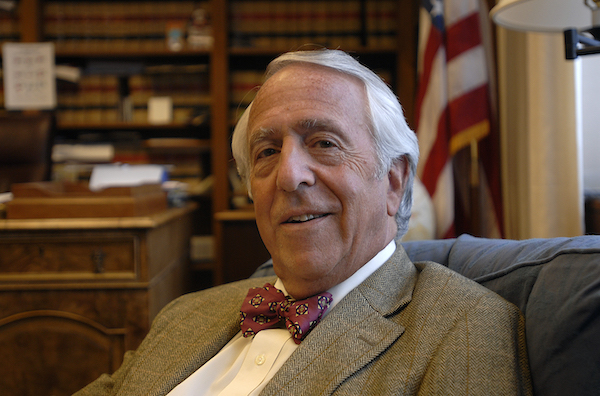
Plaintiffs can present the theory that Elon Musk schemed to lower Twitter's stock price ahead of his 2022 purchase of the company, a San Francisco federal judge decided as a securities lawsuit against the Tesla and SpaceX CEO readies for trial next month.
The plaintiff investors, represented by Bottini & Bottini Inc. and Cotchett, Pitre & McCarthy LLP, allege Musk made three posts to the social media platform, which he renamed X, that contained false statements, violating Rule 10b-5 of the Securities Exchange Act. Musk said the purchase was "on hold" since he believed roughly 20% of Twitter accounts to be bots, higher than the 5% estimate the company's then-owners gave.
In addition to the false statements theory, the plaintiffs claim Musk was struggling to fund his $44 billion purchase and said the deal was in jeopardy to drive the stock price down and renegotiate. The stock price fell by over 30% while Musk's takeover was in flux.
Musk's counsel, Quinn Emanuel Urquhart & Sullivan, LLP, moved ahead of trial to block that theory, saying it was practically identical to the false statements theory.
"If it's a true statement that affects the market, that's not securities fraud," Quinn Emanuel partner Ellyde R. Thompson said at the pretrial conference on Tuesday. Giuseppe Pampena v. Elon R. Musk, 3:22-cv-05937 (N.D. Cal., filed Oct. 10, 2022).
But Senior U.S. District Judge Charles R. Breyer disagreed, saying a statement doesn't need to be false to be part of a scheme if its purpose is to manipulate the market.
"This is exactly what this case is about, isn't it?" Breyer said.
Breyer outlined a hypothetical scenario where an investor hoping to drive a company's stock prices down disparages the company but clarifies that each statement is only an opinion. The investor then buys shares at a lower price. While the investor in this scenario didn't make any false statements, scheme liability could clearly still be in play, Breyer said.
Thompson then argued plaintiffs shouldn't be allowed to present additional statements made by Musk that Breyer had dismissed from the initial complaint.
Aaron P. Arnzen of Bottini & Bottini argued for the plaintiffs that a series of "independently innocuous" statements can still indicate a broader scheme.
Breyer said the statements might be permissible as evidence for the scheme claim even if they're out of the picture when it comes to the false statements claim.
The judge also discussed the admissibility of testimony regarding statements Musk made in the presence of an attorney.
Breyer said that if the defense plans to assert attorney-client privilege, it can't present any conversations Musk had with his lawyers as evidence.
"I am committed to the proposition that if it is going to be a shield, it can't be a sword," Breyer said.
That could prove difficult, the judge said, since many of the conversations Musk had with his team around the time of the merger included his attorneys. If either side includes evidence stemming from a conversation that involved a lawyer but didn't involve privileged communication, the jury can't know a lawyer was present, Breyer said.
"You're all going to engage in some fiction here," Breyer said.
Breyer rejected a motion to intervene filed by Eric Meckley on behalf of X that would have allowed a company lawyer to be present during the testimony of any X employee. That would allow the lawyer to protect the witness from any questions that lead them to reveal information violating attorney-client privilege or disclosing confidential company information.
Breyer said that he's had plenty of witnesses testify without their own counsel present, and he's more than capable of handling it himself.
"Why is it necessary or desirable to have another lawyer here?" Breyer said.
Jury selection is slated for Feb. 19. Musk's lawyers expressed concern that it could be difficult to find jurors without strong opinions about Musk, citing expletive-filled responses to an initial questionnaire.
Breyer called it a "record of responses that I have never seen before," but said he's confident he can find jurors who are committed to setting aside their opinions of Musk to arrive at a fair verdict. After serving on the team that prosecuted the Watergate trials, Breyer said, he'll have no problem seating a jury to try Musk.
Breyer said he hopes to seat nine jurors. The trial will begin on March 2.
Daniel Schrager
daniel_schrager@dailyjournal.com
For reprint rights or to order a copy of your photo:
Email
Jeremy_Ellis@dailyjournal.com
for prices.
Direct dial: 213-229-5424
Send a letter to the editor:
Email: letters@dailyjournal.com