


Technology,
Ethics/Professional Responsibility
Feb. 10, 2026
California AI rules for lawyers and arbitrators pass senate, head to assembly
California's Senate passed SB 574, a bill establishing AI guardrails for lawyers and arbitrators that codifies confidentiality duties, nondelegable citation verification and strict limits on AI's role in decision-making, sending it to the Assembly for consideration.


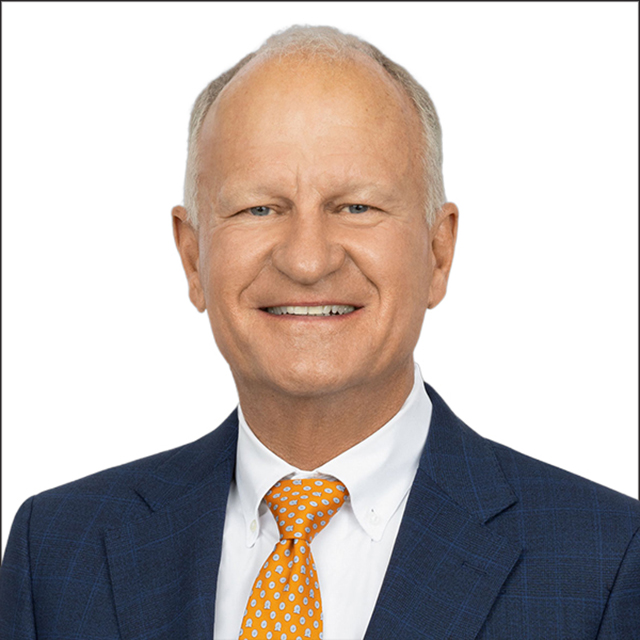

Sharon R. Klein
Phone: (949) 812-6010
Email: sharon.klein@blankrome.com
Sharon R. Klein is a California-based member of Blank Rome's Privacy, Security & Data Protection team. She can be reached at sharon.klein@blankrome.com.

Alex Nisenbaum
Email: alex.nisenbaum@blankrome.com
Alex C. Nisenbaum is a California-based member of Blank Rome's Privacy, Security & Data Protection team.

Generative artificial
intelligence (AI) is now routine in law practice: Lawyers use it to draft
correspondence, summarize discovery, outline deposition testimony and
accelerate research. Public AI tools can expose confidential information if
lawyers paste client materials into prompts, and large language models can
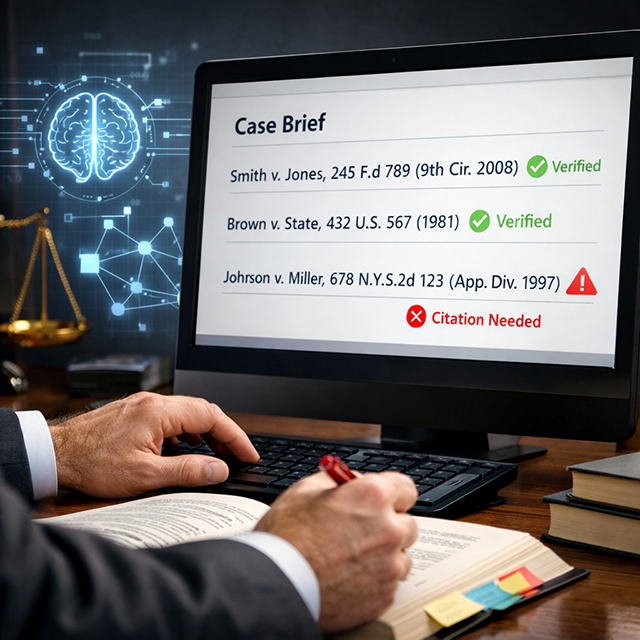
"hallucinate," producing plausible-sounding facts, quotations or citations that
do not exist. AI has enticed otherwise prudent practitioners to submit
materials to courts without vetting the veracity of that information, resulting
in sanctions.
California's
Legislature is moving to address those risks with statewide rules. Senate Bill
574, authored by Senator Tom Umberg, passed the Senate 39-0 on Jan. 29 and has
been sent to the Assembly. When asked about the bill's aim, Umberg said, "SB
574 makes clear that while technology may support legal work, responsibility
and judgment remain firmly with the professional. This bill helps maintain
public confidence in the fairness and credibility of California's justice
system." Notably, materials from the California Senate Judiciary Committee
reported no formal opposition and list privacy advocates among supporters,
underscoring how mainstream these guardrails have become for practitioners and
neutrals alike. Many courts have issued decisions and fines for nonexistent or
inaccurate citations (e.g., Noland v. Land of the Free, 114 Cal. App. 5th (2025)). If
it passes the Assembly and signed into law, California will be one of the first
states to enact a statute to regulate the lawyer's and arbitrator's use of
generative AI. In late 2025, California became one of the first court systems
in the United States to adopt court rules that provide a similar framework to
regulate generative AI's use by the state's judicial branch.
Consistent with
the "Practical Guidance for the Use of Generative Artificial Intelligence in
the Practice of Law" previously issued by the State Bar of California Standing
Committee on Professional Responsibility and Conduct in November of 2023,
Senate Bill 574 does not ban generative AI. It codifies accountability. It does
three things. First, it adds an explicit attorney duty aimed at
protecting confidentiality and reducing "AI hallucinations." Second, it
tightens California's sanctions statute to make citation verification
nondelegable no matter who (or what) drafted the filing. Third, it draws
a bright line for arbitrators: Generative AI cannot be used as a decisional
surrogate, and neutrals must avoid AI use that could influence procedural or
substantive outcomes.
Lawyers: Confidentiality
Senate Bill 574
would add Business and Professions Code Section 6068.1, framing AI governance
as an "attorney duty." It requires lawyers to ensure that "confidential" or
"nonpublic" information is not entered into a "public" generative AI system.
The bill also
supplies concrete examples of "personal identifying information," sweeping well
beyond obvious identifiers. The list includes items such as dates of birth,
Social Security numbers, driver's license numbers, addresses, and phone numbers
for parties/witnesses/victims, and sensitive categories like medical,
psychiatric and financial information along with anything sealed by court order
or designated confidential by rule or statute. The takeaway is that "I only
used facts from the file" is not a safe harbor, because case files routinely
include protected data.
Senate Bill 574
further requires attorneys to take "reasonable steps" to verify the accuracy of
AI-generated material (including work prepared by others on the lawyer's
behalf), correct erroneous or hallucinated output, and remove biased, offensive
or harmful content. The proposed duty requires attorneys to ensure their use of
generative AI does not unlawfully discriminate or disparately impact
individuals or communities based on a broad set of protected classifications
(and other classifications protected by federal or state law).
Finally, the
statute includes a disclosure "nudge": The attorney must consider whether to
disclose AI use if it was used to create content provided to the public. This
could include disclosure to a client if a lawyer intends to use AI in the
representation.
Court filings: Cite-checking
is nondelegable
Senate Bill 574
would amend Code of Civil Procedure Section 128.7--California's Rule 11 analogue--to
add an explicit prohibition, namely, that court filings cannot contain
citations that the submitting attorney has not "personally read and verified,"
including citations supplied by generative AI.
This is a targeted
response to a now-familiar scenario: AI-assisted briefs that cite cases that do
not exist or misstate holdings with high confidence (yet utterly wrong). The
Legislature's move is not an "AI ban" on legal drafting, rather, it is a clear principle-based
compliance rule tied to a sanctions framework. If you
sign it, you own it--down to the citations.
Arbitrators: No
"AI arbitrator," and avoid AI influence on decisions
The arbitration
provisions are the most categorical. Senate Bill 574 would add Code of Civil
Procedure Section 1282.1, which would prohibit arbitrators from delegating any
part of the decision-making process to generative AI, and
would direct arbitrators to avoid delegating tasks to AI if the use could
influence procedural or substantive decisions.
In addition, the
bill instructs arbitrators not to rely on AI-generated information outside the
record without disclosure and, "as far as practical," give an opportunity to
the parties to comment. It also provides that if an AI tool cannot cite sources
that can be independently verified, the arbitrator may not assume those sources
exist or are accurately characterized. The arbitrator remains responsible for
"all aspects" of the award.
This is a direct
policy statement: efficiency cannot come at the expense of due process or the
parties' expectation that a neutral human is doing the adjudicating. Legislative
analysis frames Senate Bill 574 as a logical extension of the judiciary's own
generative-AI guardrails for adjudicative tasks (California Standards of
Judicial Administration, Standard 10.80).
Just as
importantly, the bill reflects a broader shift: Professional responsibility
rules that already exist (confidentiality, competence, supervision and candor)
are being translated into AI-specific statutory requirements with clearer
enforcement hooks. This trend to manage lawyers' use of AI will continue in
California and other states and be modified as the technology advances ahead of
the law.
Practical points
• Law firms, law
departments and arbitrators must have AI policies reflecting their ethical and
statutory responsibilities.
• Lawyers and
arbitrators must undergo training on the responsible use of AI.
•
Engagement
letters should be revised to ensure clients are fully informed regarding the
lawyers' use of AI and may also include provisions outlining the clients'
responsibility to verify outcomes generated by AI.
• Monitor
developments in AI-related guidance and best practices as they evolve within
all areas of the practice of law.
Submit your own column for publication to Diana Bosetti
For reprint rights or to order a copy of your photo:
Email
Jeremy_Ellis@dailyjournal.com
for prices.
Direct dial: 213-229-5424
Send a letter to the editor:
Email: letters@dailyjournal.com