


Torts/Personal Injury,
Technology
Feb. 9, 2026
Vehicle technology and accident investigation: What personal injury attorneys must know
Advanced vehicle technology and data are reshaping accident investigations, forcing personal injury attorneys to track system performance, human interaction and emerging liability issues in modern crash litigation.



Andrew P. McDevitt
Shareholder
Walkup, Melodia, Kelly & Schoenberger
Phone: (415) 981-7210
The last decade has brought a paradigm shift in how we
drive and what our cars can now do for drivers. Driver assistance technologies
and advanced data systems are rapidly shifting the emphasis in accident
investigation and litigation from "what did the driver see?" to "what did the
technology record?" The questions are shifting from "which driver was negligent
or reckless?" to "what system failed?" As new vehicle technologies become
widespread, they are blurring the lines between human error and machine malfunction,
between personal responsibility and product liability.
Historically, motor vehicle accident case analyses hinged
on good old-fashioned "analog" investigation: police reports, eyewitness
accounts, scene analysis and evaluation of physical evidence. But today,
lawyers who represent clients in collision cases face an escalating urgency to
stay abreast of technology evolving at whiplash speed.
To conduct discovery in modern crash cases, victims'
attorneys must understand the driving technologies themselves (purpose,
expectation, operation and effectiveness), the standards and regulations that
apply, and, most importantly, how all those factors intersect with human
behavior under the real-world circumstances of accidents. Plaintiff's lawyers
also must know how to access and interpret critical data recorded by the
systems.
Key drivers
In 2015, the National Transportation Safety Board (NTSB)
began recommending that vehicle manufacturers include collision avoidance
technology (CAT) as standard equipment on all passenger and commercial
vehicles; and, likewise, that consumers "informed about the technology's
capabilities and limitations, should buy vehicles equipped with it."
Yet 10 years later, while the technology is ubiquitous,
consumer understanding of CAT's capabilities and limitations has not kept pace,
in part because the terminology remains confusing and even misleading --
sometimes with tragic consequences.
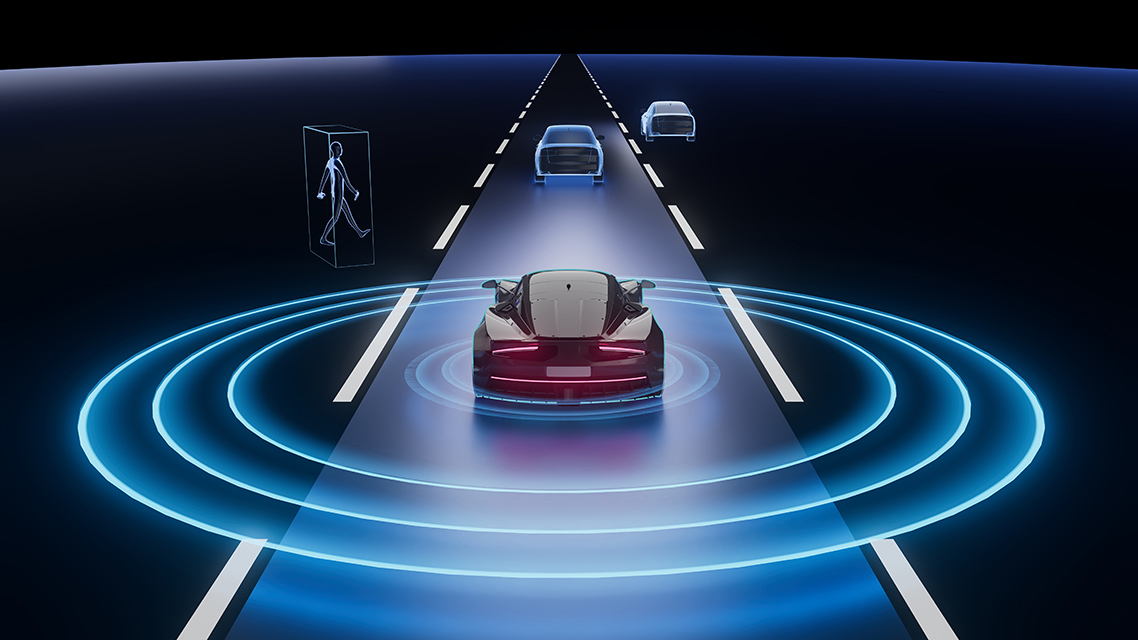
CAT systems can provide a range of detection, alerts and
assistance, from rear traffic crossing and blind-spot detection to collision
warnings, adaptive cruise control and automatic emergency braking. They employ
diverse mechanisms to detect and respond to potential hazards in real-time,
including cameras, ultrasonic sensors, radar, LiDAR and AI.
There are two broad categories of collision avoidance
technology: Advanced Driver Assistance Systems (ADAS) and Automated Driving
Systems (ADS). The U.S. Department of
Transportation relies on the SAE Levels of Driving AutomationTM (Levels 0-5) to
distinguish between them. While those levels are useful for engineers and
regulators, they do not always map cleanly onto how real drivers experience or
understand the systems in practice.
• Advanced Driver Assistance Systems (ADAS) include features such as
lane-keeping assist, adaptive cruise control, parking assistance, blind-spot
monitoring and forward-collision warning. Most vehicles on the road today
operate at SAE Levels 0-2, in which the vehicle can assist with certain driving
functions but does not perform the entire driving task. In these systems, human
engagement is still expected, but it can vary widely--from eyes on and hands on
to eyes on and hands off--depending on the feature and the manufacturer's
design.
• Automated Driving Systems (ADS), generally associated with SAE Levels 3-5, are
intended to perform sustained dynamic driving tasks under defined conditions,
including monitoring the driving environment and executing control actions
without continuous human input.
In theory, these categories draw a clear line between
driver assistance and automation. In reality, that
line has been increasingly murky. Some manufacturers combine multiple
assistance features, market them using automation-suggestive language, or
design systems that permit hands-off operation while still requiring the driver
to supervise the roadway. As a result, consumers are often left uncertain about
what level of attention, intervention or oversight is actually
expected of a driver.
In addition, sleek marketing for systems like Tesla's Autopilot
and the concept of fully "self-driving" cars can further confuse consumers or
give false confidence, while adding complexity to liability questions.
When an accident occurs due to the failure of these
technologies, even if some human error was involved, proving fault centers on a
few key questions: What was the technology supposed to do? How did that feature
actually perform (or not) under the circumstances? And
what made the difference--why did it fail?
Advanced vehicle data systems can be instrumental in
accident reconstruction, but the scope of potentially relevant data now extends
far beyond the traditional Event Data Recorder (EDR) or "black box." Modern
vehicles may generate and store information from multiple sources, including
onboard memory, Controller Area Network (CAN) data, telematics systems, GPS
modules, cameras, radar and other sensors tied to driver-assistance features.
These data streams may reflect vehicle speed, braking, steering inputs, system
status, warnings issued, object detection, and, in some cases, show when a
human operator interacted with the vehicle.
Taken together, these sources can offer a far more
complete picture of the conditions leading up to a collision. But in practice,
identifying what data exists, where it is stored and how long it is retained is
often anything but clear. Some information is stored locally on the vehicle,
some is transmitted wirelessly to manufacturers or third parties, and some is
overwritten or deleted after short retention periods (frequently without the
owner's knowledge).
Accessing and interpreting this data can present
additional hurdles. Manufacturers and component suppliers often rely on
proprietary software, tools or formats to retrieve and decode vehicle data,
limiting meaningful access to those the manufacturer chooses. In the absence of
comprehensive federal standards governing data transparency, ownership and
access, investigators and litigants may face delays, high costs and
uncertainty. Accessing and obtaining the data often requires consent, subpoenas
or court orders to obtain time-sensitive information.
As vehicles become increasingly connected, the lack of
standardized, independent access to vehicle data poses growing challenges. Data
critical to understanding how a collision occurred should not be accessible
only to manufacturers. Greater transparency and uniform standards are essential
to ensure that vehicle owners, investigators, regulators and courts can fairly
and reliably evaluate what happened when advanced vehicle technology is
involved.
The road ahead
When it comes to high-tech cars and advanced data systems,
the future is both already here and still ahead of us. In many ways, the
technology is still catching up to its own hype. In the meantime, consumers
remain vulnerable to both the failure of new features and confusion about what
those features can actually do. In the legal field,
modern motor vehicle systems have opened compelling new avenues for litigation
in accident cases but have also created a rapidly evolving obstacle course of
terminology, technology and regulatory standards to understand.
Submit your own column for publication to Diana Bosetti
For reprint rights or to order a copy of your photo:
Email
Jeremy_Ellis@dailyjournal.com
for prices.
Direct dial: 213-229-5424
Send a letter to the editor:
Email: letters@dailyjournal.com