


Family,
Alternative Dispute Resolution
Feb. 2, 2026
Divorces are costly: Private proceedings reduce those costs
Private mediation in divorce cases allows parties to resolve disputes confidentially and efficiently, significantly reducing both the financial and emotional costs compared with traditional court proceedings while giving families control over outcomes.



When couples dissolve their marriages, the emotional and
financial costs can be enormous. Former spouses must work through painful
issues: abuse, betrayal, loss of trust, loss of identity. At their most
vulnerable, these parties must also navigate a legal system that imposes a
steep price at each step and decision they make.
When those steps are taken before a public court judge,
the financial costs can be exorbitant. Monetary costs include, among other
things, attorney fees, expert fees, court reporter fees and court costs/filing
fees. Non-monetary costs can include the parties' time; the psychological and
functional toll of the proceedings on the entire family, and the lack of
personal privacy from consistently appearing in a public courtroom where many
other litigants are present listening to the parties' case details as they
await their cases to be called.
Part 2 of this series will discuss the options available
to parties to retain a private mediator in conjunction with a privately
compensated temporary judge (PCTJ). The costs will be discussed in more detail
in Part 3.
Benefits of private mediation
Private resolution of these cases can
significantly lower the financial costs of the process and can go a long way
toward mitigating the mental and emotional burden on parties.
The most significant benefit of private mediation is the
parties' ability to decide the outcome of their own dissolution case instead of
leaving the outcome to a public court judge with little knowledge of their
family. With guidance from attorneys versed in California family law, parties
can use a private mediator to help them make their own decisions. The ultimate
outcome will be a decision that reflects their family's specific situation.
When parties have designed their own resolution, they are far more likely to
comply with it than if they were ordered to follow a plan designed by a judge.
Judges are compelled to follow the law, but the same is
not true of attorneys and parties in mediation. A mediated agreement can vary
from the default law in certain ways, such as including a lump sum spousal
support buyout, a spousal support waiver, or an unequal division of community
property. Mediation allows attorneys to design solutions that work for the
entire family. This eliminates the need to predict what a judge will do later
at a hearing or trial regarding assessing credibility, assigning weight to
evidence, or issuing ultimate orders. Attorneys who resolve cases creatively,
avoiding these risks, become heroes to their clients.
Private mediation also allows parties to have input to
select a private mediator of their own choosing, based on experience and
expertise in the specific areas involved in their case, as well as their
mediation style.
Because private neutrals only schedule one case at a time,
they can focus the entire mediation day on the parties' particular case instead
of dividing their attention among a number of cases on
the same day.
In cases with urgent issues, the flexibility and
availability of the private mediator provide a huge benefit. Unlike a public
court, a private mediator can accommodate the scheduling of an urgent mediation
date. If multiple mediation dates are needed, such neutrals can set consecutive
mediation dates, avoiding long delays and the need to refresh memories before
each mediation date.
Other benefits of using private
neutrals include the ability of private mediators to hold mediations that will
accommodate different in-person venues, virtual sessions, and varying start and
end times.
Timing of private mediation
Although the goal of mediation is generally a settlement
on all issues, timing issues can affect the goals for a limited-scope
mediation. Private mediation allows parties and their attorneys to choose how
early in their case they schedule mediation.
If both parties are amenable to settlement based on a
"rounded-corners" approach that avoids getting stuck on smaller issues, early
mediation can result in substantially lower costs; each side has not yet
invested heavily in work by attorneys and experts. Preparation can be limited
to the exchange of informal discovery, leaving expensive formal discovery to be
conducted only if the parties end up in litigation.
Mediations held at the midpoint of the process will allow
for adjustment of each party's position based on access to more complete
information. Through the exchange of financial disclosures and the work of
their attorneys and experts, the parties should have sufficient information,
including information regarding assets, expenses, and custody issues, to
successfully resolve their case.
Parties can still resolve their entire case even if they
wait until close to trial to mediate. They should have completed formal
discovery and exchanged settlement proposals. If the parties do not settle at
this mediation stage, they will likely have narrowed the disputed issues to be
resolved at the upcoming trial. The attorneys can now organize and prepare the
remaining issues for a streamlined trial, reducing overall trial costs.
Attorney time
In a typical mediated case, each party's attorney will
spend time preparing the client's case. The attorneys will likely meet and
confer with each other about all issues to be resolved. They will also work on
their individual clients' financial disclosures, make informal discovery
requests for additional information needed from the other side, and work with
necessary experts on reports to support their clients' positions.
Regardless of whether the parties
choose a mediation or litigation process for their dissolution, and whether the
parties use the public system or a private neutral, their attorneys will still
need to perform the above tasks. The principal difference will be whether those
tasks are handled in a more streamlined and cordial manner, making the process
less expensive and less time-consuming for the parties.
Once attorneys and parties agree to retain a private
neutral for mediation, they may participate in a joint conference with the
mediator to provide the mediator with case background and discuss mediation
logistics.
Private resolution costs
Private mediation will generally take one full day, but it
may extend to additional sessions or additional work to finalize the parties'
settlement.
Attorneys' fees for each party will
range, depending on the complexity of the case and the number of issues to
prepare. Each attorney may spend between 30 and 40 hours of work in the three
to four months prior to and including the day of mediation. At an average
hourly rate for California family law attorneys of $500, each attorney's fees
would be between $15,000 and $20,000.
Generally, the parties also share the cost of the
mediator, who charges between $10,000 and $20,000 per day of mediation. A
forensic expert, at an average hourly rate of $400 per hour, can be expected to
perform about 25 hours of work preparing and presenting reports and attending
the mediation, totaling approximately $10,000 in costs.
The total estimated costs per party
will therefore be between $30,000 and $40,000.
These costs are only estimates, and cases vary in the
number and complexity of issues. Attorney, expert, and mediator hourly rates
will differ based on experience and expertise. Attorneys can help their clients
understand potential costs by providing a detailed outline of the necessary
tasks to be completed prior to mediation to reach a full resolution.
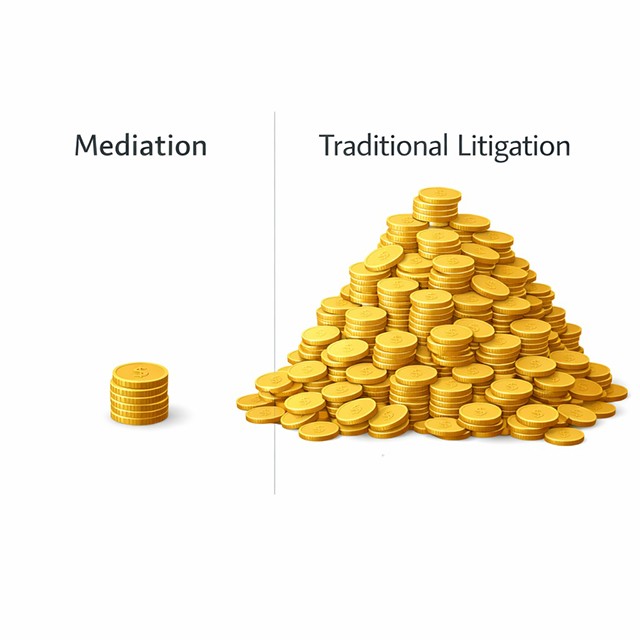
There is a substantial difference between the costs of
mediation and litigation. When parties have their dissolution cases determined
in litigation, instead of through mediation, their costs could be multiplied
tenfold or more.
Conclusion
With the help of a skilled mediator,
parties can settle their differences out of court in a single day. Mediation
offers customized solutions designed to address the unique needs of each case.
The confidential mediation process is designed to allow parties to communicate
honestly and openly with the mediator without fear of backlash in a future
hearing.
Private neutrals can adapt the mediation environment to
assist both sides with reaching resolution. In addition to a faster process,
the parties will enjoy the benefits of a significantly lower financial burden,
enabling them to move forward with their lives.
Submit your own column for publication to Diana Bosetti
For reprint rights or to order a copy of your photo:
Email
Jeremy_Ellis@dailyjournal.com
for prices.
Direct dial: 213-229-5424
Send a letter to the editor:
Email: letters@dailyjournal.com