


Jan. 22, 2026
Public defenders may decline Racial Justice Act habeas appointments, court rules
The 4th District Court of Appeal panel decision will have significant fiscal and structural implications as counties confront a rising volume of postconviction claims.


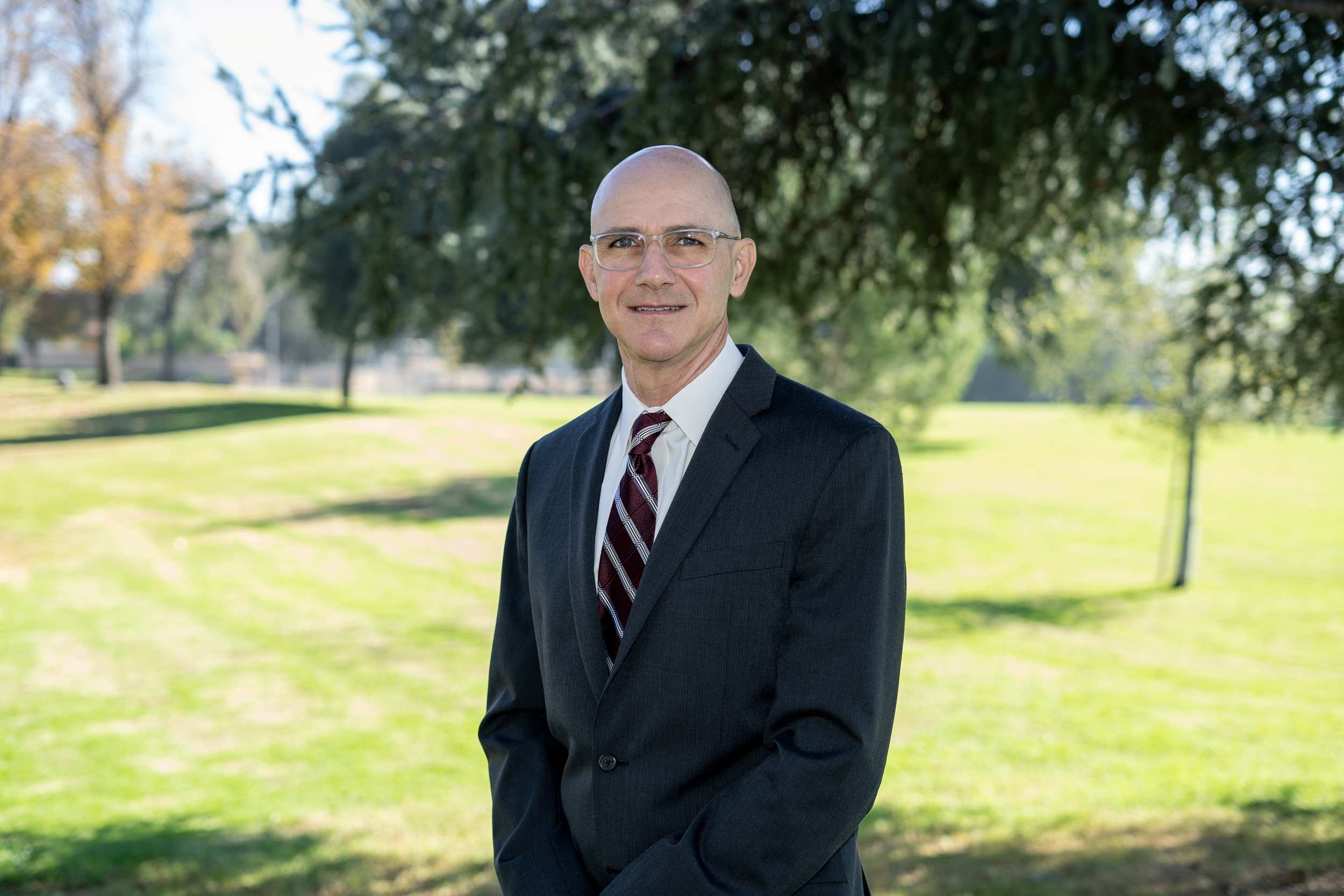
County public defenders may decline court appointments to represent inmates pursuing habeas relief under the Racial Justice Act, a unanimous 4th District Court of Appeal panel ruled, a decision that could affect how counties handle a growing number of such cases.
Justice Frank J. Menetrez of the 4th District's Division Two wrote the published opinion. Justice Douglas P. Miller and Presiding Justice Manuel A. Ramirez concurred. Harmon v. Superior Court (Cal. Ct. App., 4th Dist., Div. 2, Jan. 20, 2026), No. E086720.
The case stems from Taiwan Orran Reed's 2020 convictions for pimping, pandering, human trafficking and rape. Reed, who is African American, filed a habeas petition in June 2024 under the Racial Justice Act, alleging prosecutors and law enforcement witnesses used racially charged language at trial by referring to him as a "gorilla pimp." A Riverside County trial judge found the allegations plausible and issued an order to show cause.
Reed's convictions were upheld by the Court of Appeal on Nov. 7, 2022. After his private attorney withdrew from the case in April 2025, Riverside County Superior Court Judge Dean Benjamini appointed the public defender to represent Reed. The public defender sought to decline the assignment, citing limited resources.
Supervising Public Defender Aimee Vierra, representing Harmon, told the court the decision did not reflect the merits of Reed's petition but was due to limited resources, lack of habeas defense funding, and the office's duty to represent indigent clients in trial court.
Vierra highlighted the scale of the issue, saying the county has about 13,000 sentenced individuals in state prison or local custody who generate a steady flow of habeas filings. "That group sends me a habeas writ about five times a day on confinement conditions and similar issues," she told the panel.
The trial court relied on a 1979 case involving Randall Charlton, convicted of first-degree murder in 1974, who filed a habeas petition for ineffective assistance of counsel. The California Supreme Court ordered a hearing in San Francisco Superior Court for November 1978.
At that hearing, Michael Korn, the attorney who filed the petition, offered to continue representing Charlton if appointed, but the superior court refused, stating it could appoint only the public defender. Charlton then sought an order requiring appointment of his chosen private attorney. The appellate court denied the request without explanation, and the state Supreme Court ordered reconsideration. Charlton v. Superior Court (1979) 93 Cal.App.3d 858
Relying on this precedent, the Riverside trial court ordered the public defender to continue representing Reed, holding that habeas proceedings are stages of a criminal case requiring mandatory representation.
The appellate court disagreed, emphasizing that habeas petitioners are not defending criminal charges but pursuing separate proceedings. Menetrez wrote that such cases fall under a statute that gives public defenders discretion to take on postconviction matters. "The petitioner seeking a writ of habeas corpus is not defending criminal action -- they are prosecuting the writ," he wrote.
The court rejected Charlton, saying it failed to distinguish between the terms "defend" and "represent" and ignored the provision giving defenders discretion.
Ramirez concurred in the result but criticized the majority's reasoning, arguing that once the trial court issued an order to show cause, Reed had a statutory right to appointed counsel, which he said normally would obligate the public defender to accept the case.
"Such a holding in this case would result in a fiscal tsunami for counties throughout the state," Ramirez wrote. He agreed, however, that the matter should be sent back to determine whether a conflict of interest exists, a valid reason for declining representation.
The prosecution and the superior court did not take a position in the dispute. The appellate court dissolved its stay and directed the superior court to vacate its order compelling the public defender and to appoint other counsel for Reed.
In 2020, Reed was convicted under California's one-strike law and sentenced to 21 years, 4 months plus 30 years to life.
Douglas Saunders Sr.
douglas_saunders@dailyjournal.com
For reprint rights or to order a copy of your photo:
Email
Jeremy_Ellis@dailyjournal.com
for prices.
Direct dial: 213-229-5424
Send a letter to the editor:
Email: letters@dailyjournal.com