


Probate
Nov. 24, 2025
With friends like these: Who has standing in conservatorship law
In probate law, only those with a genuine, sustained relationship or legal stake can petition to override another's autonomy, and casual acquaintances or well-meaning strangers do not have standing.


Megan A. Moghtaderi
Principal and Practice Group Leader for the Trust and Estates Department West
Offit Kurman, Attorneys at Law
Certified Specialist by the State Bar in Estate Planning, Trusts and Probate
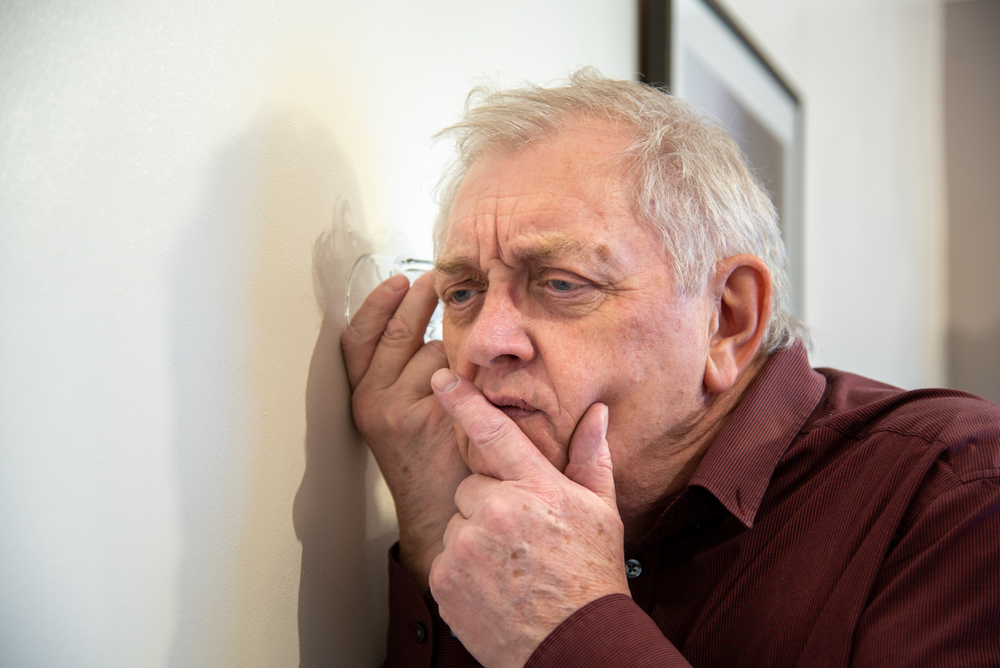
When friendship becomes a legal battleground, the question is not just who cares -- it's who counts. In probate law, conservatorship petitions are powerful tools. They are meant to shield individuals who can no longer care for themselves, but when misused, they risk undermining personal autonomy and weaponizing concern.
The recent court of appeal decision in Conservatorship of Anne S. (2025) 112 Cal.App.5th 1021, underscores this tension. This case offers more than a procedural footnote -- it is a cautionary tale about the legal weight of relationships and the limits of well-meaning advocacy. At its core is a deceptively simple question with far-reaching consequences: who has the right to ask the court to intervene in someone else's life?
Standing serves as the judiciary's gatekeeping mechanism, protecting both courts and individuals from speculative or intrusive filings. In probate, this function is especially critical; conservatorship can temporarily override personal liberty, delegate decision-making authority, and impose financial and reputational costs. As the Supreme Court observed in Barefoot v. Jennings (2020) 8 Cal.5th 822, 827, if a party lacks standing, the petition must be dismissed. The Conservatorship of Anne S. reinforces that principle: extraordinary remedies require extraordinary justification, beginning with a petitioner who has a legally cognizable stake or a genuine relational connection.
Marc B. Hankin, a neighbor who had met Anne S. only once, filed a petition in the Los Angeles County Superior Court for the appointment of a probate conservator. He alleged that Anne was being unduly influenced and possibly mistreated by her housemate. Initially joined by attorney G. Scott Sobel -- who had known Anne for years -- Hankin proceeded alone after Sobel withdrew.
Anne, represented by counsel, opposed the petition and ultimately entered into a settlement agreement with other parties. Hankin objected, claiming Anne lacked capacity to consent. The trial court dismissed the petition, finding Hankin lacked standing under Probate Code section 1820, and imposed sanctions for filing a legally frivolous petition.
The Second Appellate District affirmed. The court held that Hankin did not qualify as an "interested person" or "friend" under Probate Code section 1820. His brief interaction with Anne did not establish the kind of close or sustained relationship required by law. The court also upheld sanctions, concluding that Hankin's arguments lacked support in existing law and did not constitute a good faith-effort to extend it.
Under California Probate Code section 1820(a), a petition for the appointment of a conservator may be filed by: (1) The proposed conservatee; (2) The spouse or domestic partner of the proposed conservatee; (3) A relative of the proposed conservatee; (4) Any interested state or local entity or agency of this state or any interested public officer or employee of this state or of a local public entity of this state; and (5) Any other interested person or friend of the proposed conservatee.
Section 48 of the Probate Code further defines "interested person," noting that the definition "may vary from time to time and shall be determined according to the particular purposes of, and matter involved in, any proceeding." Historically, courts have held that an "interested person" is one who could be financially affected by the probate proceedings. Accordingly, because Hankin had no financial stake, the court rejected this basis for standing.
The case thus turned on section 1820(a)(5) -- whether Hankin qualified as a "friend." The Probate Code does not define the term, leaving courts to interpret it. Even "Black's Law Dictionary" omits a definition, perhaps because "friend" is so ubiquitous in everyday life.
Hankin argued for a broad interpretation, urging that the probate system should welcome petitions from neutral third parties who act out of concern for an elder's well-being. He argued that it is often difficult to find individuals willing to "shoulder a legal action to protect [a] senior," especially when family members are absent, unwilling, or potentially complicit in abuse. He framed his petition as a good-faith effort as a concerned citizen to protect Anne's safety.
Anne offered a starkly different view. She countered that expanding standing under Probate Code section 1820 would invite misuse. She warned of "weaponization" by "a nosy stranger," subjecting competent seniors to costly and debilitating legal battles that undermine autonomy and dignity. Her position reflects a growing concern about the potential for conservatorship to be used coercively, rather than protectively.
The appellate court sided with Anne, emphasizing that standing must be grounded in a meaningful relationship or legal interest. In re Conservatorship of Anne S., the court clarified that a "friend" under Probate Code section 1820(a)(5) means a mutual, ongoing, meaningful relationship with some degree of intimacy or closeness -- not a passing acquaintance or geographic proximity.
While sympathetic to the idea of protective advocacy, the court made clear that the statutory framework does not permit speculative or peripheral involvement. In doing so, it reaffirmed the principle that conservatorship is an extraordinary remedy -- not a tool for well-meaning but distant observers.
Conservatorship of Anne S. is a pivotal case that clarifies the boundaries of who may seek conservatorship in California. It serves as a reminder that probate courts are not venues for speculative or intrusive interventions, and that the law demands both relational and legal legitimacy from those who seek to override another's autonomy.
Conservatorship of Anne S. is a pivotal case that delineates the boundaries of those who may seek conservatorship in California. It makes clear that probate courts are not venues for speculative or intrusive interventions. Petitioners must demonstrate both relational and legal legitimacy before attempting to override another's autonomy, and the court's interpretation of "friend" and "interested person" under Probate Code section 1820 sets a high bar. A casual acquaintance or neighborly concern is insufficient; standing requires proof of a sustained, meaningful relationship or a legally cognizable interest.
The court's willingness to impose sanctions sends a clear message: probate courts will not tolerate filings that are speculative, unsupported, or advanced without evidentiary grounding. Attorneys must therefore conduct rigorous due diligence before filing, gathering concrete evidence of relational history, financial stake, or statutory authority. It is not enough to assert concern for a proposed conservatee's welfare -- counsel must be prepared to substantiate that the petitioner qualifies under the statute and that the petition rests on more than conjecture.
The case also reinforces that conservatorship is an extraordinary remedy and a last resort. Courts will protect the autonomy of individuals capable of managing their own affairs, particularly when they are represented by counsel and have entered into legally recognized agreements. For practitioners, the lesson is clear: before invoking the conservatorship process, ensure that standing is firmly established and supported by evidence. Otherwise, the petition risks dismissal -- and sanctions.
In everyday life, a "friend" may be anyone who laughs at your jokes or clicks "like" on a post. In probate court, however, friendship is a legal status with weighty consequences. It requires relational history, mutual trust and demonstrated concern over time. Conservatorship of Anne S. makes clear that when the law decides who counts as a friend or "interested person," it is not measuring casual social ties -- it is safeguarding an individual's autonomy. Petitioners who invoke that title must be prepared to substantiate it with evidence, not sentiment. For attorneys, the case is a reminder that standing is not a formality but a threshold test, and that conservatorship petitions demand both legal legitimacy and proof of genuine connection before the extraordinary step of overriding another's liberty can be justified. Moral of the story, in probate court, friendship must be proven.
Submit your own column for publication to Diana Bosetti
For reprint rights or to order a copy of your photo:
Email
Jeremy_Ellis@dailyjournal.com
for prices.
Direct dial: 213-229-5424
Send a letter to the editor:
Email: letters@dailyjournal.com