


Technology
Aug. 3, 2026
Are AI-generated briefs persuasive?
AI can produce well-researched and logically organized appellate briefs, but experienced appellate lawyers remain better at strategic judgment, persuasive advocacy and anticipating the human factors that can influence judicial decision-making.


Myron Moskovitz
Legal Director
Moskovitz Appellate Team
90 Crocker Ave
Piedmont , CA 94611-3823
Phone: (510) 384-0354
Email: myronmoskovitz@gmail.com
UC Berkeley SOL Boalt Hal
Myron Moskovitz is author of Strategies On Appeal (CEB, 2021; digital: ceb.com; print: https://store.ceb.com/strategies-on-appeal-2) and Winning An Appeal (5th ed., Carolina Academic Press). He is Director of Moskovitz Appellate Team, a group of former appellate judges and appellate research attorneys who handle and consult on appeals and writs. See MoskovitzAppellateTeam.com. The Daily Journal designated Moskovitz Appellate Team as one of California's top boutique law firms. Myron can be contacted at myronmoskovitz@gmail.com or (510) 384-0354. Prior "Moskovitz On Appeal" columns can be found at http://moskovitzappellateteam.com/blog.
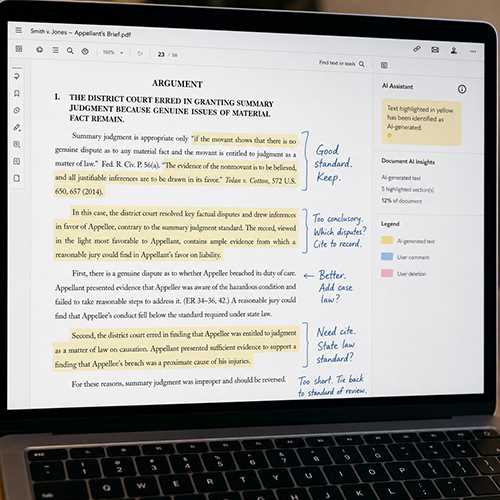
An increasing number of lawyers have been filing appellate briefs written by ChatGPT, Claude and other artificial intelligence programs.
Some of these briefs have made news, due to AI-generated "hallucinations" that include wildly inaccurate summaries of reported cases (including fake quotations). Some have cited cases that do not even exist.
This annoys judges, because it loads them with extra work and tarnishes the image of the ...
For only $95 a month (the price of 2 article purchases)
Receive unlimited article access and full access to our archives,
Daily Appellate Report, award winning columns, and our
Verdicts and Settlements.
Or
$895, but save $100 when you subscribe today… Just $795 for the first year!
Or access this article for $45
(Purchase provides 7-day access to this article. Printing, posting or downloading is not allowed.)
Already a subscriber?
Sign In