


Administrative/Regulatory
Jul. 10, 2026
Can the Administrative Procedure Act limit rapid executive policy change?
The Administrative Procedure Act requires agencies to engage in reasoned decision-making before changing policy. Recent cases show how that requirement has become a key legal check on executive action.



Stephen Kaus
Stephen Kaus is a retired judge of the Alameda County Superior Court, where he served for 12 years until 2024. He is now a private arbitrator and mediator. Prior to that, he was a public defender in Contra Costa County and civil litigator in San Francisco.
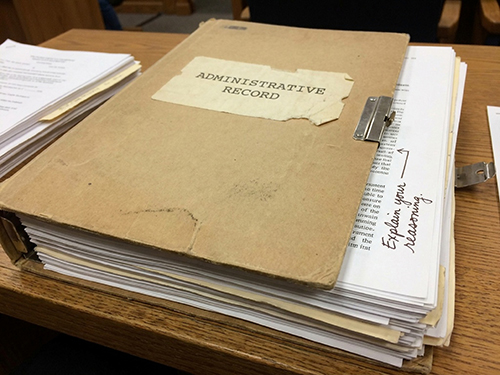
During the present administration, many institutional constraints long assumed to limit presidential action have turned out to be political norms rather than judicially enforceable rules. In some instances, the Administrative Procedure Act (APA) transforms important norms of good administration into enforceable legal duties.
It remains to be seen how effective the APA is in at least slowing the abandonment of norms, both in trial court and on appeal.
Last month, ...
For only $95 a month (the price of 2 article purchases)
Receive unlimited article access and full access to our archives,
Daily Appellate Report, award winning columns, and our
Verdicts and Settlements.
Or
$895, but save $100 when you subscribe today… Just $795 for the first year!
Or access this article for $45
(Purchase provides 7-day access to this article. Printing, posting or downloading is not allowed.)
Already a subscriber?
Sign In