


Ethics/Professional Responsibility
Mar. 5, 2026
Judge questions frequency of attorney's California appearances, denies PHV request
A San Francisco judge denied without prejudice a New York lawyer's pro hac vice application in Aurora Solar's trade secrets case, citing insufficient information about how often the attorney seeks California court appearances.


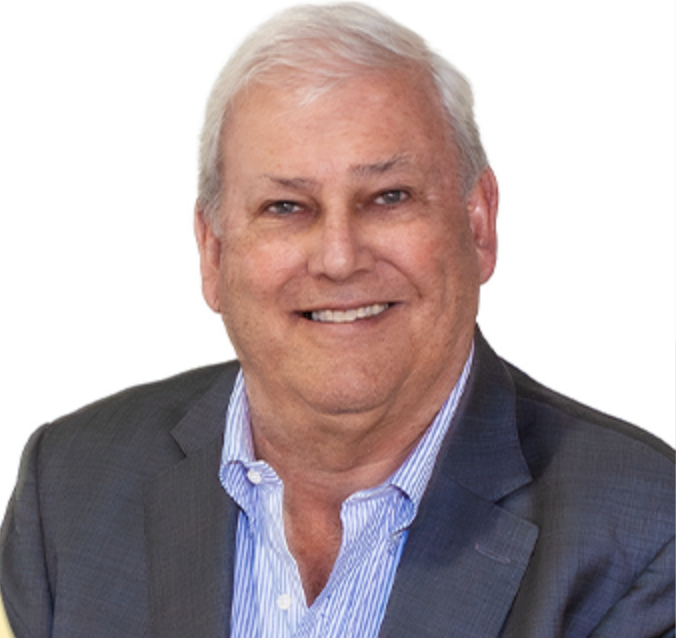
A San Francisco judge issued a rare denial of a New York attorney's pro hac vice application, stating it was not clear how frequently the lawyer had applied to practice in California.
Superior Court Judge Joseph M. Quinn denied without prejudice Fenwick & West attorney Douglas E. Etts' application to represent Aurora Solar Inc. in its trade secrets lawsuit against Aether Energy Inc.
Quinn wrote in his ruling, "Counsel's testimony begs the question whether he has applied to appear PHV in the state appellate courts or any other court in this state?
"The clear intent of the requirement is to assure the court counsel is not seeking to appear PHV with such frequency that they should seek admission to the State Bar rather than PHV status. On this record the court cannot make the necessary determination."
Etts said he had no comment on the judge's ruling when contacted. Aurora Solar Inc. v. Aether Energy, Inc. et al. CGC24619132 (S.F. Super. Ct., filed Oct. 21, 2024).
The Frequently Asked Questions section of the State Bar website notes, "Rule 9.40 of the California Rules of Court does not set a limit on the number of appearances an out-of-state attorney may make as PHV. However, the court determines if the applicant is ineligible for PHV due to multiple appearances."
Merri A. Baldwin, an attorney at Rogers Joseph O'Donnell PC and co-chair of the firm's Attorney Liability and Conduct Practice Group, commented in a phone interview, "There's no hard and fast rule about what is too much practice in California. Courts have discretion in making that determination."
Rule 9.40 states that an attorney applying for pro hac vice status must not be a resident, regularly employed or engaged in substantial business in California.
"Absent special circumstances, repeated appearances by any person under this rule is a cause for denial of an application," the rule says.
Baldwin said Etts' pro hac vice application appeared to have been made with an "administrative oversight" and was a reminder to attorneys of the need to "scrupulously adhere to the requirements of the rule" and not to "treat it as a de minimis requirement."
William Slomanson, professor emeritus at Thomas Jefferson School of Law, agreed that there did not appear to be anything untoward about Etts' application but said, "There are some, unfortunately, who might be gaming this system."
Slomanson said corporations with interests across the U.S. can take advantage of the rule and save money by using their in-house or other attorneys instead of using California-based ones.
Under California Rule of Court 9.46, attorneys licensed in another state can work as in-house counsel for a company operating in California without becoming a full member of the California State Bar, if they register as Registered In-House Counsel.
Andrew J. Waxler, founding partner at Miller Waxler, who specializes in professional responsibility defense, noted that in Golba v. Dick's Sporting Goods, Inc., G049611, (Cal. App. 4th, 2015) an attorney had 12 pro hac vice applications in 11 months and the court determined that was excessive.
"I think the key in this hearing, in this motion is the ruling was denied without prejudice. All the court wants to know is how many courts you've applied to in the last 24 months. And have any of them been denied?" said Waxler.
"I think it's rare because most applicants do provide complete information so that you don't have this situation," Waxler added. "I'm sure that was an oversight, not intentional."
Other case law on this issue includes Sheller v. Superior Court (Farmers New World Life Insurance Co.) B190479, Cal. App. 2nd, 2008, in which David Sheller, a Texas attorney, was appearing pro hac vice on behalf of the plaintiffs in a class action suit.
After Sheller sent a communication to prospective class members containing a material misrepresentation, the trial court reprimanded him. It ordered Sheller to reimburse the defendant for attorney fees as a condition of retaining his pro hac vice status.
But the decision was reversed and remanded as the trial court declined to revoke Sheller's pro hac vice status, which it had the authority to do, and purported to impose lesser sanctions, which it lacked the authority to do.
James Twomey
james_twomey@dailyjournal.com
For reprint rights or to order a copy of your photo:
Email
Jeremy_Ellis@dailyjournal.com
for prices.
Direct dial: 213-229-5424
Send a letter to the editor:
Email: letters@dailyjournal.com