

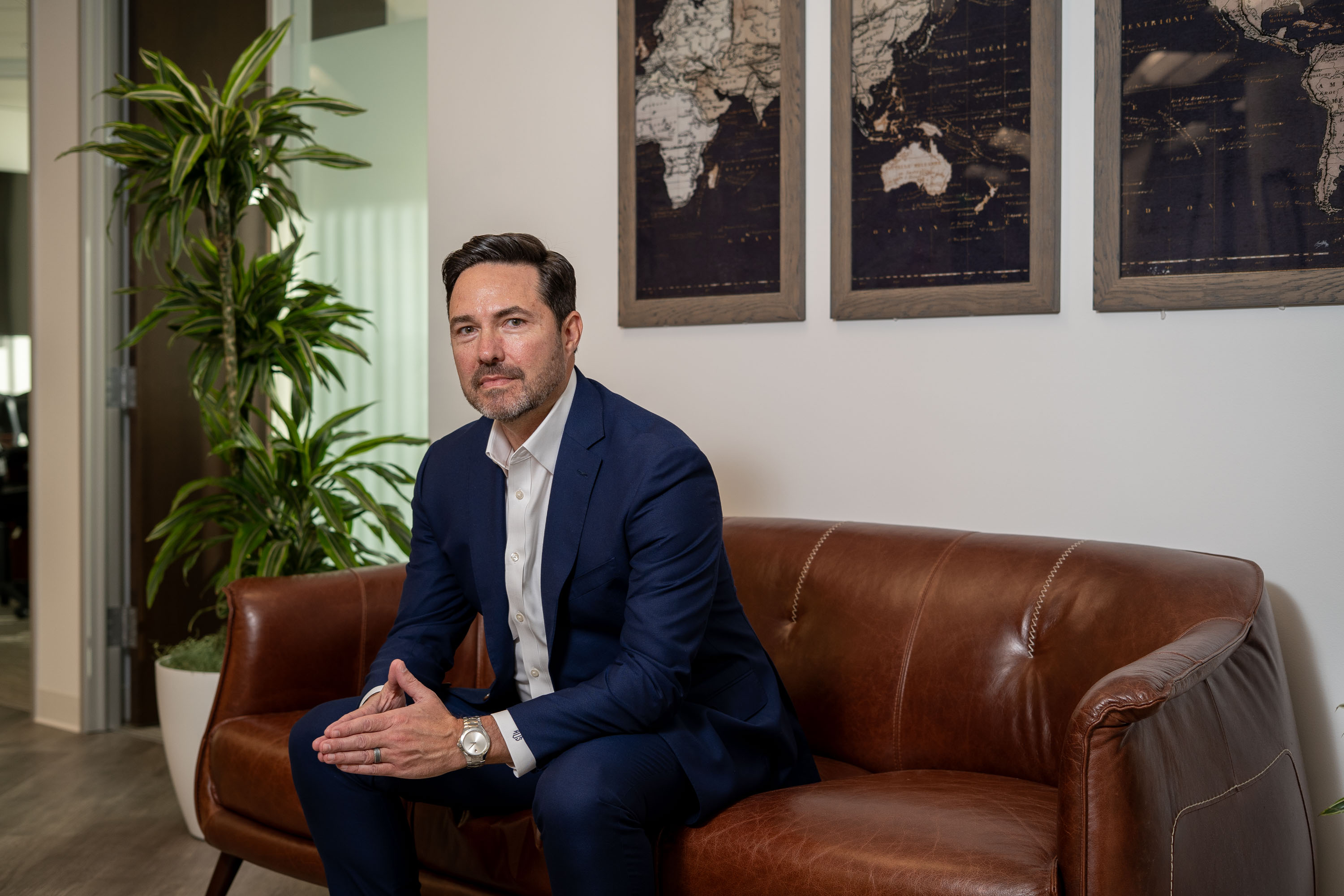
Career Highlights: Andrew Smith handles a diverse range of matters including personal injury, medical malpractice, bad faith, products liability, and premises liability. During his litigation career, he represented Fortune 500 companies, governmental agencies, small businesses and individuals on both the plaintiff and defense sides.
Alternative Resolution Centers
Personal injury, habitability, construction, insurance, business
Mediator Andrew O. Smith has never been a big fan of conflict.
"It would be hard to be a mediator without having been a litigator," said Smith, who spent more than two decades representing clients as an attorney. "But my natural propensity is to bring people together."
A 2001 Pepperdine University School of Law graduate, Smith spent a little time working in criminal defense right after he passed the bar but the bulk of his career as an attorney involved civil litigation, representing clients in personal injury, construction, insurance, and landlord-tenant disputes.
The longtime litigator said he knew early that he wanted to be a mediator but figured he wouldn't move into private neutral work until he was closer to retirement age.
"Then I just started thinking about a lot of the very successful mediators in Los Angeles," Smith recalled. "And I said, 'You know what? A lot of them probably started around my age.' And so, I thought, 'Why not? Let's give it a try.'"
Smith decided to take the leap into fulltime mediation in July 2024, and he's now on the Alternative Resolution Centers (ARC) roster of private neutrals, working regularly to resolve personal injury, business, insurance, construction and landlord-tenant disputes.
Smith said a key focus of his mediation philosophy these days is trying to operate with a calm demeanor while bringing hope to the parties.
"What I try to do is foster positivity, meaning giving people hope that through the negotiation they're actually going to reach a resolution," he explained. "I think when negotiations break down that's because people really feel like there's not any hope of reaching a resolution. I think people are more receptive to different solutions - or perhaps willing to accept a little bit less or give a little bit more - if they know there's going to be resolution."
Smith added that he doesn't want to be a passive mediator.
"I think it's important that I am providing value throughout the process," he said. "And what I try to do is first of all - with permission of the parties - share as much information as I can. I feel like if two reasonable sides have the same information, generally they will come to very similar conclusions."
The second objective is to assist the parties with negotiation, Smith said.
"Even experienced litigants struggle with how to negotiate in a way that sends the proper message to the other side," he explained. "So, I try to provide them advice on how to signal where they want to be, how to signal, ultimately, what they're looking for. I'm always encouraging the parties to really kind of share where they want to end up."
Smith said he tries to begin his mediations in a facilitative manner and will stick with that approach as long as it's working, but when challenges pop up, he will cautiously pivot to more evaluative techniques when they're appropriate.
"Oftentimes as a mediator and neutral, we don't have all the information that the litigants have," he explained. "So you can lose credibility if you're making snap judgments without the full picture of all the information. But I do use evaluation, and I do use risk avoidance to try and break impasses and get the parties to think in different ways. I'm always asking questions to change the party's perspectives."
Los Angeles plaintiffs' attorney Thomas J. Johnston used Smith recently to resolve what he described as a complicated wrongful death case, and he said the mediator was a terrific listener and a quick study.
"He's defended a lot of cases like that," Johnston said about Smith. "That gave him a good perspective on how to cut through some of the noise and get to the real issues that show the risk on each side."
Johnston added that Smith was good with his clients.
"He was very respectful and gentle with the family, but he wanted to make sure that I understood some of the risks, too, and he wasn't afraid to tell me that," Johnston recalled. "His ability to listen and not take the settlement to some preconceived idea that he had but instead let the parties really make their own decision on resolution was key."
Los Angeles defense attorney Lindy F. Bradley has used Smith to mediate seven different personal injury cases, and she said the mediator operates with a calm and professional demeanor.
"That's very helpful in cases - especially when passions are high and there's an emotional aspect to people making decisions about damages," Bradley said. "But mostly, I continue to use him because I trust him, and I think he is incredibly knowledgeable."
Bradley said Smith makes excellent use of his extensive experience as an attorney when shifting into a more evaluative approach as a mediator.
"He just lays things out quite honestly," she explained. "And that is helpful not only for me but for clients to hear someone's objective evaluation of a case. ... He has the ability to look at both sides and to actually be impartial, but he's also able to evaluate a case as a whole, which I think is really a necessary skill set for a mediator."
Long Beach defense attorney Woody Woodland has used Smith to mediate a dozen personal injury cases.
"If he's not batting a thousand, he's batting very close to it in terms of resolving all of those disputes," Woodland said.
Woodland added that one of those matters involved pro per plaintiff.
"Andrew took that case and managed to communicate all of these complexities to a fairly unsophisticated plaintiff, who had a legitimate case, and he helped him understand," Woodland recalled. "And he stayed with it literally for weeks over the summer until we had a resolution."
Woodland said Smith has "a really impressive legal pedigree" but applies a down-to-earth approach to his mediations.
"Interacting with him is sort of like having coffee at a Starbucks - there's very little legalese," Woodland explained. "He understands the legal issues. He understands the summary judgment issues - if you need that. But in our world, most of this often comes down to individual communication, and he's easy to talk to. He's non-threatening to talk to. He's not someone that's going to pound the other side's position down your throat. He's just going to work together with you until there's an understanding from a position of respect. So just his plain old communication is what I really like about him."
Smith noted, meanwhile, that moving into fulltime mediation work earlier in his career has been an especially gratifying decision.
"It's been a fantastic choice," he said. "This is the perfect fit for who I am ... And it brings me a lot of happiness to bring people together, to help resolve conflicts and help people move on with their lives through difficult times."
Here are some attorneys who have used Smith's services: Woody Woodland, Behar Gibbs Savage Paulson LLP; Lindy F. Bradley, Lagasse Branch Bell + Kinkead LLP; Thomas J. Johnston, Johnston & Hutchinson LLP; Lisa D. Collinson, Collinson Greco; Evan M. Koncan, Abir Cohen Treyzon Salo LLP