


Jul. 17, 2026
The uncomfortable truth that most bar exam advice ignores
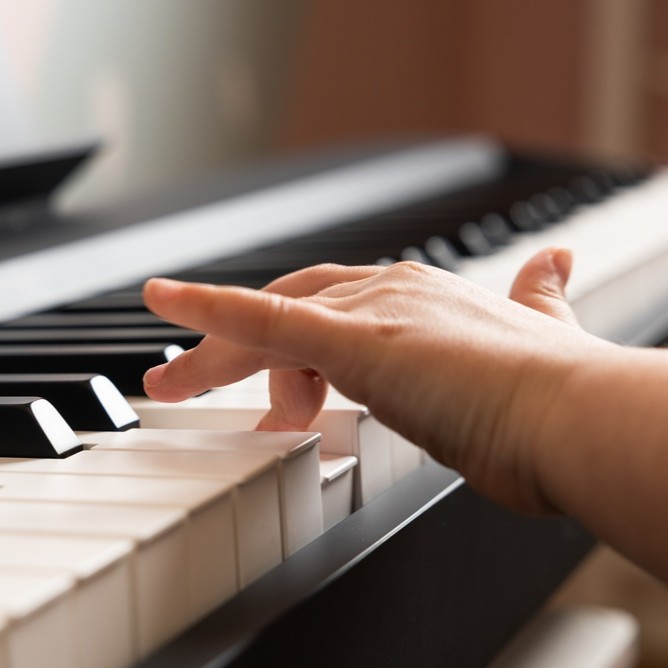
The messy secret to bar prep is the same one every skilled pianist knows: effortless only happens after you've messed up hundreds of times in private.


Brian Hahn
Maybe this is you:
You study for weeks. Nothing improves. It still feels hard. You still feel slow. You can't shake the feeling, "This should be working, but it isn't."
This is how I felt after I picked up the piano again, more than two decades after my last lesson.
Teaching yourself to play a piece is the same skill as bar prep. You must ultimately self-study to improve, even when you have a course or a teacher.
Like learning to play a piece well enough, here's what it takes to get good enough at bar prep:
1) Effortless is the result of effort.
Bar prep is very doable. But doable doesn't mean easy.
If something looks effortless, it's because it's been done over and over until it became second nature. I messed up hundreds of times trying to record a piece I thought I already knew.
How many takes are you willing to do to get the result you want?
I don't mean you need to spend 12 hours a day, 7 days a week. Just because you're billing 84 hours a week doesn't mean they're all billable to yourself, the client of all your efforts.
What's billable are actions that help lock in the ability to answer what you might see on the exam. It's actually low effort to simply grind busy work and "bill time" without thinking about where you're headed.
What matters is targeted action on what actually moves the needle, relentlessly patching gaps in your knowledge and skill.
2) Learn from the model answers (and MBE explanations).
People say not to worry if your essay answer doesn't look like the model ones. True, your answers don't need to be perfect. Good answers are subjective and can take different forms anyway.
But don't let well-intentioned advice keep you complacent. Minimum competence does not mean bare minimum.
Do you know when to bring up a rule? Can you actually organize the issues and resolve them to their conclusions?
Strive for the ideal. The way to get to good answers is to try to emulate the model answers. Being able to give the graders what they're looking for is the goal.
3) Optimize for learning, then optimize for exam performance.
I didn't let myself pick up tempo until I could play a sequence correctly at the slower one. If I can't do it slowly or at all, why pretend otherwise?
On the other hand, going too fast too early is also sloppy. Anyone can slam the keys fast. But what does the listener want to hear? What do the graders want to see?
In the beginning, worry less about how many questions you're doing and more about how well you're doing them. See if you can even answer an essay and get the relevant issues correctly. Don't worry about how slowly you're going. Don't worry about how many you're doing. Worry about how well you're doing them.
Don't practice until you get it right. Practice until you can't get it wrong.
4) Don't try to be ready before you're ready.
You will become ready as long as you keep trying. I always remind myself of this whenever I'm wondering why I can't make the sound that I want.
If you're already getting perfect scores in practice, what's the point of all this? You'll get there, systematically, step by step.
You're not wasting effort. The bamboo shoots up all at once if you keep watering it.
5) Focus on your weak areas.
You will have strong areas and weak areas. They will change over time.
It can feel like one door opens as another closes. That's normal. I don't practice the whole piece every time. I practice in portions, especially the difficult parts.
Shift more of your attention toward your current weak areas instead of giving everything equal time. An hour spent on your stronger area is worth less than an hour spent on a weak one.
That doesn't mean ignore your strong areas entirely. Check on them occasionally to make sure they're not a fluke.
6) Memorization is a byproduct of doing (active practice).
Knowing the notes on a page isn't the same as knowing how to play them. Knowing words on a vocab test doesn't mean you know how to use them.
A lot of bar takers assume they'll know how to do everything after a lecture or an outline. That's backward. The best way to "know" is to DO. The information you consume is useless unless you do something with it.
So give it a try.
You learn to swim by getting in the water, not by studying water. See how it feels to bring up an issue and write down the rule and use it to solve the issue.
Don't avoid failure. Missed questions are beacons that guide you toward what needs work. Attempts to recall are the basis of all memorization.
Rote memorization is still needed, but combine it with practical application. Mnemonics, spotting patterns, grouping related ideas, understanding the policy behind a rule, and repetition all help (just like how memorizing chore progressions and repeating phrases is easier than trying to remember individual notes).
Tools like Magicsheets and Approsheets can organize and visualize the information for you. But they're only tools. How are you going to use them?
7) You'll hit plateaus.
This isn't a linear process. You have to stay patient through the ups, downs, and sideways. This happens in bar prep, fitness, piano, and any skill acquisition.
If your scores stall or dip, your mind is saturated. This is normal. It means it's working. Your mind just needs time to process before breaking through to the next level. What you gain quickly is often illusory or luck.
8) Let your efforts simmer overnight.
It's tempting to "buckle down" and brute force this process.
But give your brain time to encode what you practiced. The turkey cooks if you let it sit in the oven for hours, not blast it at max temp. You won't see big changes day to day, but you'll see them over time.
Every time I pick up a new piece, it's impossible to imagine myself playing it well. But without fail, I see incremental improvements as the nights pass, or even within the same day between sessions.
And seeing yourself get better is the best motivation you can have.
9)Performance anxiety on the bar exam is real.
There's a difference between good in practice and good on the real thing.
I thought I was ready to record myself when I was able to play the piece to near perfection. Nerves kicked in with the camera rolling, and I made more mistakes.
Expect to perform at around 70% of your top practice condition. "We don't rise to the level of our expectations. We fall to the level of our training."
Know that the exam WILL throw you off. The solution is to get 120% as good in practice to reach that 70% in reality. If you can't do it in the comfort of home, can you be sure you can do it outside?
10) Play with the process.
Most people end up missing bar prep after it's over. Doesn't that mean bar prep can be more enjoyable than you think?
Explore, experiment, and iterate. The stakes are still low, for now.
The simple truth underneath all of this:
"Minimum competence" sounds comforting. Actually building it comes from doing the right thing, in the right way, over and over, when no one's watching.
But under pressure, people don't think about what's right.
Some are afraid of failure. Some are afraid of uncertainty. Some read off someone else's script. They are in a haze, eating what's fed to them, thinking that a big bar course automatically means useful, listening to the voice that sounds the most certain because every day is an emergency to them.
I know, because I was all of them. And I can't bear to watch the same pattern play out year after year.
Enough with the noise. You already know what to do.
If bar prep has felt exhausting or demoralizing, it doesn't mean you're behind or that it's your fault. You just need to break free of the illusion that you don't have what it takes.
That's the other reason I desperately try to get the message to you. That's why I continue to build my study tools. To empower you to trust your legs and get it done.
The bar prep industrial complex tells you that you need them. You don't. You don't need me either. You already have the agency.
Brian is the founder and chief strategist at Make This Your Last Time, a patent attorney, and second-time passer of the California Bar Exam after figuring out what works and what doesn't. He's been writing about actionable and effective bar prep since 2014, helping tens of thousands of bar takers across the country pass the exam.
For reprint rights or to order a copy of your photo:
Email
Jeremy_Ellis@dailyjournal.com
for prices.
Direct dial: 213-229-5424
Send a letter to the editor:
Email: letters@dailyjournal.com